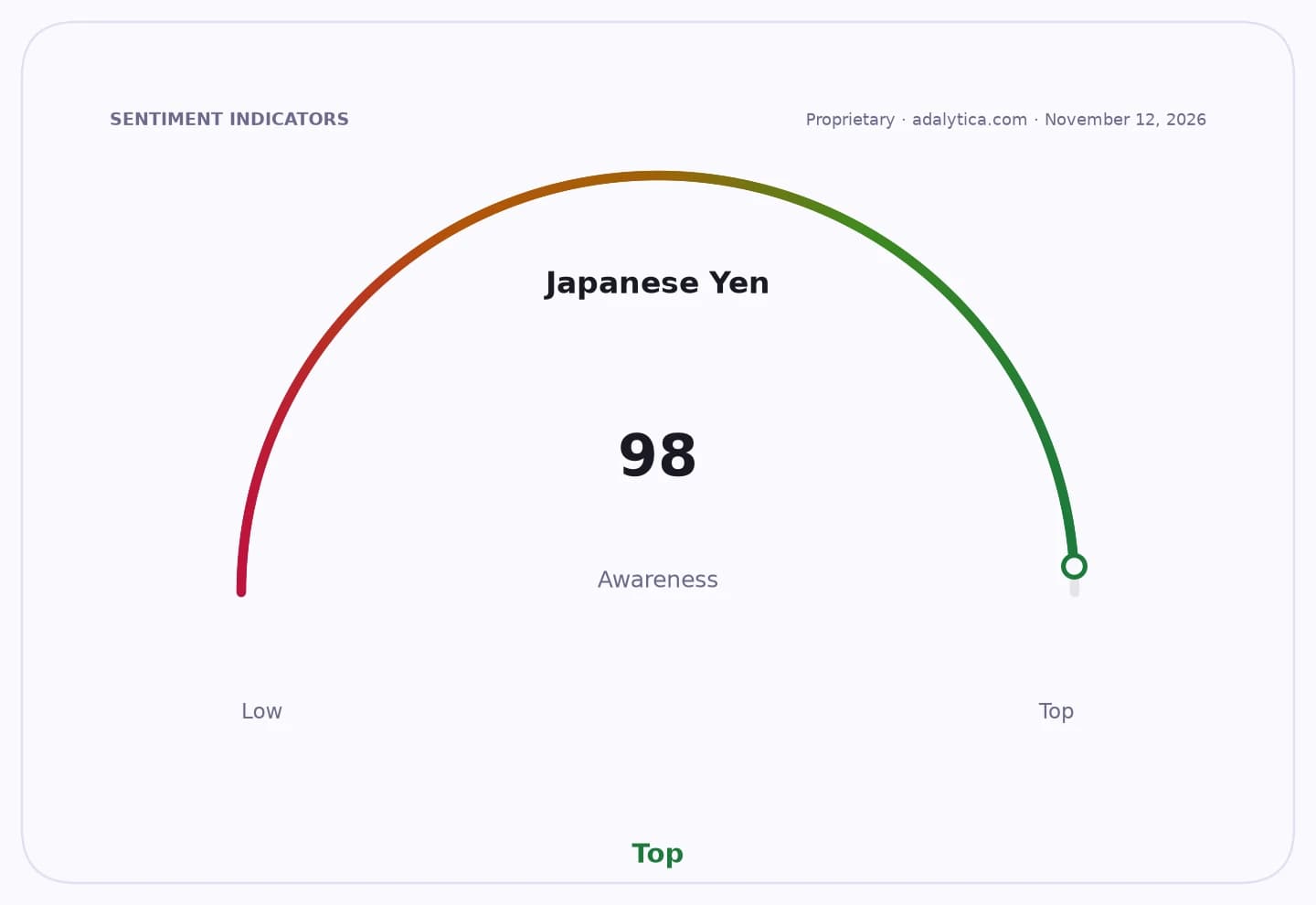
The Japanese yen is regaining its role as a haven after a sharp selloff in U.S. artificial intelligence shares pushed investors toward defensive assets and added to expectations that the currency could keep strengthening against the dollar.
Yen Rises on AI Stock Selloff and BOJ Rate Bets
Safe Haven Demand
The yen rose 0.2% to 157.34 per dollar in early Asian trading on Friday, extending Thursday’s 0.6% advance to 157.54 and outperforming all Group of 10 peers. The move underscores how quickly the market can rotate back to the yen when risk appetite weakens, even after years in which the currency’s traditional safe-haven appeal was blunted by the wide U.S.-Japan rate gap.
Sentiment Indicators

The immediate catalyst was a rout in U.S. technology stocks, particularly names tied to artificial intelligence, after a sweeping Democratic victory in the U.S. midterm elections this week helped trigger a broader Wall Street selloff. As investors reassessed the durability of AI-linked earnings and valuations, money flowed into more defensive positions, including the yen. Goldman Sachs strategists said the currency has become a more effective hedge against shocks tied to developments in AI markets.
That matters because the yen’s behavior is central to global risk pricing. A stronger yen typically signals stress in equity markets and tighter financial conditions, especially when it reflects demand for safety rather than a shift in Japanese fundamentals alone. It also tightens the screws on exporters and companies with large overseas earnings, whose foreign revenue translates into fewer yen. The latest move has already revived concerns for Japanese corporates that have spent much of the year benefiting from a weaker currency.
Safe Haven Demand — 30-day sentimentadalytica.com
Explore this data interactively — full history, time series and cross-market comparisons.
Japanese Yen
The yen briefly strengthened as far as 156.08 per dollar last month during an earlier bout of technology-led selling, before giving back most of those gains. This time, the rally comes with a stronger policy backdrop: markets are pricing roughly a 76% chance that the Bank of Japan will raise rates by its Dec. 18 meeting. That expectation gives the currency an additional tailwind if officials continue edging away from ultra-loose policy.
Still, the case for a sustained yen rebound is not straightforward. The currency’s old safe-haven status has been diluted in recent years by the still-large gap between U.S. and Japanese yields and by persistent Japanese investment abroad, both of which encouraged investors to sell yen even in periods of market stress. That helps explain why the yen has often struggled to hold gains after risk-off spikes.
For investors, the key question is whether the AI-driven pullback in equities marks a short-lived correction or the start of a broader de-risking. If the selloff deepens, the yen is likely to remain one of the main beneficiaries, alongside Treasuries and other defensive assets. If technology shares stabilize, the currency may again face pressure from the carry trade and the still-favorable dollar yield advantage. The next test is whether upcoming BOJ guidance and any further weakness in AI stocks keep the yen’s safe-haven bid alive.
| Entity | Gains | Losses |
|---|---|---|
| Japanese yen | ▲Haven demand | ▼Weak-risk environment easing |
| U.S. AI stocks | ▲Volatility reset potential | ▼Valuation de-rating |
| Japanese exporters | ▲Lower imported costs | ▼Fewer yen for overseas revenue |
| Dollar-funded carry trades | ▲Low-rate funding stays useful | ▼Yen shorts face squeeze |