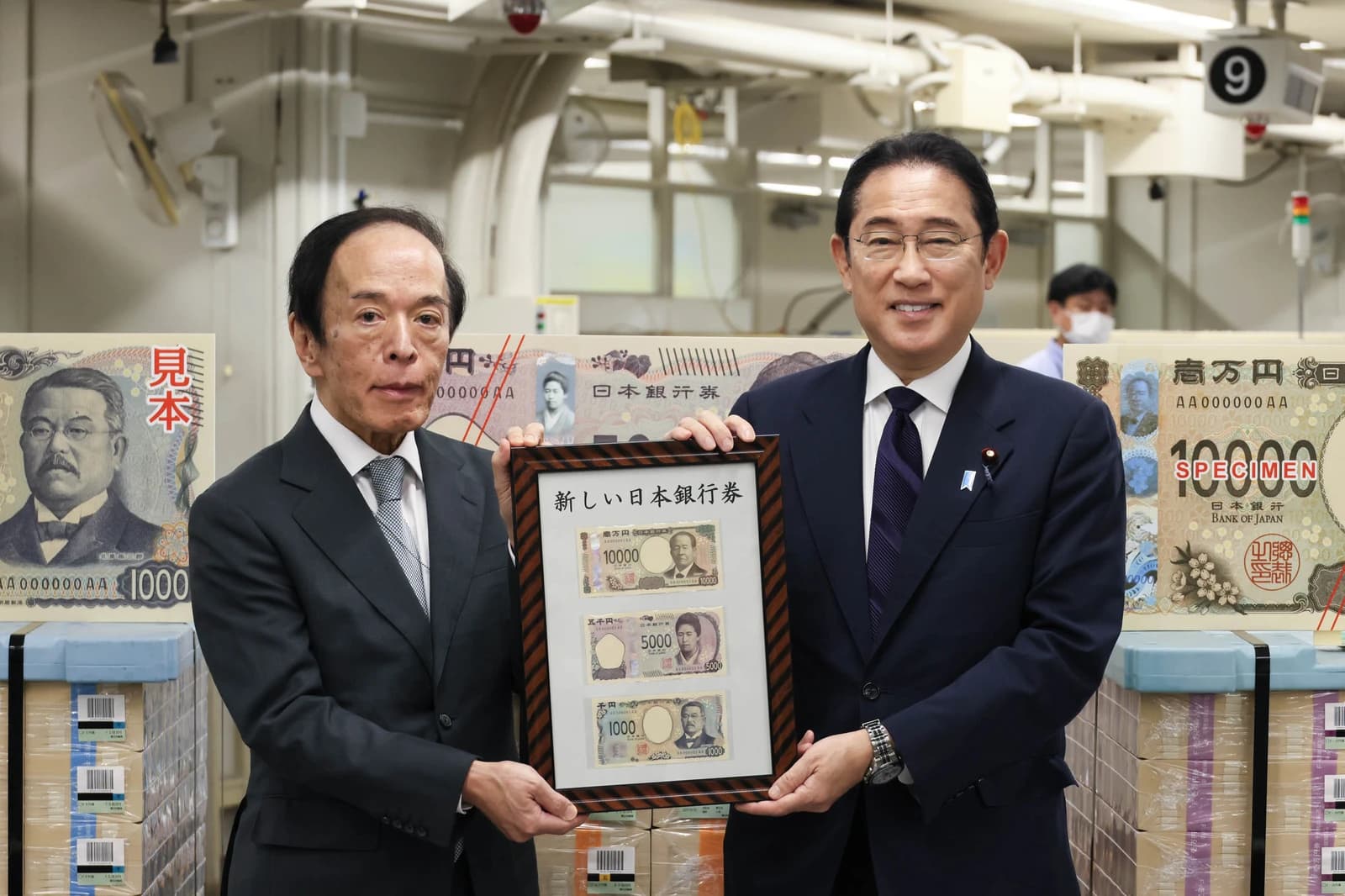
Bank of Japan Governor Kazuo Ueda said it is becoming increasingly important to keep underlying inflation around the central bank’s 2% target, a shift in emphasis that strengthens the case for further rate increases and has immediate implications for the yen, Japanese bonds and domestic equities.
BOJ Ueda says inflation must stay near 2%

Ueda’s remarks matter because they suggest the BOJ is moving from a policy stance focused on ending deflation to one aimed at preventing inflation from overshooting. That is a meaningful pivot for Japan, where ultra-loose monetary policy has anchored borrowing costs near zero for years and helped keep government bond yields suppressed. If the central bank is now more concerned about inflation persistence than inflation weakness, markets must price in a tighter path for policy, even if the next move is still months away.
Sentiment IndicatorsⓘProprietary · adalytica.com · October 8, 2026
This is a snapshot — live sentiment, awareness and momentum for 130+ markets update continuously in the dashboard.Open AlphaPulse

The governor said Japan’s economy and prices are broadly tracking the BOJ’s forecasts, supported by a moderate recovery and a solid Tankan business survey. He also warned that rising commodity costs are lifting wholesale inflation and passing through to consumer prices, while inflation expectations are continuing to rise. He added that underlying inflation could overshoot the target because of external price pressures, strong AI-related demand and a weak yen.
That combination is economically significant for a country still trying to balance growth and price stability after decades of stagnation. The BOJ has already lifted its policy rate to the highest level in 31 years, but Ueda said financial conditions remain accommodative and continue to support activity. In other words, the central bank believes it has room to tighten further without choking off the recovery.
For investors, the message is that the hurdle for another BOJ hike appears to be falling. The bank’s next two-day policy meeting ends on Oct. 30, and markets will focus on new quarterly forecasts for growth and inflation for clues on timing. If those projections show inflation staying firmer for longer, the BOJ could prepare the ground for another increase in borrowing costs. That would tend to support the yen, put upward pressure on Japanese government bond yields and weigh on rate-sensitive parts of the equity market.
The currency and bond backdrop already reflects that shift. The U.S. dollar index has been trading above its 50-day and 200-day moving averages, while Japanese equity exposure as tracked by the EWJ ETF has been softer than the broader dollar move would suggest, with its recent climb likely vulnerable to tighter domestic policy. In inflation-linked markets, sentiment gauges on Adalytica show extreme greed across CPI, long-term inflation expectations and breakevens, underlining how aggressively markets have begun to discount persistent price pressure.
The bull case for Japanese assets is that a gradual normalization still signals policy credibility, not a sudden tightening cycle. If inflation settles near target and growth holds up, Japan could escape its low-rate trap without a recession. The bear case is that the BOJ may be forced to tighten into still-fragile demand if imported inflation, wage pressures and yen weakness keep pushing prices higher.
For now, Ueda’s message is that the BOJ is no longer just trying to reach 2%. It is increasingly determined to keep inflation there, and that makes the next policy steps more consequential for global investors than they were a few months ago.
| Entity | Gains | Losses |
|---|---|---|
| BOJ / Ueda | ▲Inflation credibility | ▼Policy flexibility |
| Yen | ▲Higher-rate support | ▼Weakness if BOJ hesitates |
| Japanese banks | ▲Better net interest margins | ▼Bond-market volatility |
| Japanese duration / JGB bulls | ▲None | ▼Price pressure from tighter policy |