Bolivia’s new government is facing an early test to its political credibility after an adviser to President Rodrigo Paz, along with an Argentine linked to President Javier Milei’s camp, was detained over an attack on an analyst — a development that pushes security, rule-of-law concerns and cross-border politics to the foreground just as investors were starting to price in a more market-friendly regional shift.
Bolivia Adviser Detention Hits Argentina, Peru ETFs
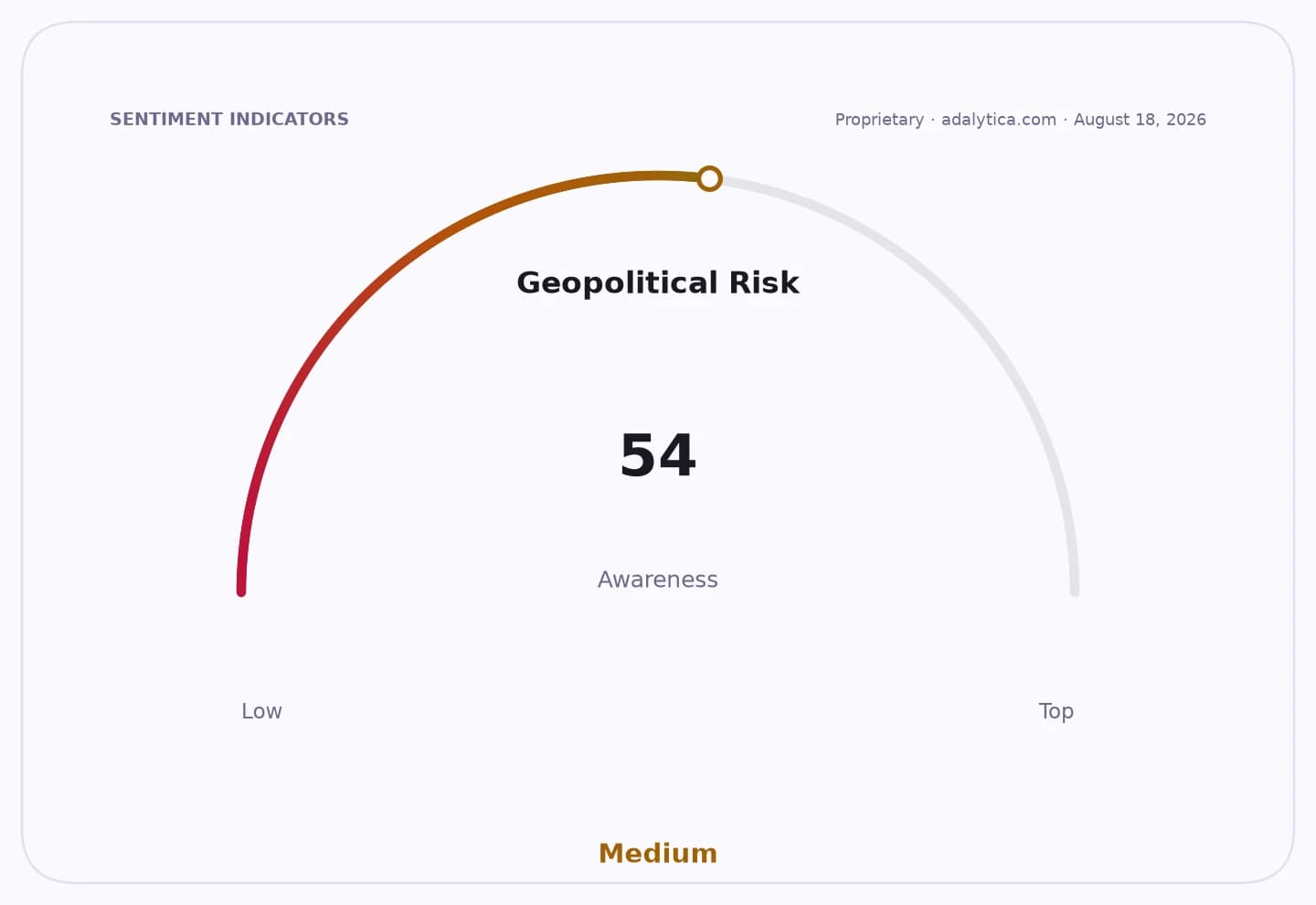
The detentions matter because they go beyond an isolated criminal allegation. They raise questions about the discipline and governance of political networks around two of South America’s most closely watched right-leaning leaders, at a time when markets are trying to distinguish reformers from the chaos that has often undermined Latin American policy changes. Any perception that political factions tolerate intimidation or extra-legal tactics can quickly become an economic story: it can chill private investment, complicate coalition-building and add a risk premium to assets tied to the region.
Sentiment IndicatorsⓘProprietary · adalytica.com · August 18, 2026
This is a snapshot — live sentiment, awareness and momentum for 130+ markets update continuously in the dashboard.Open AlphaPulse
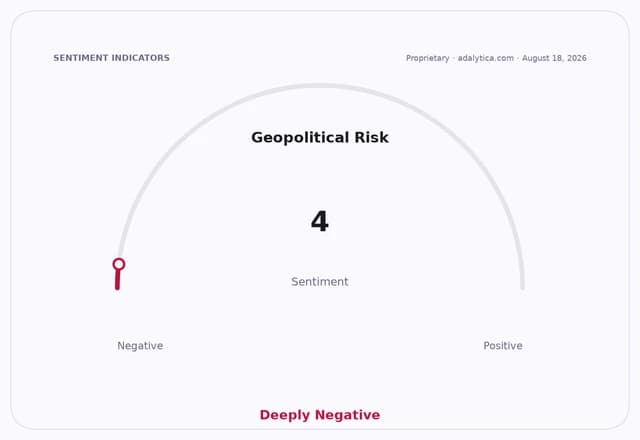
That matters for investors well beyond the courtroom. Argentina’s equity proxy, the Global X MSCI Argentina ETF, ended Aug. 18 at 89.82, down from 91.33 the day before and below its 50-day average of 93.29, while Gallego ADRs fell to 42.62, extending a slide from 43.42 on Aug. 17 and leaving the stock more than 14% below its 50-day line. Neither move can be pinned solely on the detentions, but the timing underscores how quickly political headlines can feed into already fragile risk appetite. The ETF tracking Peru and broader Latin American exposure, EPU, also eased to 87.80 from 89.19, even as it remained above both its 50-day and 200-day moving averages, a sign that regional assets are still supported but vulnerable to headline shocks.
The broader narrative is one of a region trying to move from protest, polarization and disorder toward a pro-investment political cycle, while old habits keep intruding. Argentina’s Milei has sold investors on fiscal repair and deregulation; Bolivia’s Paz is being watched for whether he can offer stability after years of volatility. Detentions linked to an analyst attack, however, drag both camps into a more uncomfortable frame: if political allies are seen as implicated in coercion, the market-friendly message becomes harder to sustain.
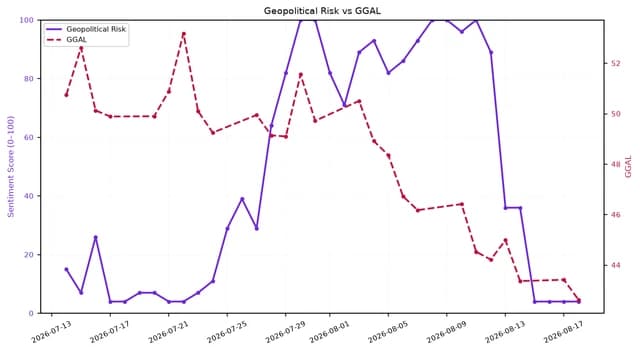
Technical signals in the region’s listed proxies also reflect that caution. GGAL, the Argentine banking bellwether, has dropped to 42.62 from a recent peak of 58.69 and sits below its 50-day moving average near 50, with RSI readings around 28.5 and MACD still negative, indicating momentum has turned sharply weaker. ARGT, the Argentina ETF, has slipped back under its 50-day average as well. Those are conventional technical indicators, but they reinforce the same message as the headlines: investors are not abandoning the trade, yet they are becoming more selective on political risk.
For now, the immediate market damage appears contained. The deeper risk is that the case becomes another reminder that in Latin America, governance shocks rarely stay political for long; they flow into currencies, bank valuations and country risk. If Paz and Milei can distance themselves cleanly from the episode and demonstrate institutional independence, the damage may fade. If not, investors will likely demand a higher premium for putting money into a region where reform momentum is still being tested by the politics around it.
| Entity | Gains | Losses |
|---|---|---|
| Investors in rule-of-law reform | ▲Clearer governance signal | ▼If detentions expose political coercion |
| Bolivia’s Paz government | ▲Chance to show institutional control | ▼Credibility if adviser link deepens |
| Milei’s political camp | ▲If quickly distanced from the case | ▼Reputational damage from association |
| Argentina/Bolivia risk assets | ▲If scandal is contained | ▼Higher country-risk premium |