Bolivia’s government is framing the Domo Oso-X3 exploration project as a strategic chance to rebuild natural gas reserves, even as the country warns it is running into a broader energy vulnerability.
Bolivia Domo Oso-X3 Gas Project Advances
Geopolitical Risk
Presidential spokesman José Luis Gálvez said the Tarija project should move ahead because it could help recover gas supplies and avert a deeper energy crunch. The argument matters because Bolivia’s proven gas reserves, recently put at 2.3 trillion cubic feet, are now below the government’s reference estimate of what Domo Oso-X3 alone might contain.
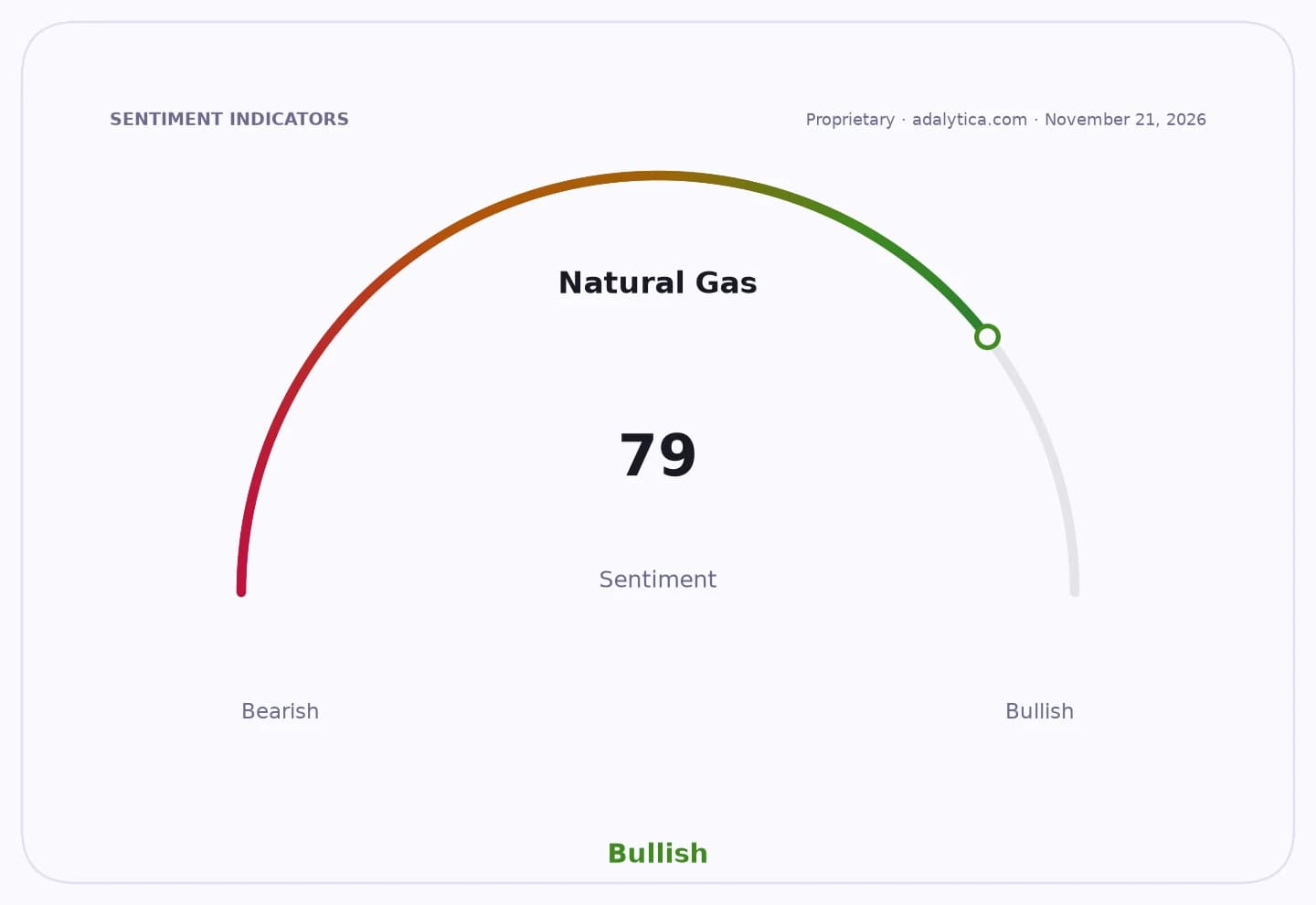
Sentiment Indicators
Official projections put the project’s potential at 2 trillion to 4 trillion cubic feet, with a central estimate of about 2.8 Tcf. If that range holds, the find could materially alter Bolivia’s reserve base and extend the life of an industry that has long underpinned export earnings, fiscal revenues and domestic fuel supply. For an economy that has seen years of underinvestment in exploration, a credible new gas discovery would not just be a geological win; it would be a macroeconomic one.
The timing is politically sensitive. Gálvez said Bolivia faces an ongoing energy crisis and blamed a lack of exploration under previous governments for increasing the risk of a supply shortfall. That makes the project more than an environmental or legal dispute: it is now being cast as part of the country’s effort to stabilize power and gas availability while protecting economic activity and government revenue.
The Agroenvironmental Tribunal added a key condition on Tuesday when it ruled the project lies outside the boundaries of the Tariquía national reserve, but ordered reinforced and continuous environmental monitoring. That decision removes one legal obstacle while keeping scrutiny in place, giving the government a path to push ahead without fully dismissing ecological concerns. The project already has an environmental license and prior consultation with communities in the area, according to the administration.
For investors, the significance is less about an immediate market move than about the broader signal for upstream risk in Latin America. If the project advances smoothly, it could support service spending, midstream demand and future export optionality in Bolivia. If it becomes mired in political resistance or environmental challenge, the country’s reserve replacement problem could worsen, reinforcing dependence on declining output and raising the odds of tighter domestic supply.
The story also lands in a global gas market that remains tight in key regions, with Europe facing low storage levels and producers under pressure to secure new supply. Against that backdrop, any credible addition to reserves is strategically valuable. For Bolivia, Domo Oso-X3 is now being presented as a test of whether the country can reverse years of depletion before energy insecurity becomes structural.
| Entity | Gains | Losses |
|---|---|---|
| Bolivia government | ▲Reserve recovery option | ▼Political pressure if project stalls |
| Domo Oso-X3 project | ▲Regulatory momentum | ▼Environmental opposition risk |
| Domestic energy users | ▲Higher supply security | ▼Delayed relief if exploration lags |
| Environmental groups | ▲Ongoing monitoring leverage | ▼Weaker case after tribunal ruling |