María Corina Machado’s support for a US proposal to declare Venezuela’s presidency vacant hardens the opposition’s challenge to Nicolás Maduro at a moment when political risk, border tensions and sanctions exposure are all rising again.
Venezuela Opposition Backed by Machado in US Plan
The move matters because it pushes the Venezuelan crisis beyond symbolism and back into the realm of power struggle, where the key question is not just whether Maduro remains isolated, but whether the opposition can consolidate enough international backing to make a transition scenario credible. For investors, that is important because Venezuela sits at the intersection of geopolitics, sanctions and oil-market risk: any shift in the legitimacy contest around the presidency can affect the outlook for crude exports, regional stability and the terms under which foreign capital might eventually return.
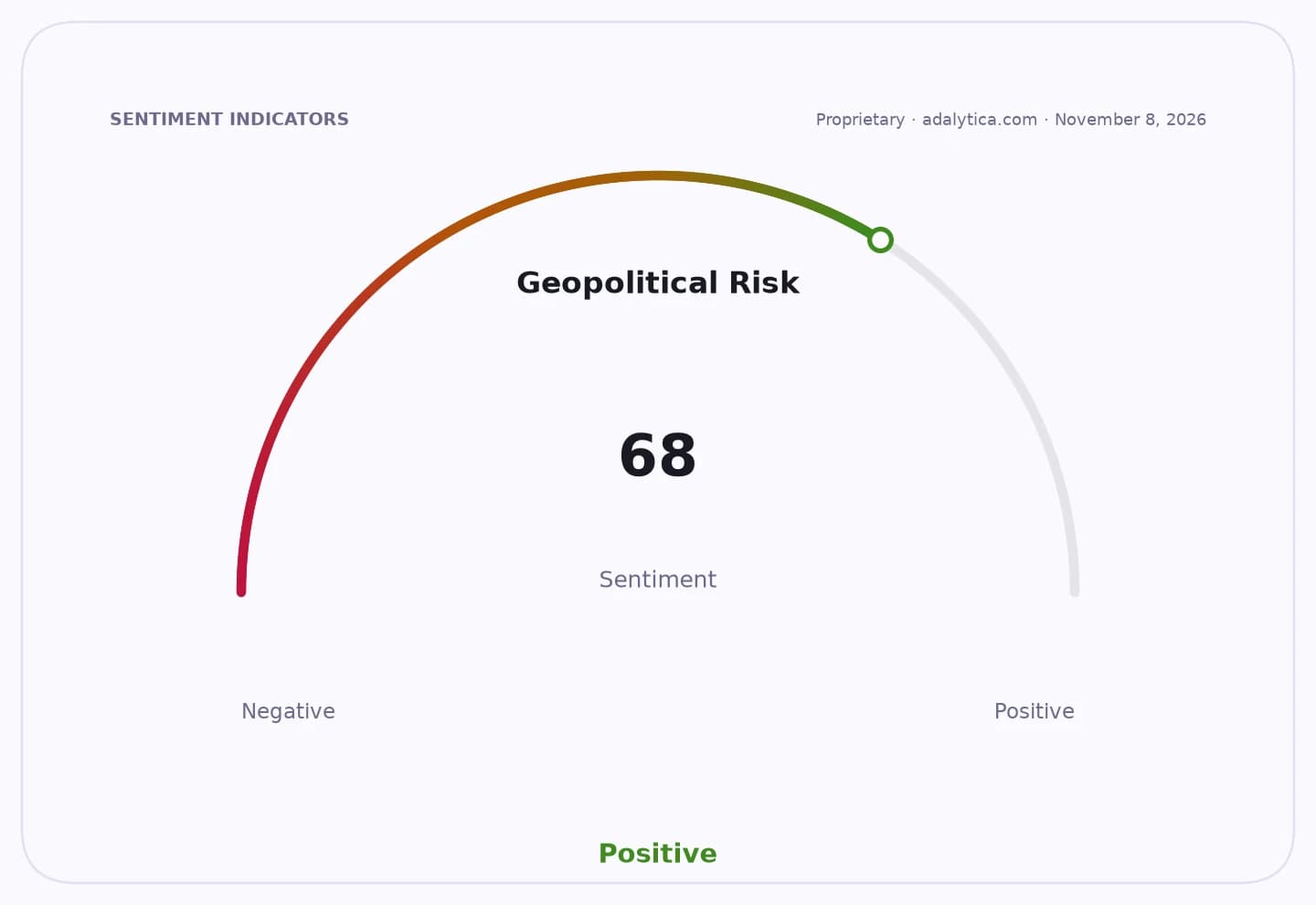
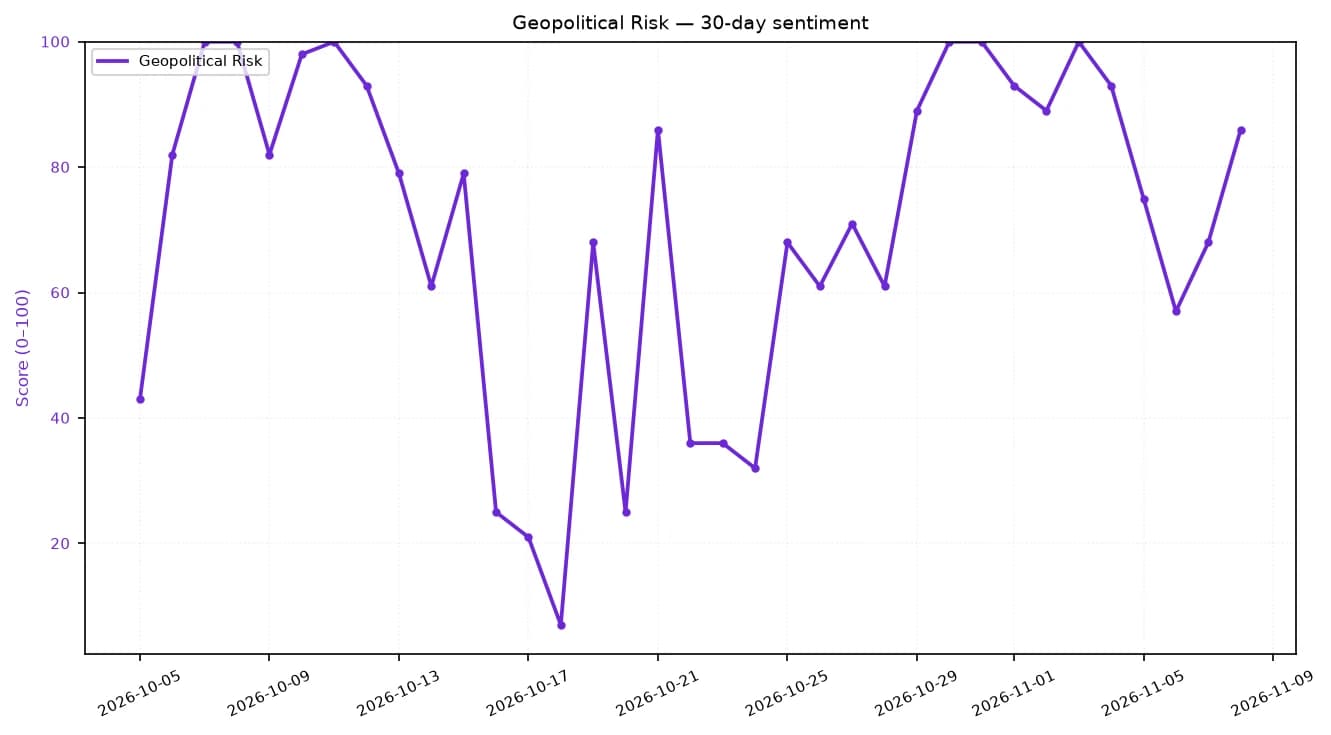
Sentiment Indicators
Machado’s stance gives Washington’s position a prominent Venezuelan face and helps keep the opposition aligned with the US narrative that Maduro’s rule lacks legal standing. It also raises the stakes ahead of the next electoral cycle, with Machado framing the issue around the need for a new government and a return to institutional normality rather than a negotiated accommodation with the current administration.
That matters economically because Venezuela remains one of the largest latent upside stories in global energy, even after years of collapse. The country’s oil industry has been constrained by sanctions, underinvestment and political fragmentation, and any change in the governing structure would not immediately restore production. But it could alter the policy framework enough to change expectations for crude output, debt restructuring and the repatriation of capital. Traders and long-only investors alike tend to price Venezuela less on current fundamentals than on the probability of eventual normalization.
The market backdrop underscores how closely political risk and energy flows remain linked. USO has been volatile and recently traded at 142.66, below its 50-day moving average of 152.48, with RSI readings at 33.9 and a negative MACD crossover, indicating the ETF has lost some near-term momentum even after earlier spikes. EEM, which captures broader emerging-market sentiment, has also slipped to 61.03 from higher levels earlier in the year, suggesting investors are not broadly chasing risk in the developing world even as headline geopolitical tension stays elevated.
Those moves do not tell the Venezuela story on their own, but they show how fragile risk appetite remains. The Adalytica Global Stability Sentiment gauge sits at 86, labeled “Extreme Greed,” while awareness is only 4, “Extreme Fear,” a combination that points to complacent positioning in the face of low visibility. The US dollar signal is also firm, with sentiment at 85, which tends to reinforce pressure on risk assets and keeps sanctions-sensitive frontier markets under a tighter financing environment.
For investors, the immediate implication is not a quick repricing of Venezuelan assets, which remain difficult to access and heavily politicized. The more relevant point is that Machado’s endorsement of a vacant-presidency move keeps alive a pathway to regime-change expectations, which can affect oil-related sanctions bets, Latin American sovereign spreads and the wider security premium attached to the Caribbean and northern South America. It also reinforces the divide between those betting on eventual normalization and those assuming a prolonged standoff.
The bull case is that a more unified opposition, with stronger US and regional backing, could sharpen the pressure on Maduro and improve the odds of a post-crisis reset. The bear case is that the declaration gambit deepens confrontation without changing facts on the ground, extending the stalemate and preserving the sanctions regime that has kept Venezuela’s economy and oil sector trapped in low-investment limbo.
What investors should watch next is whether Washington turns rhetoric into a more explicit policy push, how regional governments respond, and whether Machado can translate symbolic support into a durable coalition ahead of the 2027 election horizon. Until then, Venezuela remains less a trade than a political option value — one that can move energy, emerging-market and geopolitical risk pricing whenever the balance of legitimacy shifts.
| Entity | Gains | Losses |
|---|---|---|
| María Corina Machado / opposition | ▲International legitimacy | ▼Short-term compromise |
| US policymakers | ▲Pressure on Maduro | ▼Diplomatic flexibility |
| Maduro government | ▲— | ▼Legitimacy, negotiating leverage |
| Oil investors / bulls | ▲Transition upside optionality | ▼Policy uncertainty now |