Brazil’s federal police say Jair Bolsonaro drafted a plan to flee to Argentina and seek political asylum, a finding that intensifies the legal pressure on the former president just as the Supreme Court prepares to rule on whether he led a coup plot to overturn Brazil’s 2022 election.
Bolsonaro asylum plan raises Brazil legal risk
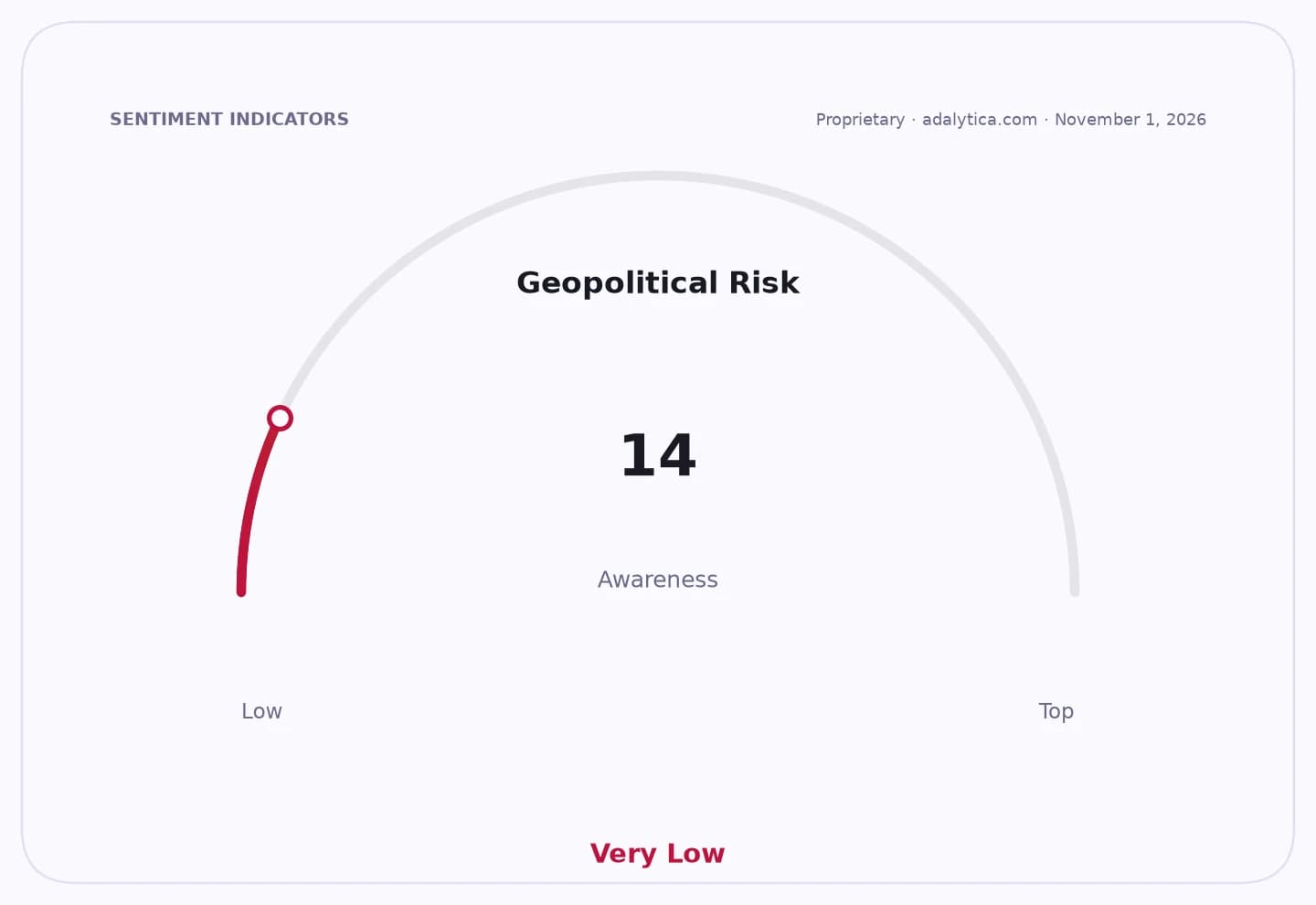
Geopolitical Risk
The allegation matters because it shifts the case from political defiance to possible flight risk. If prosecutors convince judges that Bolsonaro sought refuge abroad after searches of his home and office in 2024, it would strengthen the broader obstruction case and raise the odds of tighter restrictions on the former president as the court weighs a verdict expected between Sept. 2 and Sept. 12.
Sentiment Indicators
According to the federal police report, Bolsonaro prepared a 33-page letter to Argentine President Javier Milei claiming he was a victim of political persecution and asking for urgent protection. Investigators also say he admitted spending two nights at the Hungarian embassy in Brasilia, a detail that has already fueled suspicions he was looking for ways to avoid arrest while the probe advanced.
The new findings are part of a wider obstruction-of-justice accusation that also involves Bolsonaro’s son, lawmaker Eduardo Bolsonaro. Police say messages between the two show efforts to discredit Brazil’s Supreme Court and Congress while trying to keep Donald Trump onside, a reminder that the case has become as much geopolitical as judicial. For Bolsonaro’s allies, foreign backing remains a crucial variable; for prosecutors, it underscores an attempted strategy to internationalize a domestic legal fight.
Geopolitical Risk vs EWZadalytica.com
Explore this data interactively — full history, time series and cross-market comparisons.
The underlying criminal case is far bigger than the asylum issue. Bolsonaro and several allies are accused of heading a criminal organization that plotted to nullify the election and target key state figures, including President Luiz Inacio Lula da Silva and Justice Alexandre de Moraes. A conviction would be a historic blow to Brazil’s hard-right movement and could reshape the field ahead of the next presidential cycle.
Markets are watching because political risk in Brazil rarely stays confined to the courtroom. The iShares MSCI Brazil ETF, EWZ, has slumped to $31.98 from above $42 in late October, with the 50-day moving average now far above the share price and the RSI at 17.3, a level that reflects heavily oversold conditions. Argentina-focused ADR exposure has also weakened, with ARGT falling to $73.67 from more than $96 in July, suggesting investors have been trimming risk across the region as headlines turn more adversarial.
A softer global risk backdrop would normally help Latin American assets, but Brazil’s domestic uncertainty is now acting as its own drag. Adalytica’s Global Stability Sentiment has fallen to 57 from 93 in early November, pointing to a sharp deterioration in geopolitical confidence. That does not by itself change fundamentals, but it reinforces the market’s sensitivity to rule-of-law headlines in a region where institutional credibility is central to capital flows.
For investors, the immediate watchpoint is whether the court treats the asylum evidence as corroboration of obstruction or as a separate political sideshow. A tougher judicial response could keep pressure on Bolsonaro’s movement and on Brazil’s right-wing coalition, while any sign of leniency would embolden allies who argue the case is politically motivated. Either way, the verdict window in early September is likely to be a major catalyst for Brazilian equities, the real and broader regional sentiment.
| Entity | Gains | Losses |
|---|---|---|
| Bolsonaro prosecutors | ▲Stronger obstruction case | ▼None |
| Lula government / Brazilian institutions | ▲Rule-of-law legitimacy | ▼Political uncertainty |
| Bolsonaro and allies | ▲None | ▼Legal exposure and flight-risk optics |
| EWZ / Brazil bulls | ▲Potential oversold bounce if uncertainty eases | ▼Near-term political risk premium |