Booking Holdings is still the cleaner long-term bet for investors trying to choose between two global e-commerce giants, because its asset-light travel model is throwing off far more cash while Alibaba keeps spending heavily to defend a slower-growing China business and fund AI ambitions.
Booking Holdings vs Alibaba for 2027

That distinction matters economically because the best stock for 2027 is not necessarily the one with the biggest addressable market — it is the one that can convert scale into durable profits without burning through capital. In that contest, Booking’s travel platform is winning on the numbers that matter most to investors: free cash flow, margins and balance-sheet flexibility.
Sentiment Indicators

Booking generated about $28.1 billion in revenue over the last 12 months, up 8%, and roughly $7.2 billion in net income. It also produced about $9.1 billion in free cash flow in 2025, backed by an investment-grade cash pile of $16 billion and a $20 billion buyback program. The company is steadily shifting toward a merchant model, which should support fatter margins over time, while two-thirds of Booking.com traffic now comes organically rather than from paid search. That reduces dependence on Google and makes the business more resilient if digital advertising costs rise.
Alibaba is not without appeal. The Chinese e-commerce and cloud leader still operates at enormous scale, with revenue of about $160.3 billion in the 12 months ended Sept. 30, 2026, and net income of roughly $17.6 billion. Its 88VIP membership base has grown to about 64 million, and its cloud and AI business is expanding fast, with one unit growing 45% year over year. But that growth is being financed against a tougher backdrop. Alibaba’s core retail operations are losing share in China, free cash flow was nearly negative $7.6 billion in fiscal 2026, and the company faces regulatory uncertainty and geopolitical risk that Booking simply does not.
Alibaba Group
That is why the market has treated the two stocks differently. Alibaba’s valuation looks cheaper, but cheap is not always the same as attractive when earnings visibility is clouded by competition, policy risk and heavy capital spending. Booking trades below the average S&P 500 multiple and below travel rival Airbnb, yet it combines steady growth, wide margins and strong cash generation. For investors building wealth over the next three to five years, that combination usually beats a lower multiple tied to harder-to-predict outcomes.
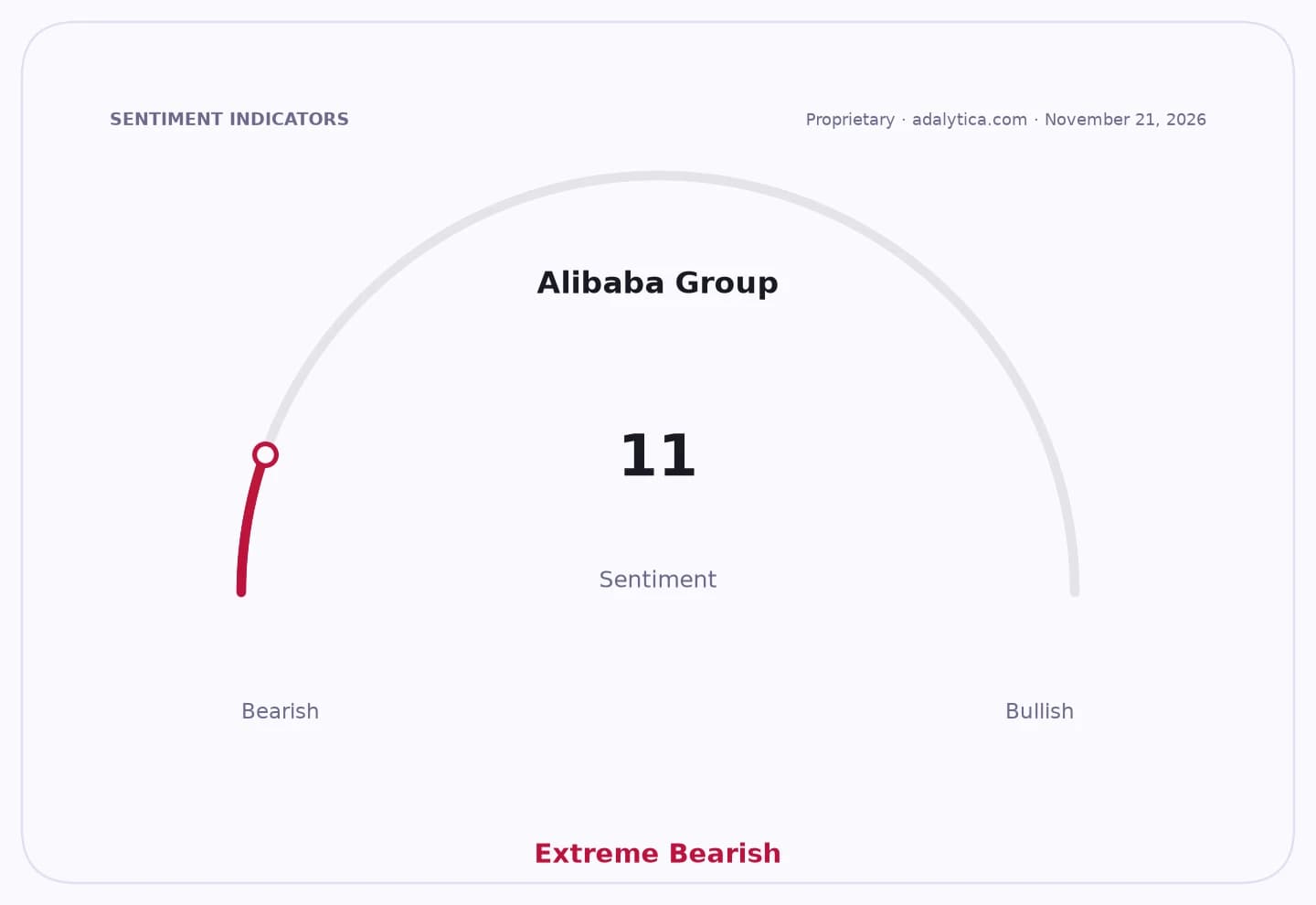
The technical picture also reflects that gap in confidence. Alibaba’s shares have fallen well below both their 50-day and 200-day moving averages, with conventional RSI readings deep in oversold territory, while Booking has also pulled back but remains supported by a much stronger fundamental story. Adalytica’s sentiment snapshot shows extreme fear around Alibaba, underscoring how much skepticism is already priced in.
Neither stock is a short-term trade for investors who think in years, not weeks. Alibaba could still reward patient buyers if its AI cloud business scales faster than expected and China consumer sentiment improves. But if the question is which e-commerce leader looks better positioned for 2027, Booking’s cash flow, balance sheet and margin expansion give it the sturdier compounding path. For long-term investors, it belongs on the watchlist — and probably near the top of it.
| Entity | Gains | Losses |
|---|---|---|
| Booking Holdings | ▲Higher margins and free cash flow | ▼Less upside if travel demand weakens |
| Alibaba | ▲Cheaper valuation and AI growth optionality | ▼Regulatory and China retail risk |
| Long-term investors in Booking | ▲Clearer earnings visibility | ▼Missed upside if Alibaba re-rates |
| Alibaba shareholders | ▲Deep-value rebound potential | ▼Heavy capex and market-share pressure |