Brazil’s 2027 minimum wage is projected to rise to R$1,741, a 7.4% increase that will lift pension, welfare and payroll-linked spending across the federal budget and tighten the fiscal room for President Luiz Inácio Lula da Silva’s government.
Brazil 2027 Minimum Wage Seen at R$1,741
The number is still provisional, but it already anchors the debate over next year’s budget because the floor feeds directly into the country’s largest social outlays. The proposal sent to Congress on Aug. 31 implies a R$120 increase from the current R$1,621, with the final figure to be set only after inflation data for November is released in December. Even a modest change in the inflation index can move the final minimum wage by several reais and add billions of reais to public spending.
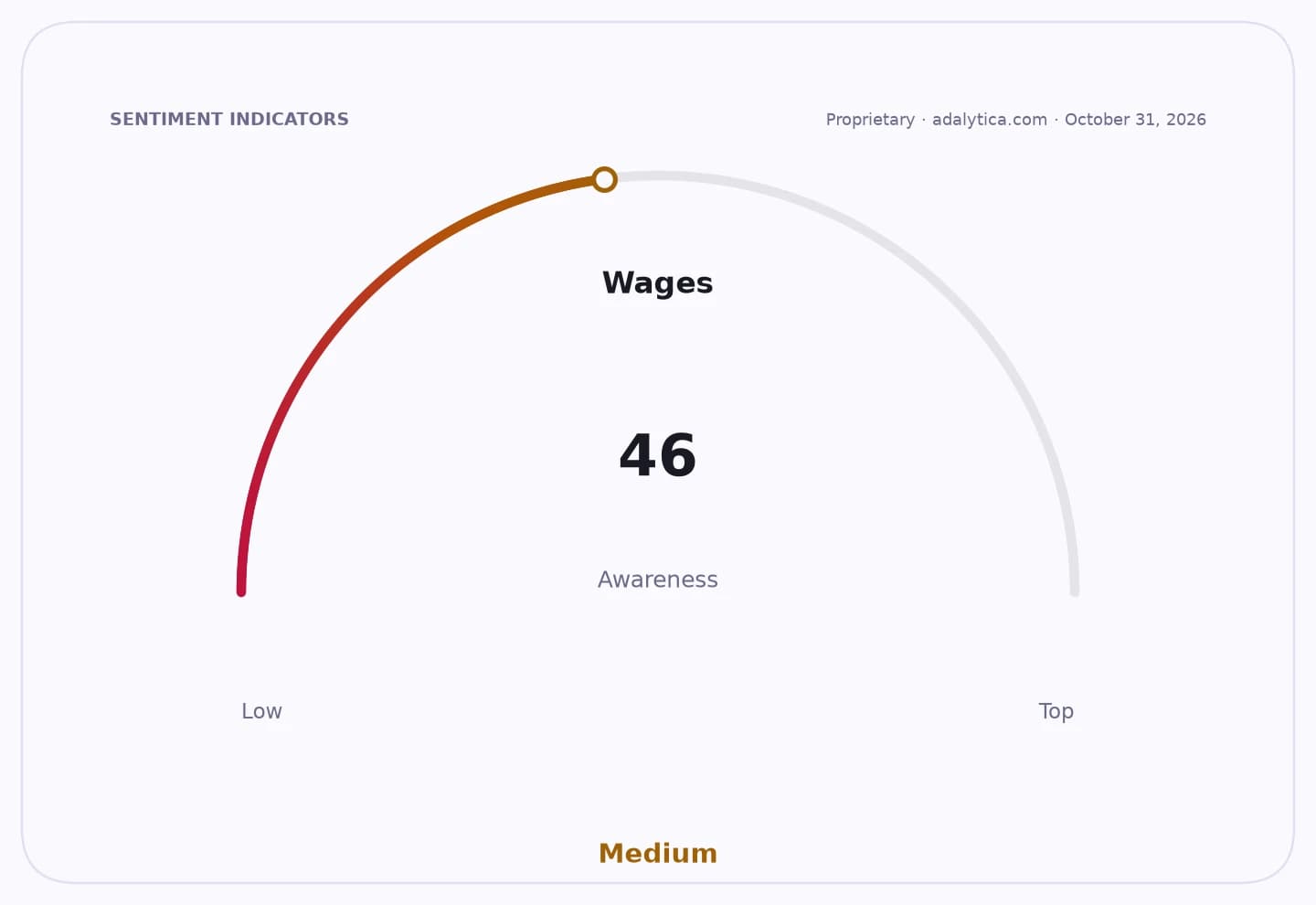
Sentiment Indicators
The wage rule combines full inflation correction, measured by the INPC, with a real gain tied to GDP growth from two years earlier. For 2027, that means a 2.3% real increase based on 2025 growth, capped under Brazil’s fiscal framework. Using the government’s 4.93% INPC estimate, the minimum wage rounds to R$1,741. If inflation comes in closer to the 4.29% rate seen in September, the floor would be nearer R$1,730, underscoring how late-year price data will decide the final fiscal bill.
For investors, the significance lies less in the headline wage itself than in the spending it automatically drags higher. Every R$1 increase in the minimum wage adds about R$413.2 million to federal primary spending in 2027, according to the Treasury. Most of that lands in the pension system, but the BPC disability and elderly benefit, unemployment insurance and the salary bonus also rise with the floor. A minimum wage of R$1,741 would also push MEI contributions from R$81.05 to R$87.05 a month and lift the minimum payout for INSS retirees and BPC beneficiaries to the same level.
That makes the wage forecast a macro issue as much as a social one. The Treasury said each 0.1 percentage point increase in the INPC raises spending by R$1.35 billion, because inflation also indexes benefits above the floor. In a budget that already sets aside R$1.169 trillion for pensions and R$145.1 billion for the BPC, the wage and inflation assumptions will help determine whether the government can preserve its fiscal targets without further spending pressure.
The politics are straightforward: a higher minimum wage supports household income, consumption and formal payroll receipts, but it also compresses fiscal flexibility at a time when Brazil is trying to balance social policy with budget discipline. That trade-off matters for bond investors and local asset managers because the wage floor is embedded in the country’s biggest mandatory expenditures. It also matters for companies tied to low-income consumption, since a higher minimum wage tends to support retail sales, services and consumer staples.
For now, the market focus is on the next two inflation prints and the final budget vote in December. If the INPC accelerates, the wage floor will rise further and the fiscal cost will climb. If inflation stays closer to current levels, the government gets only limited relief. Either way, the 2027 minimum wage is set to remain one of the key variables in Brazil’s budget arithmetic.
| Entity | Gains | Losses |
|---|---|---|
| Low-income workers and retirees | ▲Higher cash income | ▼— |
| INSS, BPC and other mandatory spending recipients | ▲Higher indexed benefits | ▼— |
| Federal government budget | ▲— | ▼Larger primary spending burden |
| Local consumer-facing companies | ▲Stronger household demand | ▼Fiscal tightening risk |