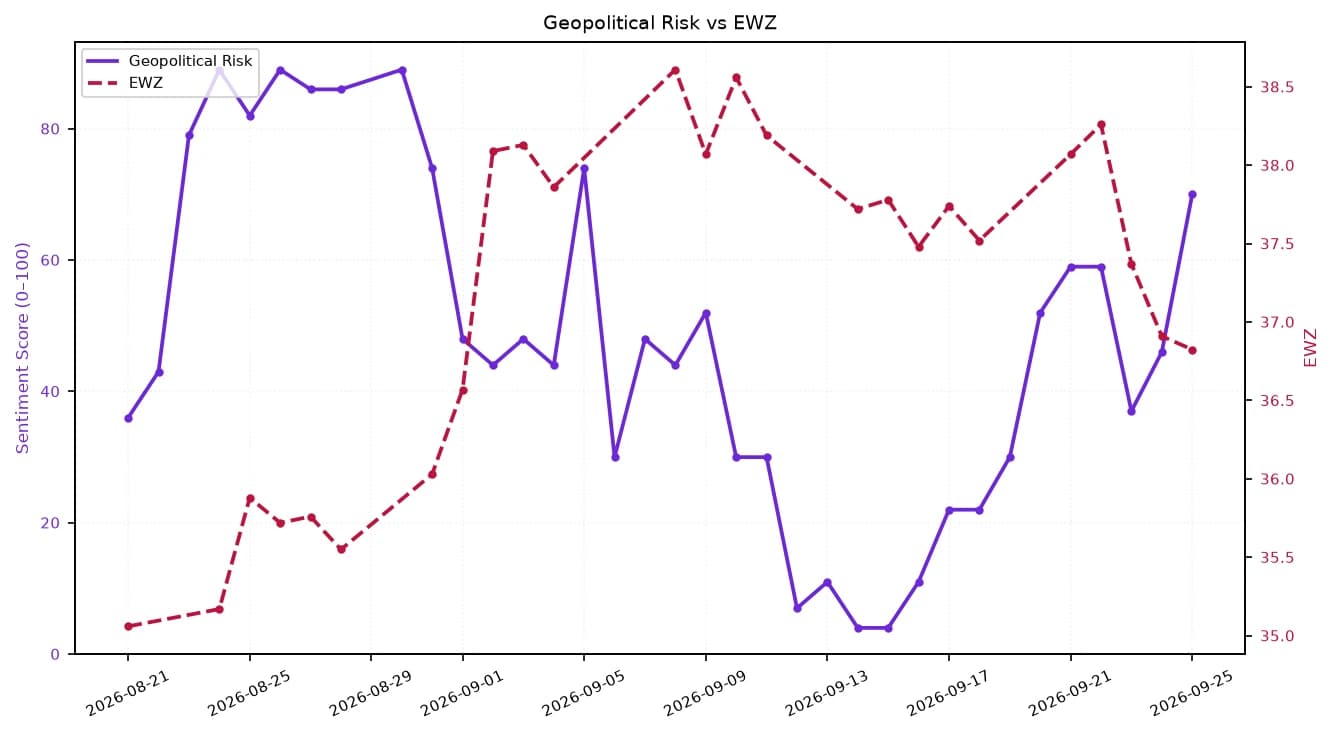
Brazil is taking a bigger hand in its critical minerals industry, and that matters because the country is trying to stop raw ore from leaving the country while the high-value processing, magnets and manufacturing are captured elsewhere.
Brazil critical minerals law boosts processing control

President Luiz Inácio Lula da Silva on Wednesday signed a law that gives the government power to review foreign acquisitions, international contracts and changes in control involving strategic minerals, a clear signal that Brazil wants sovereignty over assets that are increasingly important to defense, electronics and the energy transition. The new framework also creates a council under the presidency with authority to block transactions unless it approves them.
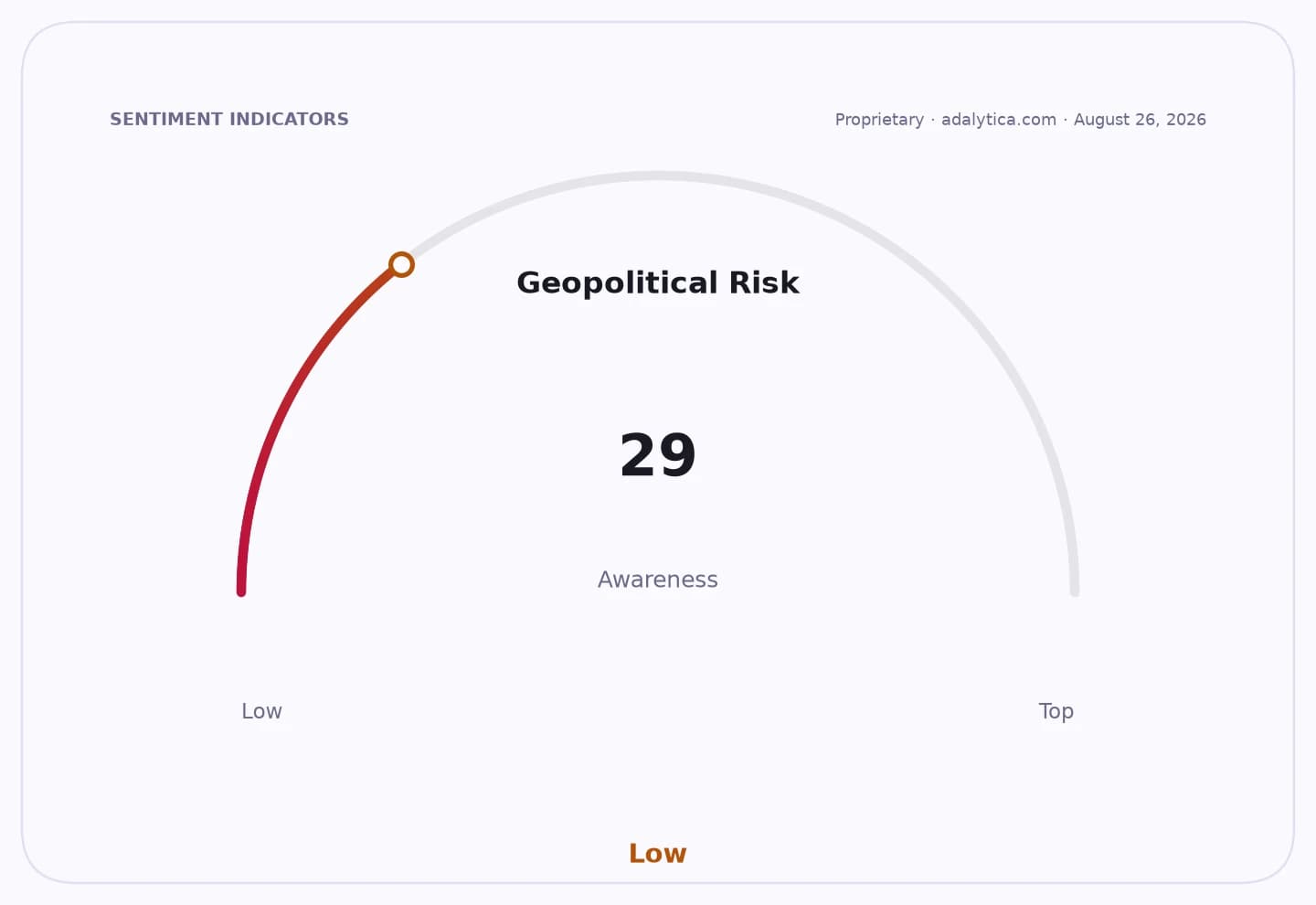
Sentiment IndicatorsⓘProprietary · adalytica.com · September 19, 2026
This is a snapshot — live sentiment, awareness and momentum for 130+ markets update continuously in the dashboard.Open AlphaPulse

That is economically significant for a country that sits on some of the world’s most coveted mineral reserves but has struggled to turn them into domestic industry. Brazil holds 21 million metric tons of rare earth reserves, the world’s second-largest total, according to a study cited by the government. Yet, as senior fellow Rafaela Guedes noted, Brazil has “virtually no capacity” to separate or refine rare earths or make magnets — exactly where the profits and strategic leverage tend to be concentrated.
The law is designed to change that. It includes up to 5 billion reais, or about $1 billion, in tax credits from 2030 through 2034 for processing, manufacturing and recycling projects, plus a guaranteed fund with up to 2 billion reais in federal contributions to lower financing risk. Priority projects can also tap tax-advantaged bonds and faster government review. For investors, that combination matters because mineral projects often fail not on geology, but on capital intensity, long paybacks and uncertain offtake.

Brazil is also trying to protect itself from the familiar trap of exporting unprocessed materials and importing back the finished product at a premium. The government can now require more value-added processing on exports, though it stopped short of banning shipments of raw ore. That balance suggests Brasília wants to attract capital, not scare it away — but on terms that keep more of the industrial upside at home.
The timing is just as important as the policy itself. Less than two weeks ago, USA Rare Earth completed its roughly $2.8 billion acquisition of Serra Verde, Brazil’s only commercial producer of rare earths. The mine’s initial output is already locked in for 15 years to a buyer backed by U.S. government agencies and private investors, with minimum prices attached. In other words, the global race for critical minerals is no longer theoretical; Brazil is watching its resources become strategic bargaining chips in real time.
Lula’s rhetoric underscored the political edge of the move. Invoking Brazil’s colonial gold history, he warned against repeating a pattern in which ore leaves the country and wealth is created elsewhere. That message will resonate with voters who want more domestic jobs and industrialization, but it also reflects a broader geopolitical push by resource-rich countries to reclaim control as the U.S. and China compete for supply chains.
For investors, the new law is a double-edged development. It should be supportive for long-term projects that can win domestic processing incentives, partner with local industry and secure financing. It may also introduce a slower, more political approval process for foreign buyers, joint ventures and M&A. Mining names with Brazilian exposure — including Vale and other developers eyeing rare earths, lithium, nickel or potash — will now have to treat regulatory alignment as a core part of the investment case.
The long-term takeaway is straightforward: Brazil is not shutting the door on critical minerals, but it is moving to make sure the door opens inward first. That should help create a more durable domestic value chain, even if it makes dealmaking more complicated in the near term. For patient investors, the opportunity is in the companies that can help Brazil process, finance and industrialize its mineral wealth over the next decade.
| Entity | Gains | Losses |
|---|---|---|
| Brazilian government | ▲More control over strategic assets | ▼Less policy flexibility |
| Domestic processors | ▲Tax credits and financing support | ▼Longer project timelines |
| Foreign buyers | ▲Access to reserves with rules | ▼Easier control of assets |
| Mining exporters | ▲Continued export access | ▼Lower value capture abroad |