Brazil’s government has given banks, lenders and credit funds five business days to report old debts that could be sold into Desenrola 3.0, a new debt-relief round that could move as much as R$90 billion of delinquent credit off private balance sheets and onto the state’s books. The program matters because it could reshape near-term consumer credit recoveries, ease pressure on heavily indebted households and change the quality of loan portfolios across major Brazilian lenders.
Brazil Desenrola 3.0 debt-buy plan targets R$90B
The first phase is a call for creditors, not consumers. Authorities want to gauge how much eligible debt is available before setting the auction, now slated for November and possibly pushed into early December, and to determine whether banks will accept the minimum 90% haircut required for the government to buy the paper.
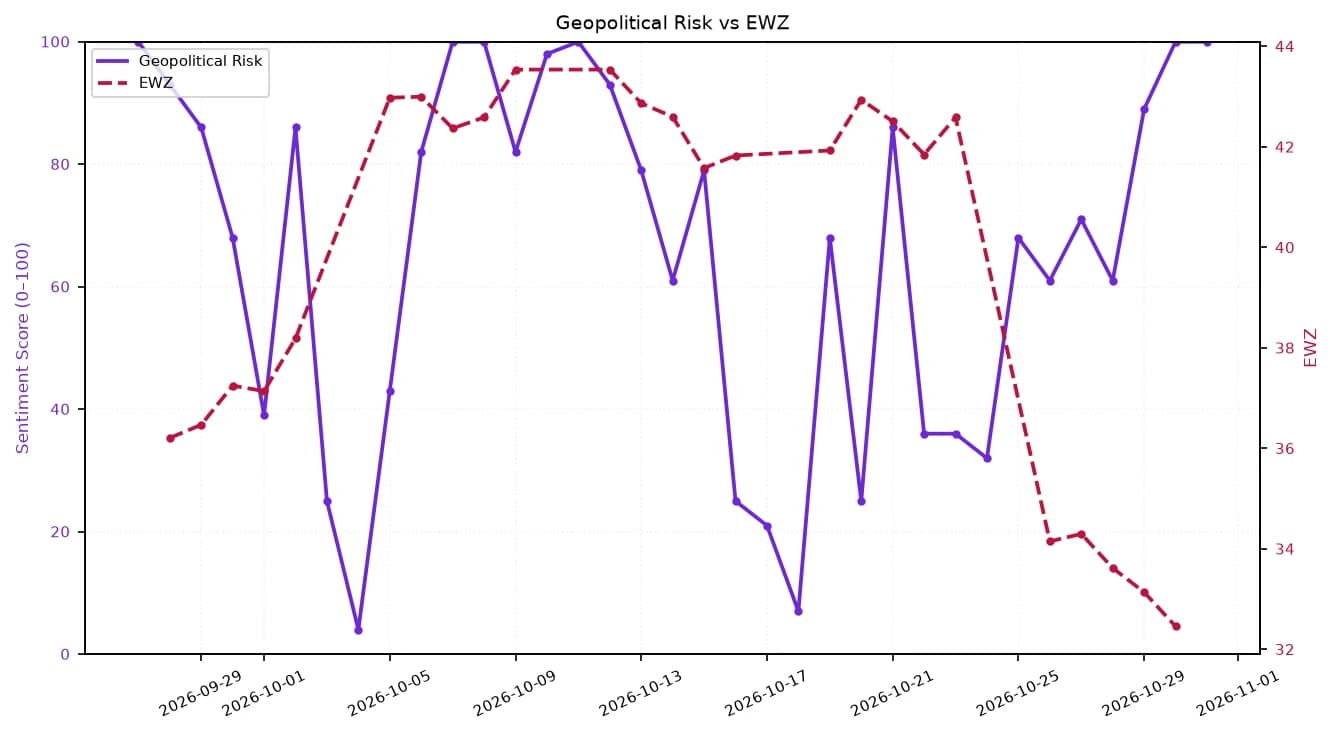
Sentiment Indicators
If the full R$90 billion is offered, the Treasury’s outlay would be capped at roughly R$9 billion, based on the mandated discount. Officials have said the bidding could ultimately settle at 93% to 95% discounts depending on the portfolios submitted, suggesting the state is trying to buy distressed consumer receivables at deep markdowns rather than subsidize lenders at par.
The eligible pool is limited to debts of up to R$10,000 that are between 720 and 1,645 days past due, including revolving and installment credit card balances and unsecured personal loans. The government also wants to prioritize lower-income borrowers and microentrepreneurs, although it may widen the purchase if the target segment is too small.
For banks, the program creates a potential clean-up mechanism for older nonperforming loans, but only at a steep price. For investors, the key questions are how much of the eligible stock each lender is willing to sell, how aggressively the government bids, and whether the transaction improves future recovery rates or simply crystallizes losses already embedded in earnings.
Brazilian bank shares were already under pressure in recent sessions, with Banco Santander Brasil, Itaú Unibanco and Banco Bradesco all showing sharp declines and heavy trading, underscoring how sensitive the sector is to credit-quality headlines. Any confirmed transfer of distressed debt to the federal government could alter provisioning needs, capital allocation and the outlook for consumer lending growth.
The next catalyst is the creditor response over the coming five days, followed by the auction structure and final discount terms from the National Monetary Council and regulators.
| Entity | Gains | Losses |
|---|---|---|
| Brazilian government | ▲Gains debt-purchase leverage | ▼Loses fiscal flexibility |
| Banks and credit funds | ▲Gains balance-sheet cleanup | ▼Loses on steep discounts |
| Overindebted borrowers | ▲Gains renegotiation access | ▼Loses bargaining power |
| Brazilian bank stocks | ▲Gains visibility on losses | ▼Loses on credit-quality pressure |