Russia’s consumer debt squeeze is creating a lucrative shadow industry that is stripping vulnerable borrowers of assets while banks and regulators struggle to stop it.
Russia debt intermediaries push borrowers into bankruptcy
That is the real economic story behind the Altai Territory warning about so-called “debtors of debtors” — aggressive legal intermediaries who promise to wipe out loans, sell expensive “consulting” services and often push people into bankruptcy when cheaper solutions such as restructuring or refinancing would have worked.
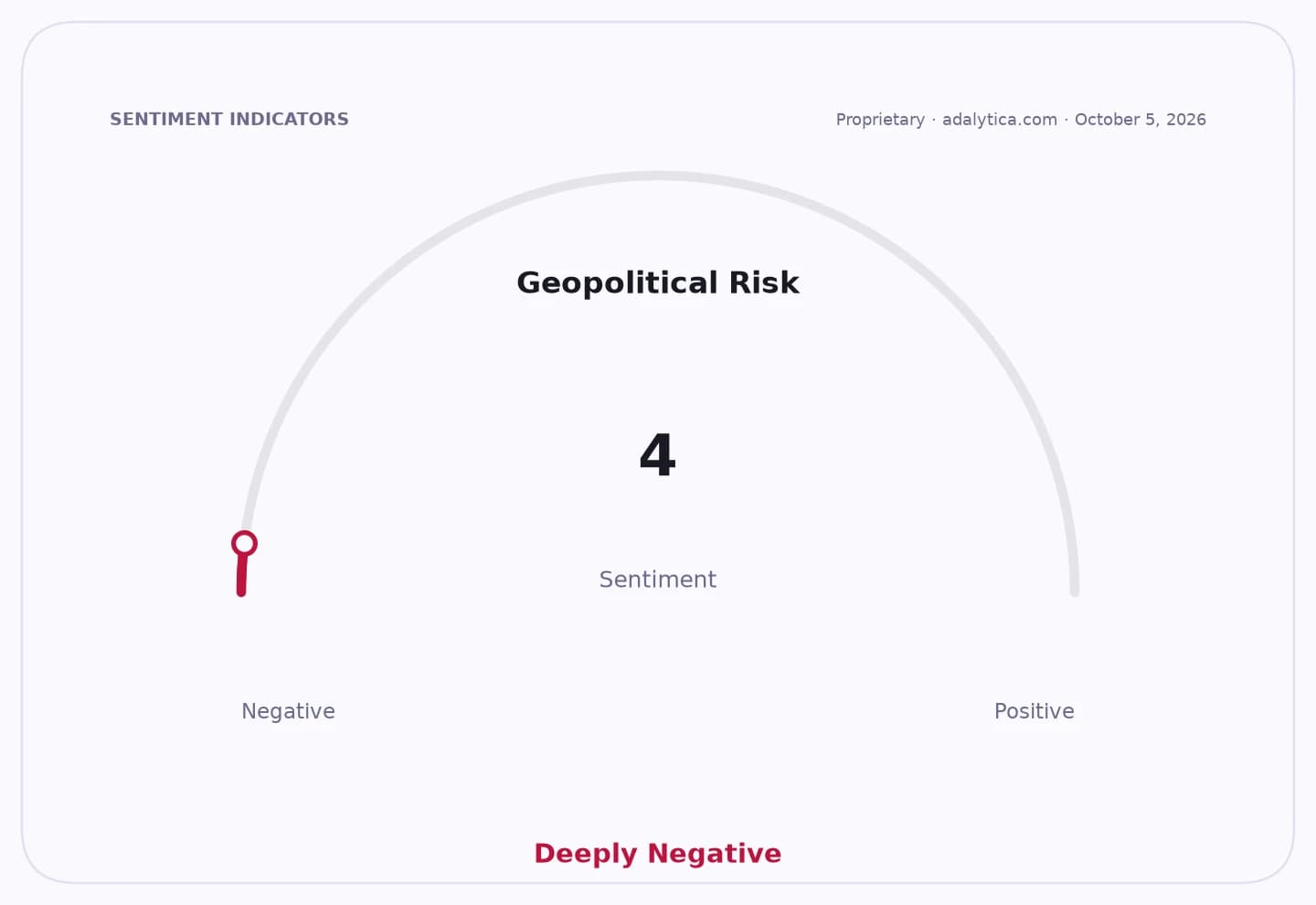
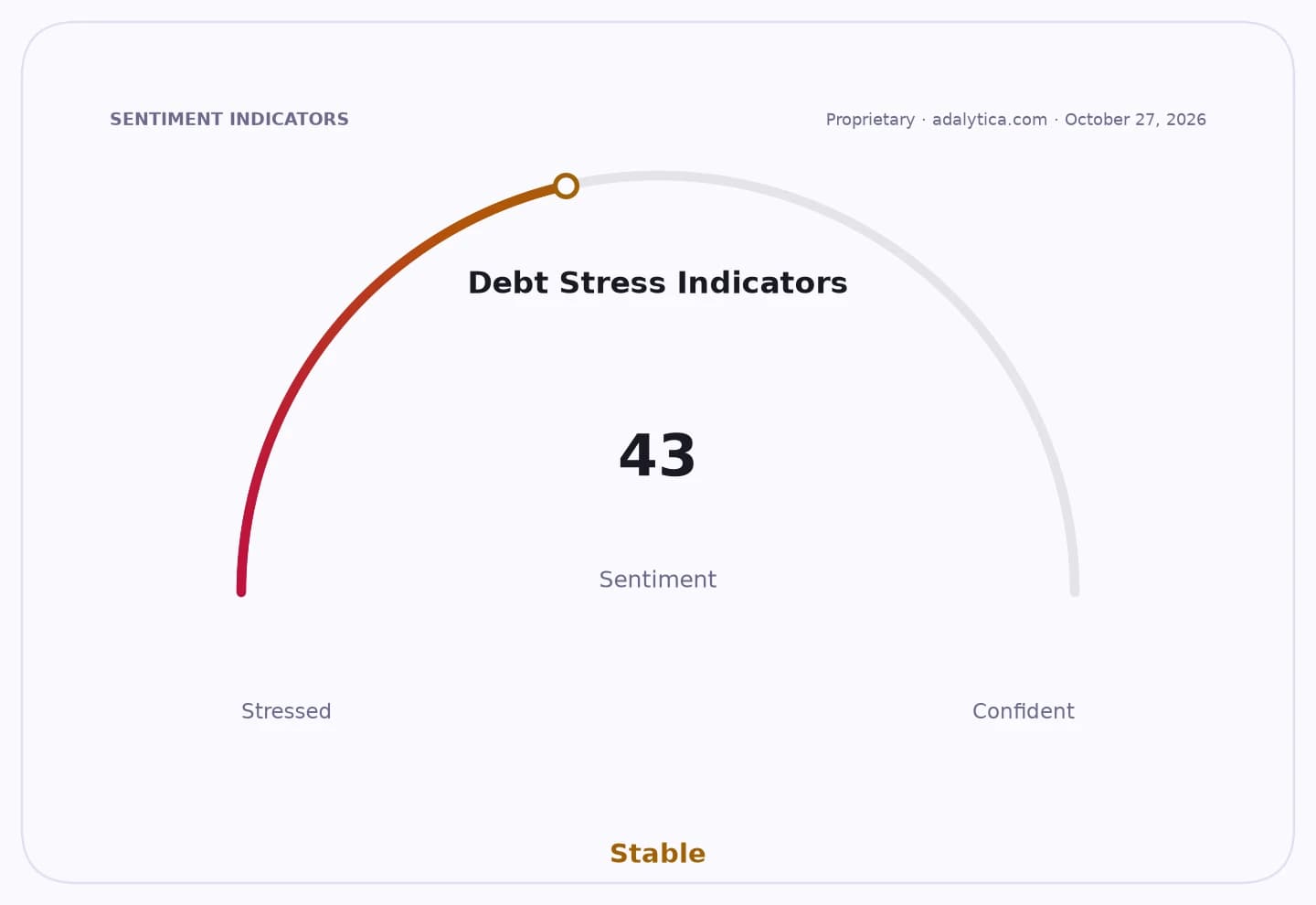
Sentiment Indicators
The scale is hard to ignore. Sberbank said 137,000 Russians were declared bankrupt in the first quarter of 2026, roughly one a minute, while as many as 90% of people who entered bankruptcy had first turned to third parties for help. In the Altai Territory, officials described cases where borrowers paid 100,000 rubles for advice and still lost homes, or took on additional loans to fund the “rescue,” only to see courts reject debt write-offs.
For lenders, the issue is bigger than consumer misery. It raises recovery risk, increases the chance of asset sales at distressed prices and complicates credit quality assessment in regions where household balance sheets are already fragile. For investors, the message is that Russia’s household debt market is increasingly bifurcated: borrowers who deal directly with banks can often access restructuring, while those routed through intermediaries can end up in a harsher and more destructive liquidation process.
The economics are straightforward. The “debt relief” business model extracts cash from people least able to pay, then monetizes the legal and procedural complexity of bankruptcy. Officials in Altai said some contracts are broken into multiple fee layers — including payments for “analysis,” “document collection” and “court representation” — while the actual service may amount to little more than filing paperwork or a police complaint.
That matters because it shifts losses from a manageable credit workout into a wealth-destroying event. In one case cited by officials, a woman in Biysk with 1.3 million rubles of debt paid 100,000 rubles to lawyers and still lost an apartment and a one-sixth stake in her daughter’s housing, which were sold for 1.2 million rubles. In another, a borrower who already had four loans took out five more to pay “debt reducers,” then failed to have the new obligations erased.
The larger investment takeaway is that the real winners are the banks that can pull borrowers into formal restructuring before they fall into the shadow market. Sberbank and the Bank of Russia are pushing that message hard, pointing to more than 4,600 approved payment holidays in Altai over the past two and a half years, covering 1.3 billion rubles of debt including mortgages.
What the market may be missing is that this is not just a consumer-protection story. It is a credit transmission story. As household stress rises, banks that offer fast, credible workout channels can preserve recoveries and customer relationships, while lenders that ignore the intermediary problem risk higher charge-offs and reputational damage. The policy response — tighter ad controls, a registry of debt advisers and better free legal aid — could also squeeze the most predatory players and shift business back toward regulated lenders.
For investors, the actionable thesis is clear: in any weakening consumer-credit environment, own the institutions that control the workout process and avoid the firms most exposed to sloppy underwriting and distressed borrowers forced into costly bankruptcy. The Altai scandal is a reminder that in a debt cycle, the cheapest solution is often the one that never passes through the shadow middleman.
| Entity | Gains | Losses |
|---|---|---|
| Banks offering restructurings | ▲Keep borrowers in formal channels | ▼Less fee income from intermediaries |
| Borrowers working directly with lenders | ▲Lower costs, better outcomes | ▼Less access to “easy fix” promises |
| “Debt relief” intermediaries | ▲Short-term fees | ▼Regulatory scrutiny, shrinking trust |
| Distressed borrowers | ▲Potential access to cankanreestructure | ▼Asset sales, bankruptcy losses |