Brazil goes to the polls with the real question for investors not who wins, but how fast the next president can restore confidence without choking growth — and that choice could ripple straight into Argentina’s trade, currency competitiveness and industrial exports.
Brazil Election Nears as Argentina Trade at Risk
The market is weighing two very different paths. Luiz Inácio Lula da Silva is favored in the first round on polls showing him ahead of Flávio Bolsonaro, while a runoff would narrow the gap sharply, leaving the outcome open enough to keep Brazilian assets, and the region, on edge. That matters because Brazil is still Argentina’s most important commercial counterpart, and the next administration will help determine whether the region’s largest economy slows gently or cools abruptly.
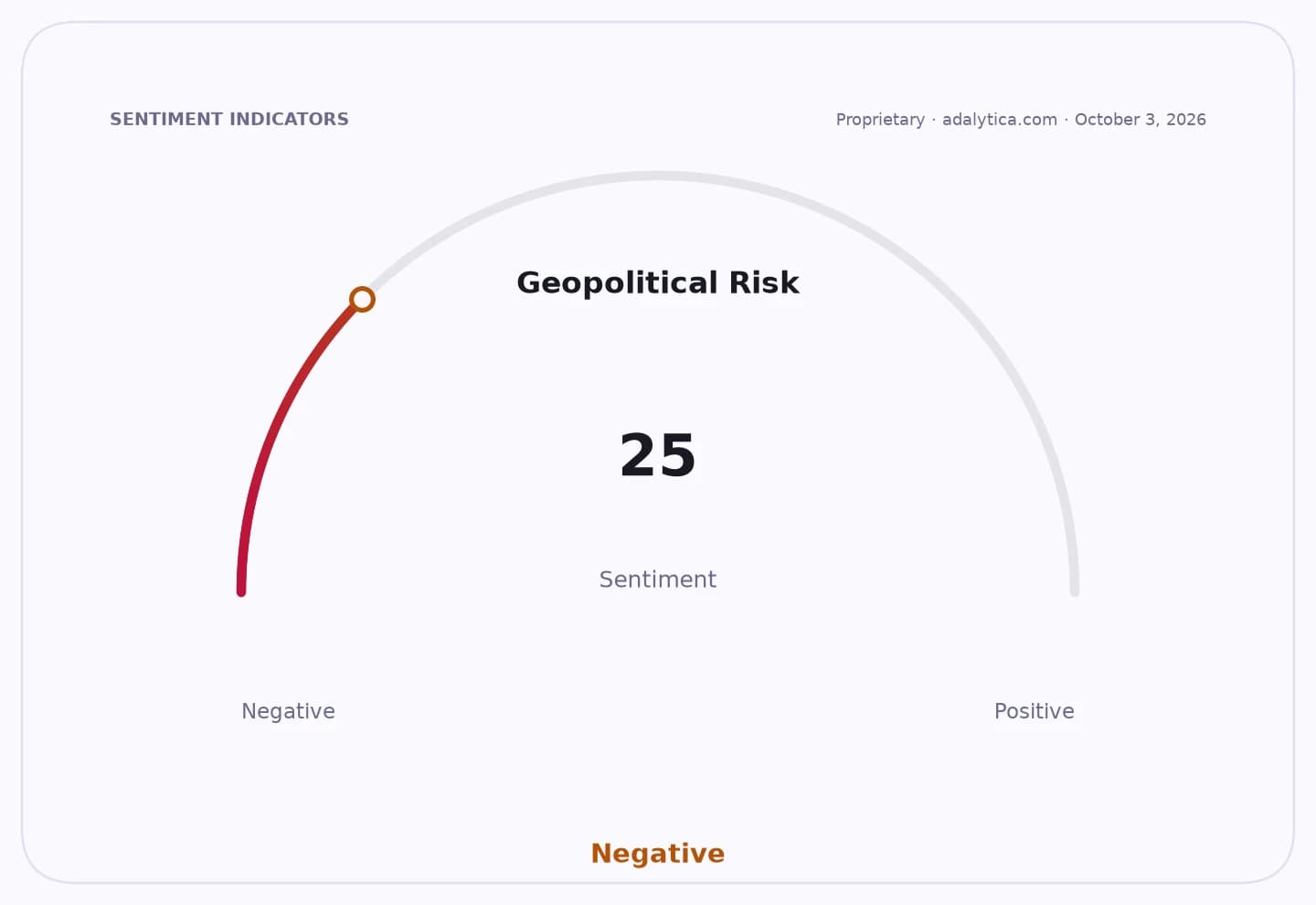
Sentiment IndicatorsⓘProprietary · adalytica.com · October 3, 2026
This is a snapshot — live sentiment, awareness and momentum for 130+ markets update continuously in the dashboard.Open AlphaPulse
For Argentina, the stakes are immediate. A softer Brazilian economy would weaken demand for Argentine cars, steel and wheat just as local producers need external markets to cushion a fragile domestic backdrop. A weaker real would also alter the bilateral price equation, making Brazilian goods more competitive and pressuring Argentine exporters in Brazil, especially in autos and pickups. The most important variable is the combination of growth and exchange rate — in other words, “real plus growth,” as one analyst framed it — because those two forces will decide whether Argentina sells more into Brazil or loses market share.
The macro setup in Brazil is already restrictive. The Selic stands at 13.75%, well above the latest inflation readings, with the IPCA at 4.22% year on year in August and the IPCA-15 at 4.47% in September. That gap supports carry trade flows into Brazilian assets, but it also keeps borrowing costs high and activity slowing. GDP still expanded 0.5% quarter on quarter and 2% year on year in the second quarter, yet the IBC-Br weakened in June and July, signaling that momentum is fading.
Geopolitical Risk vs EWZadalytica.com
Explore this data interactively — full history, time series and cross-market comparisons.Open AlphaPulse
Investors should care because the election is really a referendum on fiscal credibility. Lula is expected to favor a more gradual consolidation, preserving social spending and public investment, while Bolsonaro is pushing faster austerity, tighter spending and privatizations. Neither path is painless. Lula may support near-term demand but risks leaving markets unconvinced on debt dynamics. Bolsonaro could win credibility on fiscal restraint, but an aggressive adjustment would probably hit growth first and only later, if at all, improve confidence enough to lower rates and strengthen the currency.
That trade-off is precisely why Brazilian ETFs and Argentina-linked vehicles have become barometers of regional risk. EWZ, the iShares MSCI Brazil ETF, has been volatile but remains above both its 50-day and 200-day moving averages, while its RSI and MACD readings point to a market still searching for direction rather than pricing a clean breakout. ARGT, the Global X MSCI Argentina ETF, looks far more fragile, with its price well below its moving averages and RSI readings deep in oversold territory, a sign that investors are already discounting macro stress in Buenos Aires and are likely to react sharply to any deterioration in Brazil’s demand or currency backdrop. EPU, the Peru ETF often used as a Latin America proxy, has been steadier, underscoring how Brazil-specific the current political risk is.
The deeper story is not just about polling. It is about the next phase of South American capital flows. A credible Brazilian fiscal path could steady the real, support lower rates later and preserve demand for imported goods across the region. A muddled result, or a government that cannot turn campaign promises into legislation, would keep the currency under pressure and force markets to price a longer period of tight money and slower trade. That would be especially damaging for Argentina, where exports, industrial utilization and external financing all depend on Brazil avoiding a hard landing.
For investors, the opportunity is to look past the headline and focus on second-order winners and losers. Brazilian banks, exporters and infrastructure names could benefit if credibility improves and rates eventually fall. Argentina’s automakers, steelmakers and agricultural exporters gain from a stronger Brazil and lose from a weaker one. And any move toward looser Mercosur trade rules could create new upside for Brazilian consumers but more competition for Argentine manufacturers.
The actionable takeaway is simple: this election is a macro catalyst for the whole Southern Cone. If Brazil delivers a pro-growth, credible fiscal transition, the best trade is long Brazilian risk and selective Argentina exporters. If the vote produces policy drift and a weaker real, stay defensive on Argentina-linked assets and favor companies exposed to domestic demand rather than Brazilian trade.
| Entity | Gains | Losses |
|---|---|---|
| Brazilian exporters | ▲Stronger competitiveness | ▼Higher rates, weak credibility |
| Argentine exporters | ▲Stronger Brazil demand | ▼Weaker real, slower Brazil growth |
| EWZ holders | ▲Fiscal credibility, lower rates | ▼Policy drift, currency pressure |
| ARGT holders | ▲Better trade access, stronger Brazil | ▼Softer demand, tighter competition |