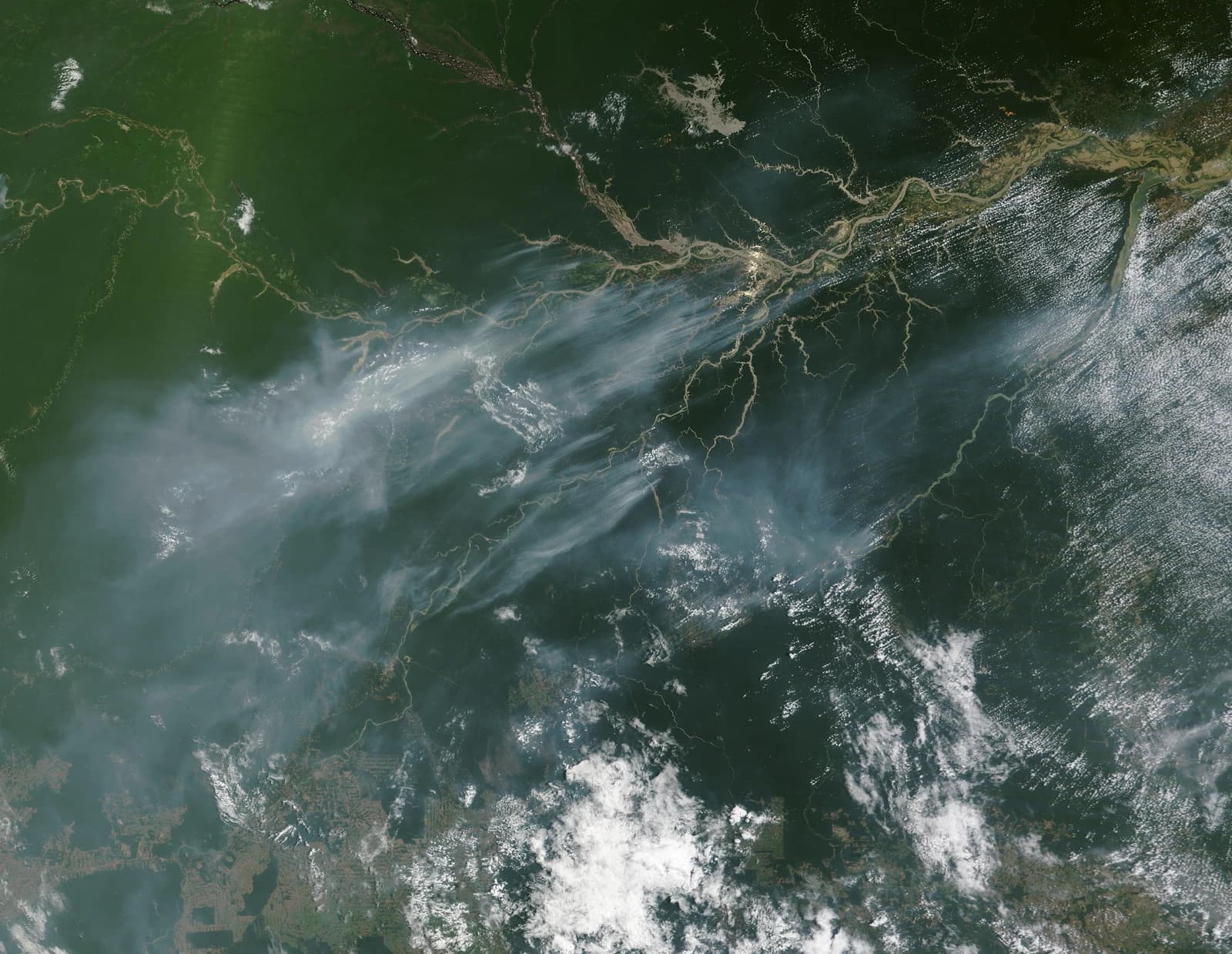
Brazil’s greenhouse-gas emissions fell 6% in 2025 to the lowest level in eight years, a drop driven mainly by weaker deforestation in the Amazon and Cerrado and one that moves Latin America’s largest economy closer to its Paris climate pledge.
Brazil emissions fell 6% to eight-year low in 2025

The country released 2.06 billion tons of carbon-dioxide equivalent last year, down from 2.19 billion tons in 2024, according to the 14th edition of the SEEG emissions estimate published by Observatório do Clima. Net emissions, which strip out carbon absorbed by vegetation and protected forests, declined 9% to 1.41 billion tons, the lowest since 2012.
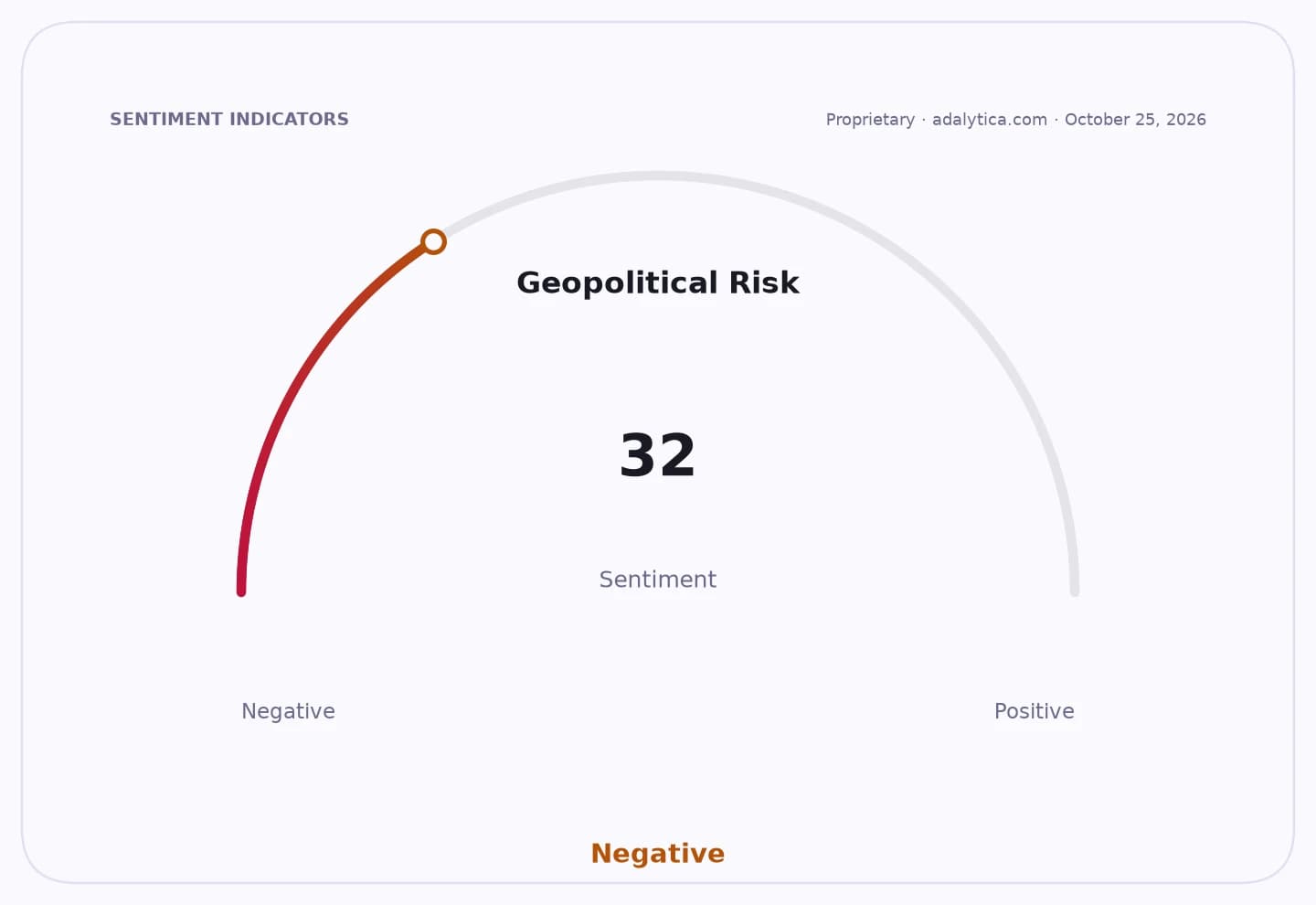
Sentiment IndicatorsⓘProprietary · adalytica.com · October 27, 2026
This is a snapshot — live sentiment, awareness and momentum for 130+ markets update continuously in the dashboard.Open AlphaPulse
The improvement matters economically because land-use emissions remain Brazil’s biggest climate liability and a direct constraint on its standing in global carbon markets, trade negotiations and green-finance flows. With the world under pressure to cut emissions sharply this decade, Brazil’s ability to show faster progress could help preserve access to climate-linked capital and reduce the risk of policy penalties from investors and trading partners focused on supply-chain deforestation.
The data also shows how dependent Brazil still is on land-use gains rather than structural cuts across the rest of the economy. Emissions from land-use change fell 15% to 814 million tons, helped by the second straight year of declines in all biomes, while transport-related fuel use pushed energy emissions up 1.2% to 427 million tons and agricultural emissions were essentially flat at 626.3 million tons.
Deforestation remains Brazil’s dominant source of pollution, accounting for 39% of total emissions in 2025, followed by agriculture at 30% and energy at 21%. The report said cattle still generate most agricultural emissions, while diesel and gasoline demand lifted transport emissions and forced the power sector to rely on thermal plants even as solar output surpassed fossil generation for the first time.
For investors, the report reinforces a split between companies and sectors that benefit from cleaner land-use trends and those exposed to Brazil’s persistent fossil-fuel and transport emissions. It also underscores the potential for stronger policy support around monitoring, enforcement, renewables and carbon credits, while highlighting the risk that progress could stall if the country fails to cut emissions outside deforestation.
Analysts and climate researchers said Brazil’s path to its 2030 and 2035 targets will depend on extending reductions beyond the forest sector into farming, freight, power generation and waste. Preliminary SEEG estimates suggest net emissions could fall to 1.23 billion tons this year, close to the 2030 target of 1.20 billion tons, with the next test being whether Brasília can lock in forest gains without relying so heavily on them.
| Entity | Gains | Losses |
|---|---|---|
| Brazil government | ▲Better Paris-pledge progress | ▼Pressure to cut other sectors |
| Forest conservation policies | ▲Emissions decline support | ▼Noisy compliance gap remains |
| Clean energy investors | ▲Stronger decarbonization case | ▼Slower cuts in transport/power |
| Deforestation-linked sectors | ▲— | ▼Tighter scrutiny and restrictions |