Brazil’s new cooperation agreement with EUROPOL raises the stakes in the fight against organized crime by giving the country deeper access to European policing networks just as drug trafficking, environmental crime and human smuggling remain a drag on security, commerce and investor confidence.
Brazil EUROPOL pact boosts crime-fighting cooperation

For markets, the significance is bigger than a headline on law enforcement. Organized crime is a tax on economic activity: it raises transport costs, distorts supply chains, weakens border integrity and increases the operational risk premium on everything from agriculture to logistics and insurance. A tighter intelligence pipeline between Brazil’s Federal Police and EUROPOL should improve cross-border investigations, particularly in areas where criminal groups exploit trade routes, ports and financial channels to move narcotics, timber and people.
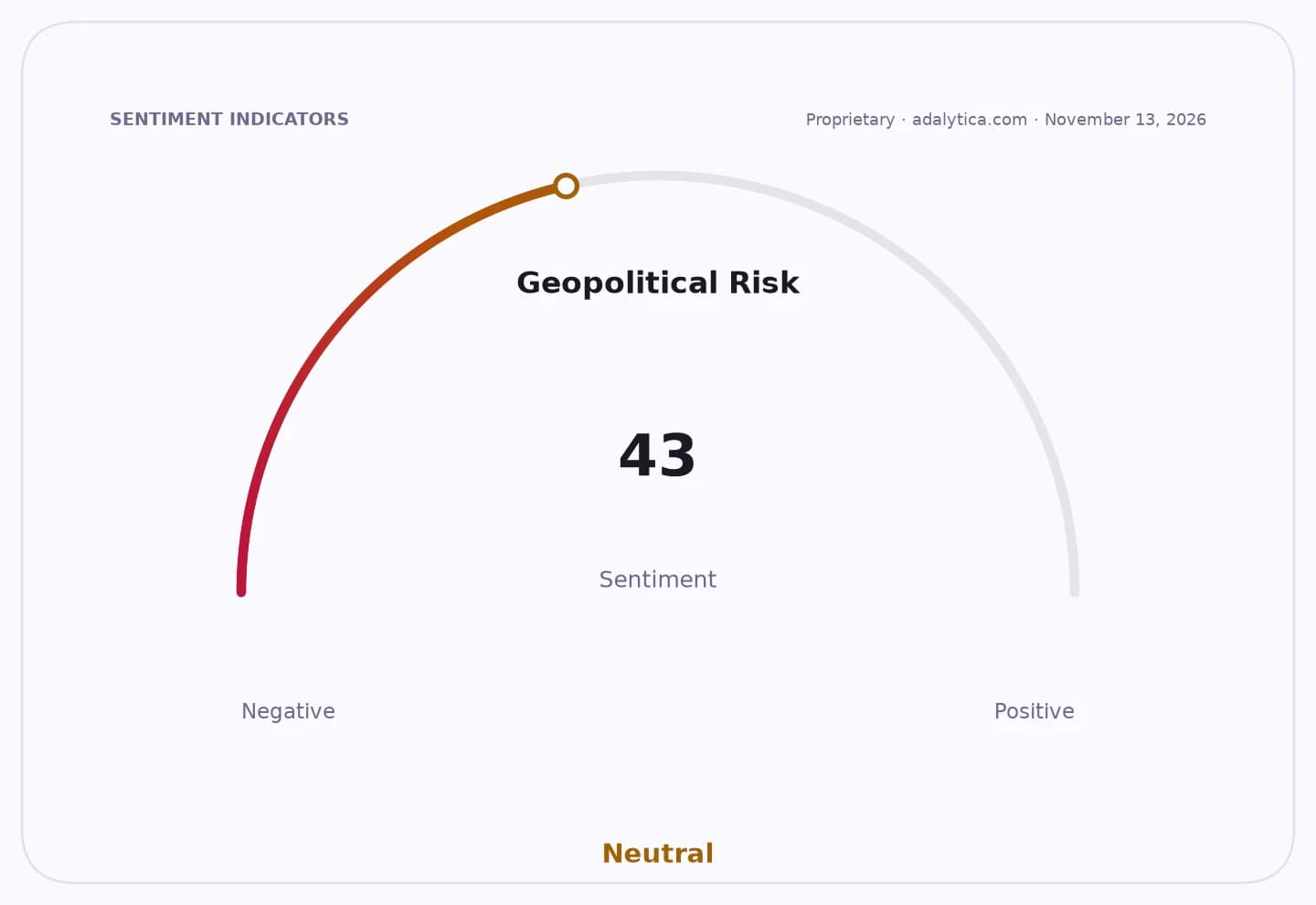
Sentiment Indicators

The agreement, signed in Brussels by Brazil’s Justice Minister Ricardo Lewandowski and EU Home Affairs Commissioner Magnus Brunner, is designed to intensify information sharing and joint investigations while explicitly protecting privacy and data rights. That balance matters because the deal is not just about raids and arrests; it is about building a durable legal framework that can support international cooperation without triggering political or regulatory backlash.
Brazil said the pact puts it among the first countries to strike this kind of arrangement with the European Union, underscoring how strategically important the relationship has become. For the EU, Brazil is a major partner in combating transnational networks that reach deep into Latin America. For Brazil, the agreement strengthens its standing as a security partner at a moment when authorities are under pressure to show they can confront sophisticated criminal organizations that operate like multinational enterprises.

Investors should care because the beneficiaries are not limited to law enforcement. Better coordination can gradually improve the risk profile for exporters, shippers, ports, agribusiness and resource companies exposed to illicit activity. It also reinforces the broader investment case for Brazilian assets by signaling a more capable state response to one of the country’s most persistent structural weaknesses.
That matters at a time when Brazil-linked assets are already sensitive to shifts in global risk appetite. EWZ has been volatile, while the broader Brazil trade has been wrestling with sharp swings in sentiment. Conventional technical indicators on EWZ show the fund has been under pressure, with its 50-day moving average still well above the latest close and RSI readings recovering from deeply oversold territory, suggesting traders remain cautious even as policy headlines improve the medium-term backdrop.
The bigger narrative is that security cooperation is becoming an economic variable, not just a diplomatic one. If Brazil can translate this agreement into faster investigations, more seizures and cleaner trade corridors, the payoff will show up in lower friction costs and a modest but real improvement in the country’s investability. For long-term investors, that is the kind of slow-moving catalyst that can matter more than the day-to-day noise.
The takeaway: Brazil is trying to turn security cooperation into an economic advantage, and the market is likely underestimating how much that can support the broader investment case over time.
| Entity | Gains | Losses |
|---|---|---|
| Brazil Federal Police | ▲Better intelligence and reach | ▼Higher scrutiny if results lag |
| EUROPOL / EU | ▲Stronger transnational crime enforcement | ▼More resource burden |
| Brazilian exporters/logistics firms | ▲Lower route and port risk | ▼Higher compliance costs |
| Organized crime networks | ▲None | ▼Disrupted operations and financing |