Brazil’s political risk premium is back in focus after Flavio Bolsonaro said he could seek constitutional changes that would reshape the judiciary and the presidency, a move investors will read as a test of how far the country’s rightward shift can go.
Brazil EWZ Rises as Bolsonaro Court Reform Talk Grows

That matters because Brazil is not just facing another noisy election cycle; it is confronting a possible institutional stress event in the region’s biggest economy. Bolsonaro’s comments about “re-democratizing” the country, alongside proposals to reform the courts, alter the political system and potentially extend presidential terms to five years, suggest a program that could weaken checks and balances rather than merely rework policy. For markets, that raises the odds of louder conflict with the Supreme Court, a more unpredictable legislative process and a heavier governance discount on Brazilian assets.
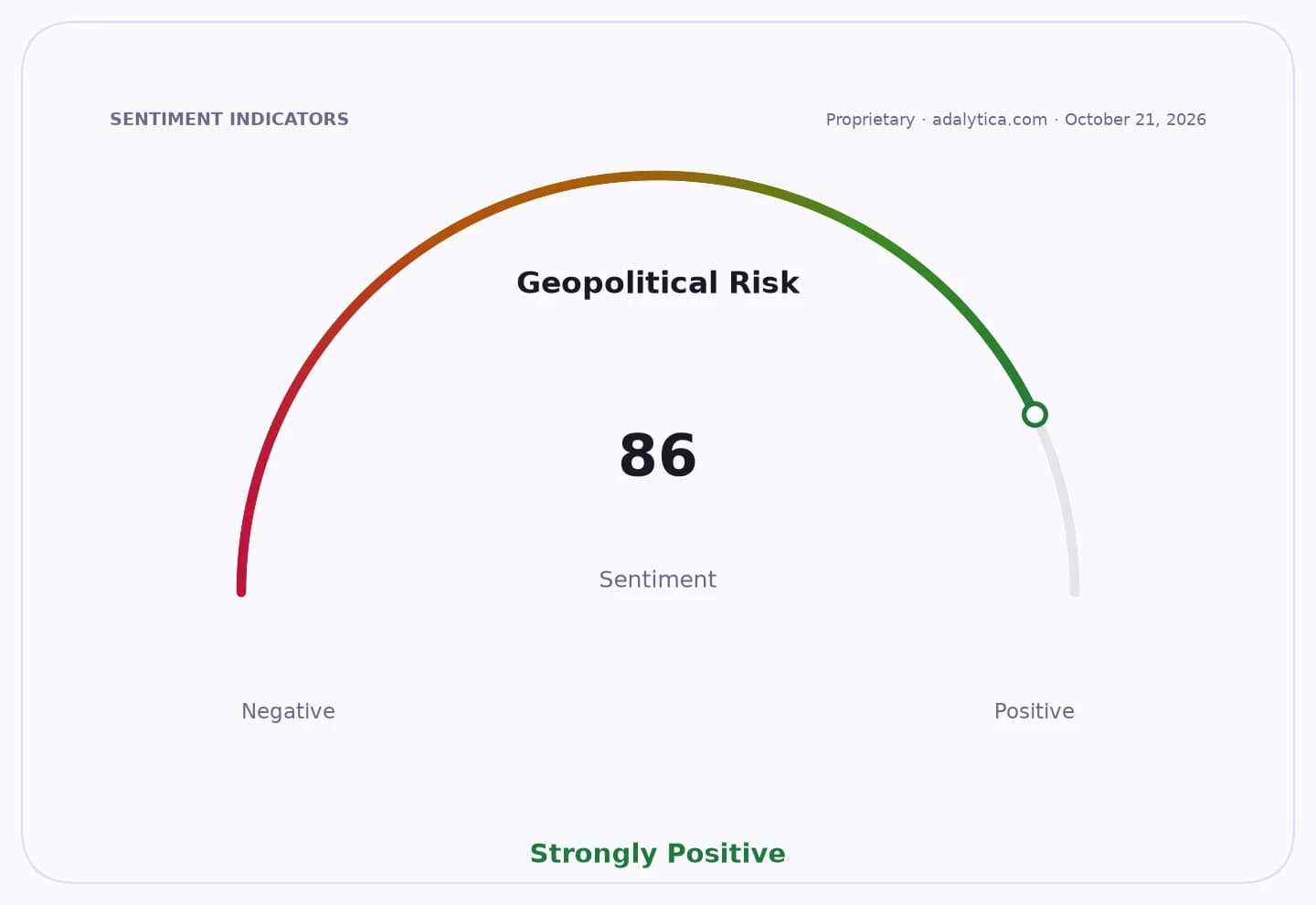
Sentiment IndicatorsⓘProprietary · adalytica.com · October 9, 2026
This is a snapshot — live sentiment, awareness and momentum for 130+ markets update continuously in the dashboard.Open AlphaPulse

The stakes are heightened by the size of the right’s foothold in Congress. Bolsonaro’s Liberal Party won the most seats in both chambers, with 121 of 513 in the lower house and 28 of 81 in the Senate, giving his camp a real platform to push constitutional changes if it can assemble broader support. That is why the story is bigger than one candidate’s rhetoric: institutional control, not just electoral victory, is what can determine whether policy remains market-friendly or turns confrontational.
Investors should also remember the historical baggage. Brazil’s modern democracy was cemented by the 1988 constitution after 21 years of military rule, and Jair Bolsonaro’s presidency repeatedly stirred fears about the durability of that settlement. His son’s language is therefore not simply provocative branding; it taps into a long-running market concern that political populism in Brazil can bleed into institutional erosion. In a country that ranks 28th in the V-Dem liberal democracy index, the direction of travel matters as much as the headline result.
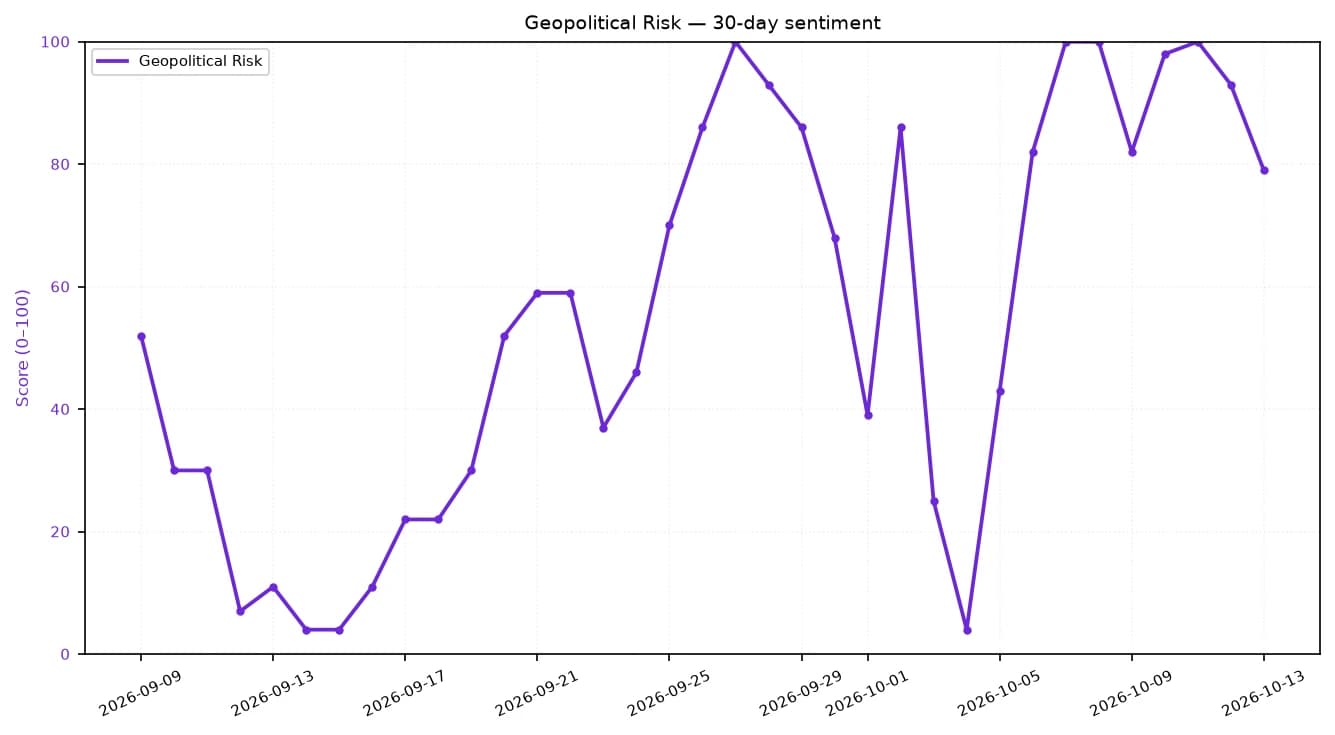
Geopolitical Risk vs EWZadalytica.com
Explore this data interactively — full history, time series and cross-market comparisons.Open AlphaPulse

The immediate market read-through is straightforward: Brazilian equities and the real can rally on right-wing policy hopes, but they remain vulnerable to any sign that the next administration will pick a fight with the courts or rewrite the rules of succession and accountability. The iShares MSCI Brazil ETF, EWZ, has already broken higher, closing at $43.38 on Oct. 9 after a powerful run, with the price well above its 50-day and 200-day moving averages. But the technical overbought backdrop — with RSI readings around 74 and the price pressing the upper Bollinger Band — suggests investors are paying up for the upside while underpricing the governance risk that could reverse the move just as quickly.
That is where the asymmetry lies. If Bolsonaro’s camp moderates, Brazilian assets can keep benefiting from pro-business expectations and political continuity. If, however, constitutional reform becomes a vehicle for weakening the judiciary or extending executive power, foreign capital will demand a higher risk premium, and that could hit everything from local banks to rate-sensitive sectors to the sovereign curve.
The broader lesson for investors is to stop treating Brazil as a pure commodity-beta trade. The next leg will be driven by institutional credibility, not just growth and rates. I believe the market is still underestimating how quickly constitutional politics can reprice Brazilian risk — and that means staying selectively bullish on Brazil, but only with tight attention to rule-of-law signals and an exit plan if the rhetoric turns into a constitutional assault.
| Entity | Gains | Losses |
|---|---|---|
| Bolsonaro camp | ▲More power | ▼Institutional constraints |
| Brazilian equities/EWZ longs | ▲Policy rally | ▼Governance shock |
| Brazilian courts | ▲Judicial review relevance | ▼Political pressure |
| Foreign investors | ▲Near-term upside | ▼Higher risk premium |