Brazil’s pandemic fight is faltering at exactly the moment investors need confidence that Latin America’s largest economy can contain the damage, and the political fracture inside Jair Bolsonaro’s government is making that failure more expensive by the day.
Brazil EWZ Falls as Pandemic Response Falters

The most important development is not just that Brazil has lost two health ministers in six weeks. It is that the government’s response to coronavirus has become a policy vacuum, with the president opposing shutdowns favored by health officials while the state also failed to scale up testing quickly enough to track the spread. That combination raises the odds of a longer outbreak, a slower reopening and a more punishing hit to output, employment and corporate earnings.
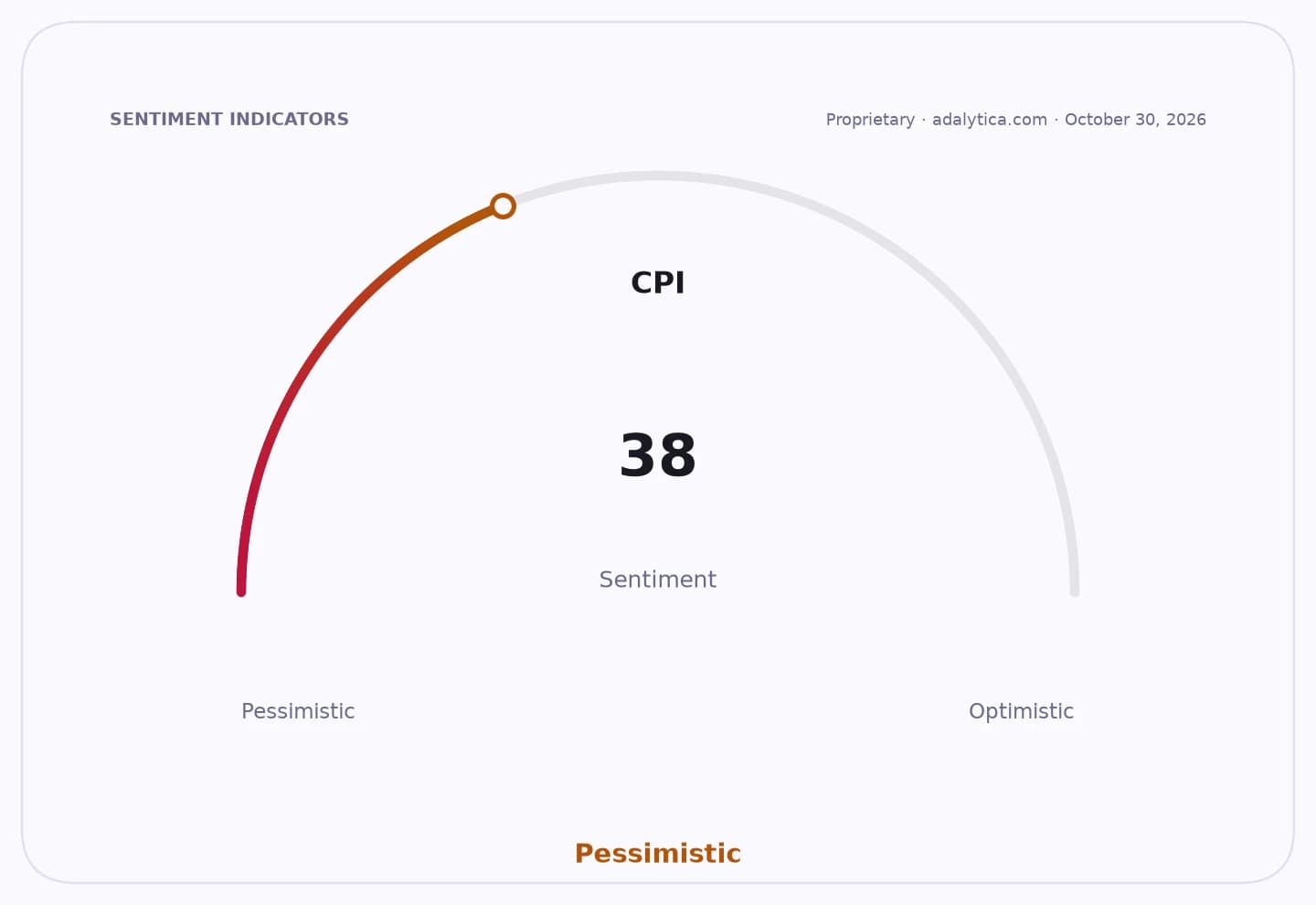
Sentiment Indicators
Reuters reported that Bolsonaro’s clashes with Health Ministry and cabinet officials undermined an early response that began promisingly. Those tensions spilled into the bureaucracy itself, with aides describing pressure to soften official guidance and epidemiologists saying the Health Ministry was forced to rewrite its own communique. In a health crisis, that kind of confusion is economically corrosive: it delays containment, erodes public trust and forces businesses to plan around uncertainty rather than policy.
For investors, the market implication is straightforward. The longer Brazil struggles to coordinate public-health measures, the deeper the recession risk and the more uneven the recovery for banks, retailers, airlines, industrials and anything tied to consumer demand. Even if emergency fiscal support cushions the blow, it cannot offset the damage from a virus that is still moving faster than the government’s response.
Geopolitical Risk vs EWZadalytica.com
Explore this data interactively — full history, time series and cross-market comparisons.
That is why the market has already begun to price in stress. EWZ, the iShares MSCI Brazil ETF, has dropped to about $32.19 from above $42 just days earlier, while its RSI — a standard technical indicator — has fallen to deeply oversold territory. Petrobras stock has also weakened sharply, while the Brazilian real has stayed volatile around 5.48 per dollar, underscoring how quickly sentiment can reverse when policy credibility cracks.
The real economic risk is that Brazil is not just fighting a virus; it is fighting an institutional credibility problem. Bolsonaro’s unwillingness to give health authorities room to act raises the probability of stop-start restrictions, prolonged pressure on small businesses and a slower return of jobs. That matters in a country already vulnerable to rising unemployment and a demand shock that can spill into sovereign risk, funding costs and earnings expectations.
The investable takeaway is that Brazil remains a high-beta market where political dysfunction can overwhelm valuation arguments. Until policymakers restore a coherent containment strategy and testing capacity catches up, investors should favor caution on broad Brazil exposure and look instead for selective beneficiaries of volatility, dollar strength and defensive balance sheets.
| Entity | Gains | Losses |
|---|---|---|
| Public-health officials | ▲Greater urgency for stronger action | ▼Political cover and autonomy |
| Bolsonaro critics | ▲Confirmation of policy failure | ▼None |
| EWZ holders | ▲Potential oversold rebound | ▼Further downside from recession risk |
| Brazilian consumers and small businesses | ▲Possible future policy correction | ▼Current shutdown and demand shock |