Brazil’s old class divide is back at the center of politics, and investors are pricing the country as if Lula can still turn social inclusion into market-friendly growth.
Brazil EWZ and Petrobras Rise as Politics Loom
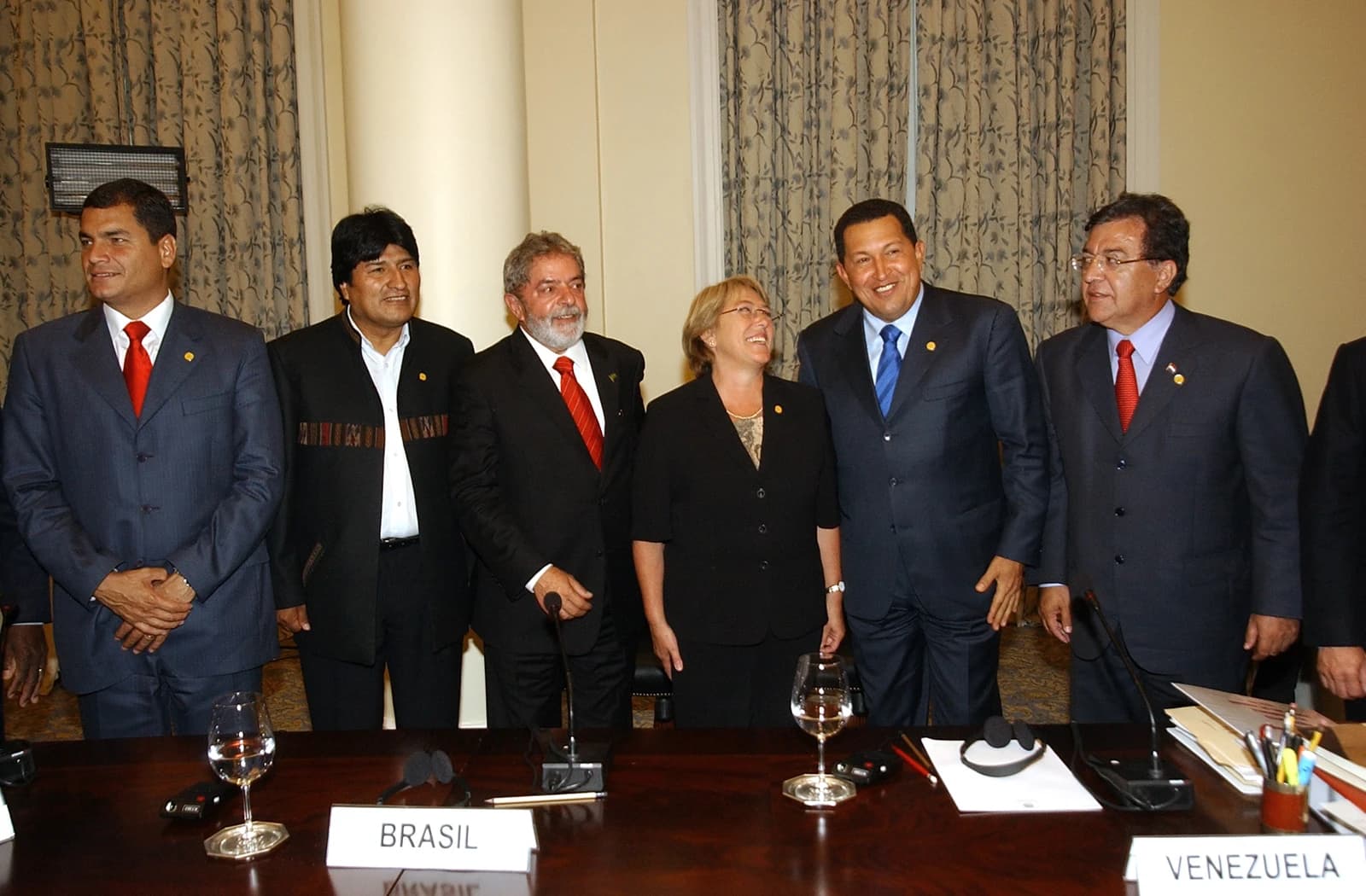
The clearest economic message from Brazil right now is not just that inequality remains deep; it is that the political response to it remains unstable. Lula has spent years trying to pair redistribution with investor confidence, but the country’s “two Brasis” are once again defining the investment backdrop: a mass electorate that still benefits from social transfers and a wealthier establishment that often recoils from the left, even when the macro numbers improve.
Sentiment IndicatorsⓘProprietary · adalytica.com · October 7, 2026
This is a snapshot — live sentiment, awareness and momentum for 130+ markets update continuously in the dashboard.Open AlphaPulse
That matters because Brazil’s policy mix is increasingly being judged through a political lens as much as an economic one. If Lula cannot broaden his coalition beyond the urban elite and labor base, his room to push reforms, preserve fiscal credibility and sustain the pro-growth agenda that markets want will stay limited. For investors, that means every rally in Brazilian assets still has a political discount attached.
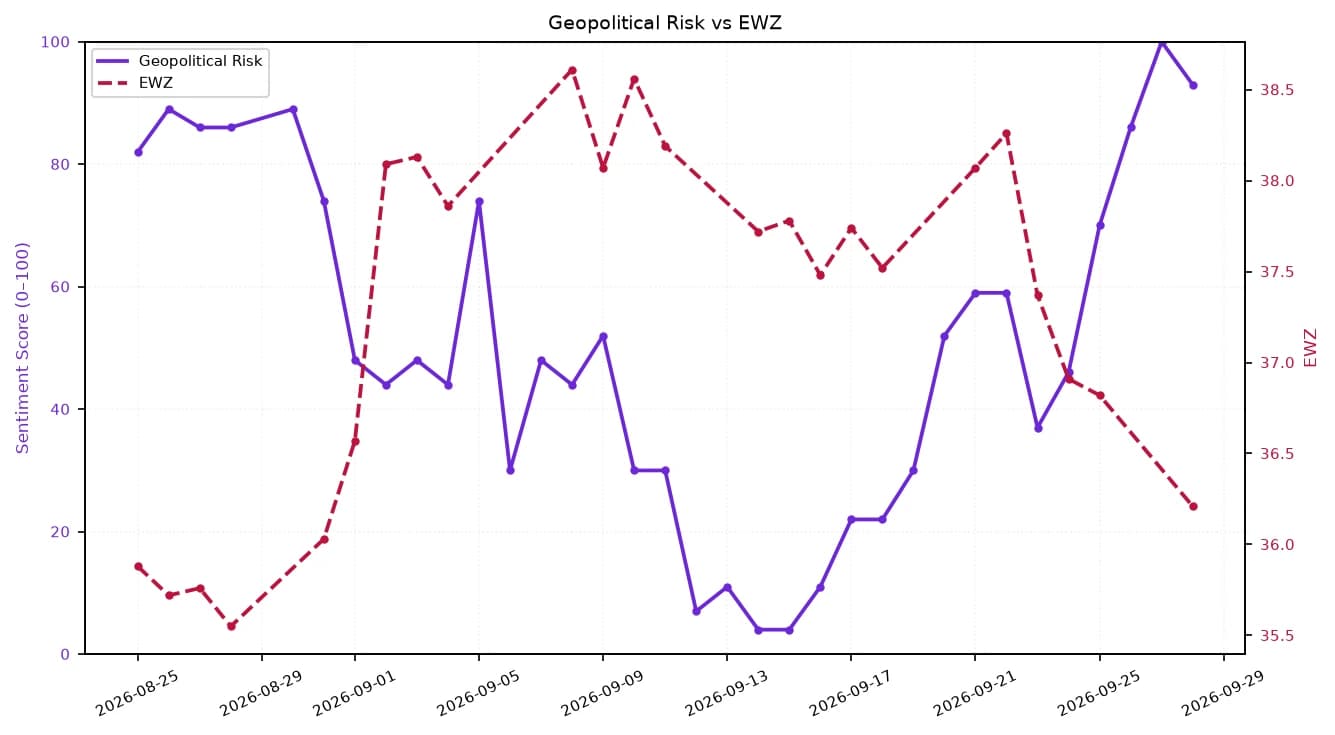
The market has nonetheless found reasons to lean bullish. EWZ, the iShares MSCI Brazil ETF, has surged to $43.00 from $35.47 in late July, while Petrobras, traded in New York as PBR, has climbed to $23.80 from $17.45 in early August. Both moves show how quickly capital will chase Brazil when growth, commodities and carry line up. But the technicals also warn that the trade is crowded: EWZ’s RSI has jumped to 76.8, well into overbought territory, while Petrobras’ RSI stands at 75.2. In other words, investors are embracing Brazil’s upside story even as the underlying politics remain structurally divided.
Geopolitical Risk vs EWZadalytica.com
Explore this data interactively — full history, time series and cross-market comparisons.Open AlphaPulse
That divide is not academic. It is exactly the kind of social fault line that can shape taxation, spending, state intervention and the treatment of strategic sectors such as energy, infrastructure and agribusiness. Petrobras is the obvious beneficiary when Brazil’s growth and political calm support capital spending and cash generation, but it also remains exposed to any shift toward heavier state influence. EWZ, meanwhile, captures the broader trade: banks, commodities, domestic consumption and exporters all benefit when Brazil’s macro story is stable enough to attract foreign money.
The bigger investment point is that Brazil remains a high-beta play on global liquidity, China demand and domestic policy credibility. A favorable export cycle and a weaker dollar can make Brazilian equities look cheap very quickly. But the country’s social fracture means those gains are fragile unless they are matched by real income growth and enough political legitimacy to keep the reform agenda alive. That is why the market keeps oscillating between enthusiasm and caution.
For now, the thesis is straightforward: Brazil’s inequality narrative is not a side issue, it is the central risk premium in the country’s assets. If Lula can translate social inclusion into a broader and more durable growth model, Brazil has room for a further rerating. If not, the rally in EWZ and Petrobras will keep running into the same wall: politics.
| Entity | Gains | Losses |
|---|---|---|
| Lula coalition | ▲Broader legitimacy if growth reaches poorer voters | ▼Support from elites and fiscal hawks |
| EWZ holders | ▲Exposure to Brazil upside and commodities | ▼If political risk premium widens |
| Petrobras / PBR | ▲Strong cash flow and commodity leverage | ▼Policy risk if state intervention rises |
| Brazil’s wealthy establishment | ▲Asset gains in a growth rally | ▼Comfort with a more redistributive agenda |