Brazil is losing momentum just as the rest of Latin America is expected to edge ahead, and that gap matters because it points to slower earnings growth, tighter policy for longer and less room for the region’s biggest economy to pull capital in.
Brazil growth forecast trails Latin America in 2026
The World Bank now sees Brazil expanding 2.1% in 2026, slightly below the 2.2% forecast for Latin America and the Caribbean and beneath the 2.4% pace projected for 2025. For an economy that anchors regional trade, commodity demand and portfolio flows, even a modest underperformance can ripple through banks, exporters and local asset prices.
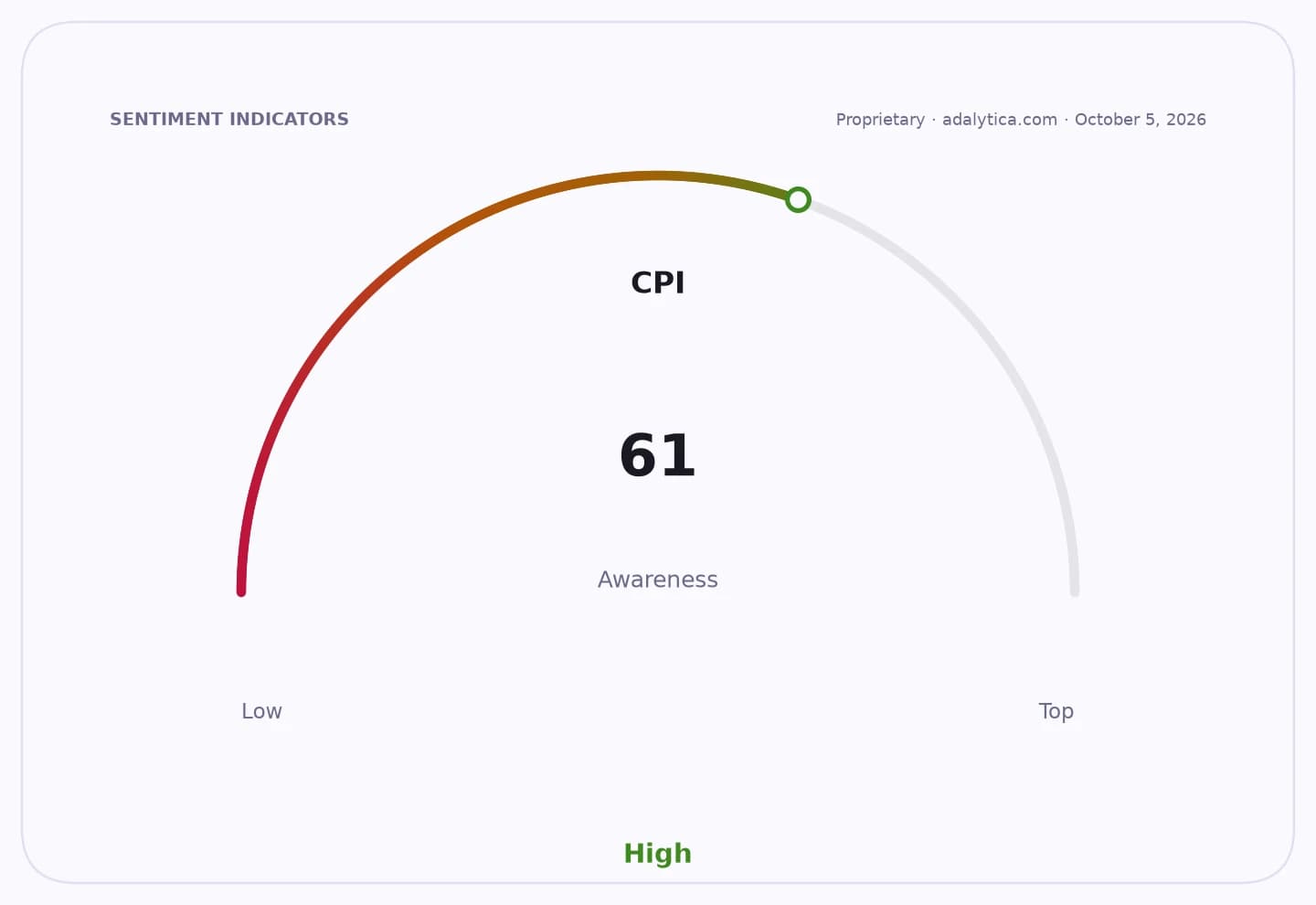
Sentiment IndicatorsⓘProprietary · adalytica.com · October 7, 2026
This is a snapshot — live sentiment, awareness and momentum for 130+ markets update continuously in the dashboard.Open AlphaPulse
The message is straightforward: high interest rates, policy uncertainty and weaker public investment are still choking off Brazil’s growth engine. The World Bank said those same forces are weighing on Mexico as well, but Brazil’s size makes the slowdown more consequential. When the region’s largest economy cannot outgrow the average, Latin America’s investment case becomes more dependent on isolated winners than on broad-based cyclical strength.
That is exactly why investors should pay attention. Slower growth typically keeps the central bank cautious, prolongs expensive credit conditions and limits the rebound in domestically focused sectors. It also narrows the market’s margin for error in earnings, especially for lenders, retailers and industrial names that need stronger demand to justify multiple expansion. By contrast, companies tied to hard-currency exports, regulated cash flows and global commodity cycles can look relatively more attractive when local GDP loses speed.
The World Bank’s broader regional read is still constructive, but selectively so. Paraguay is expected to grow 4.7% and El Salvador 4.5%, helped by security gains and fiscal restraint that support private investment. Argentina is projected to expand 2.1% in 2026 after a sharp adjustment, while Brazil’s softer path underscores how reform discipline and macro stability are becoming the real growth differentiators across Latin America.
There is also a market angle here. Brazil’s ETF EWZ has surged to about $42.37, well above its 50-day and 200-day moving averages, but its RSI readings near 71 suggest the rally is already extended. Petrobras shares have climbed to $23.99 and also sit on elevated technical momentum. That tells me the market has been willing to bid Brazil on sentiment and commodity exposure, even as the macro backdrop remains mediocre. The danger is that investors extrapolate recent strength without fully pricing in a longer stretch of subdued domestic growth.
The cleaner trade is to stay selective. I believe Brazil still offers pockets of opportunity, especially in commodity-linked names and companies with pricing power or dollar revenues, but the broad-country bet is less compelling if 2026 growth comes in below the regional average. The World Bank’s forecast reinforces a simple thesis: in Latin America, capital will keep rewarding economies that protect macro credibility and punish those that cannot turn stability into faster expansion.
| Entity | Gains | Losses |
|---|---|---|
| Brazil exporters | ▲Dollar revenues, weaker real | ▼Domestic demand softness |
| Brazilian consumers | ▲None | ▼High borrowing costs |
| EWZ bulls | ▲Momentum trade | ▼Overextended valuation |
| Regional peers like Paraguay | ▲Relative growth premium | ▼Less attention from capital |