Brazilian President Luiz Inácio Lula da Silva’s approval rating is essentially unchanged in the latest Datafolha poll, underscoring a deeply polarized political backdrop as the country heads toward the 2026 election.
Brazil Lula Approval Stays Near Tie in Datafolha Poll

The survey found 50% of respondents disapprove of Lula’s government and 48% approve, a one-point shift from the previous poll in which 50% disapproved and 47% approved. The result leaves the administration hovering near statistical tie territory, with the margin of error at 2 percentage points.
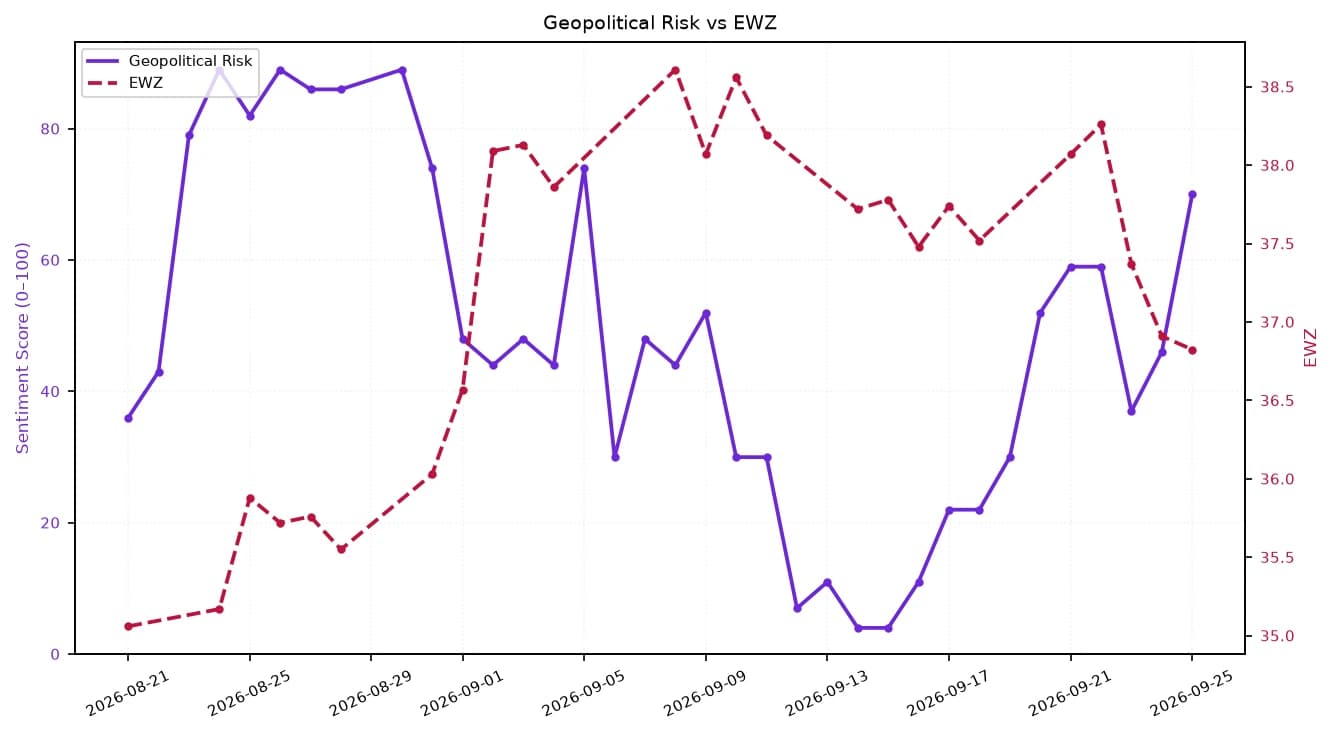
Sentiment IndicatorsⓘProprietary · adalytica.com · September 19, 2026
This is a snapshot — live sentiment, awareness and momentum for 130+ markets update continuously in the dashboard.Open AlphaPulse

That matters because Lula’s standing helps shape the odds for policy continuity in Latin America’s largest economy. A president with approval stuck below or near 50% typically has less room to push through fiscal measures, tax changes or spending initiatives, especially when Congress is already a constraint and campaign politics are intensifying.
The poll also showed the share rating the government as “ruim ou péssimo,” or bad/terrible, steady at 42%, while the proportion calling it “ótimo ou bom,” or excellent/good, rose to 34% from 32%. Those numbers suggest Lula has stabilized support at the margin, but not broken out of a narrow band that keeps political risk elevated for investors.
For markets, the importance is less about the one-point move than about what it says on the macro backdrop: Brazil is entering a period when policy signals, fiscal discipline and institutional credibility could matter more for the real and local rates than any single poll reading. Brazilian assets have already been sensitive to shifts in election expectations, and approval trends can influence bets on spending, state intervention and future central-bank independence.
Datafolha interviewed 2,002 people aged 16 and older on Sept. 15 and 16. The poll was commissioned by Globo and Folha de S.Paulo and registered with Brazil’s electoral court under number BR-04029/2026.
With the race still months away, investors will watch whether Lula’s approval improves enough to strengthen his governing position or remains locked in a narrow range that keeps election volatility elevated.
| Entity | Gains | Losses |
|---|---|---|
| Lula government | ▲Stabilized approval at 48% | ▼50% disapproval remains a drag |
| Opposition candidates | ▲Persistent dissatisfaction to exploit | ▼Lula still holds a slight support edge |
| Brazilian assets | ▲Clearer election pricing if support firms | ▼Policy uncertainty stays elevated |
| Long real / local rates shorts | ▲Better odds if fiscal credibility improves | ▼Higher volatility if approval stays weak |