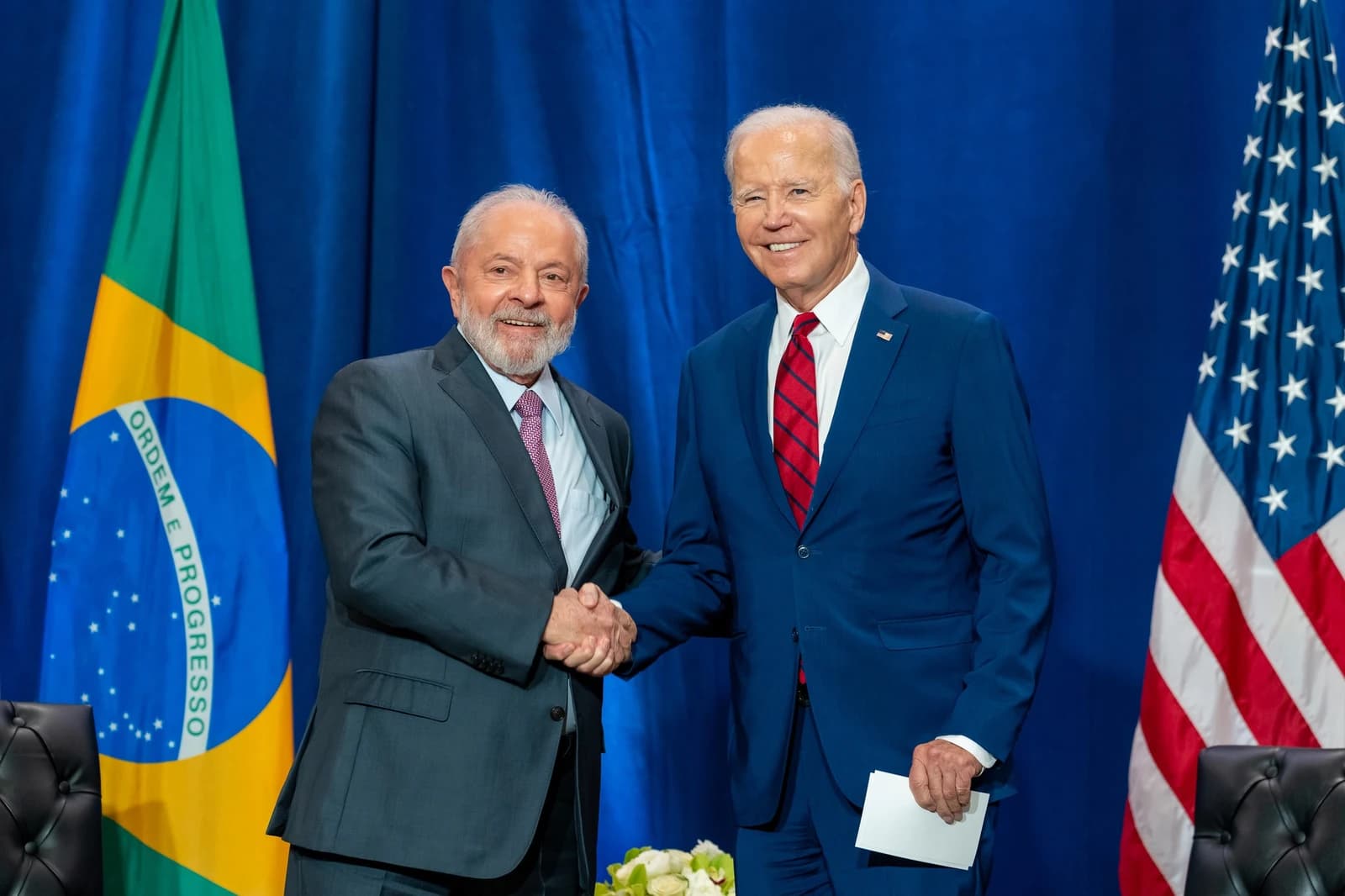
President Luiz Inácio Lula da Silva is pushing back hard against market criticism of Brazil’s fiscal strategy just as lawmakers prepare to take up a spending-cut and revenue-raising bill that could save the federal government as much as 56.1 billion reais in 2027.
Brazil Lula Defends Fiscal Bill as Chamber Debates It

The fight matters because Brazil’s ability to stabilize public finances is one of the main determinants of local asset prices, borrowing costs and the real’s path into the 2026 election cycle. Lula’s comments underline the political sensitivity of austerity at a moment when investors are looking for proof that the government can restrain spending without derailing growth or social programs.
Sentiment Indicators
Speaking in a livestream on Saturday, Lula defended the adjustment package already approved by the Senate and due to be examined by the Chamber of Deputies next week. The proposal combines spending cuts with higher revenue, and the government says it could reduce federal outlays and lift collections by between 45.1 billion reais and 56.1 billion reais in 2027.
Lula accused parts of the financial market of questioning his administration’s seriousness on fiscal control, saying he had overseen the most primary surpluses in Brazil’s history. He also rejected criticism from what he called “yuppie” financiers in São Paulo’s Faria Lima district, framing the dispute as one between investors and his government’s social priorities.
Markets have been watching the debate closely. The iShares MSCI Brazil ETF, EWZ, has swung sharply in recent months, reflecting the tension between hopes for fiscal discipline and renewed political risk. EWZ closed at $28.54 on Nov. 20, down from $42.59 on Oct. 23, while its 50-day moving average stood at $36.77 and the 200-day average at $36.67, a sign of how quickly sentiment has deteriorated. Its RSI reading of 27.4 points to technically oversold conditions.
Banco Bradesco shares have also been under pressure. The stock ended at $2.23 on Nov. 20, versus $4.42 on Oct. 6, with its RSI at 32.8 and the share price well below both the 50-day and 200-day moving averages, indicating investors have been cutting exposure to Brazil-linked financials as fiscal and political uncertainty builds.
The broader backdrop remains difficult for emerging-market investors. Adalytica’s U.S. dollar trade signals show extreme fear in sentiment even as awareness remains elevated, reflecting how quickly global markets can react to Brazil’s domestic policy debate and wider risk-off moves.
The key test now is whether the Chamber advances the fiscal package without watering it down. Any delay or dilution would likely deepen concern over Brazil’s deficit path, while a cleaner passage could help steady sentiment around the real, banks and Brazil ETFs heading into next year.
| Entity | Gains | Losses |
|---|---|---|
| Lula government | ▲Fiscal credibility if bill passes | ▼Political capital if austerity is unpopular |
| Investors in Brazil assets | ▲Better deficit outlook | ▼Risk if plan is weakened |
| EWZ holders | ▲Upside from fiscal discipline | ▼Volatility from policy uncertainty |
| Brazilian banks | ▲Stabilization if markets calm | ▼Pressure if sovereign risk rises |