Brazil’s presidential runoff debate turned on state control, public spending and security rather than policy detail, sharpening the choice for investors over the future of Petrobras, privatizations and fiscal discipline.
Brazil runoff debate lifts Petrobras and EWZ focus
Economic Growth Targets
The exchange between Luiz Inácio Lula da Silva and senator Flávio Bolsonaro in São Paulo was the first formal debate of the runoff and came with just days left before the Oct. 25 vote. Instead of a lengthy discussion of programs, the contest was dominated by accusations, corruption claims and moral attacks, according to analyst Beto Almeida, who said those exchanges crowded out substantive discussion of the candidates’ plans.
Sentiment Indicators
That matters economically because Brazil’s next government will shape the role of the state in key sectors at a time when markets are already sensitive to policy uncertainty. Lula defended Petrobras and criticized past privatizations of Eletrobras and BR Distribuidora, reinforcing a more interventionist message that tends to support broader state influence in strategic assets. Flávio Bolsonaro, by contrast, argued for budget cuts, but Almeida said he did not explain how those reductions would be delivered, leaving questions over whether a Bolsonaro-led administration would bring the kind of fiscal consolidation investors often want, but not necessarily the spending roadmap to achieve it.
The debate also highlighted the split over social and security policy. Lula backed the public health system, while Flávio Bolsonaro steered part of the discussion toward crime and violence, proposing tighter surveillance at borders, ports and airports with support from the armed forces. For voters, that frames the runoff as a contest between expanded state provision and a law-and-order, leaner-state agenda. For investors, it is also a proxy for the outlook on public spending, regulatory intervention and the treatment of state-controlled companies.
Economic Growth Targets vs EWZadalytica.com
Explore this data interactively — full history, time series and cross-market comparisons.
A separate exchange on rare earths brought foreign policy and resource sovereignty into the campaign. Almeida said Lula twice pressed his rival on whether he would support handing rare earths to foreign interests, without getting a direct answer. The issue matters beyond campaign rhetoric: Brazil’s strategic minerals could become a flashpoint in relations with the United States and other industrial powers, and the eventual stance of the next administration may influence investment rules around critical resources.
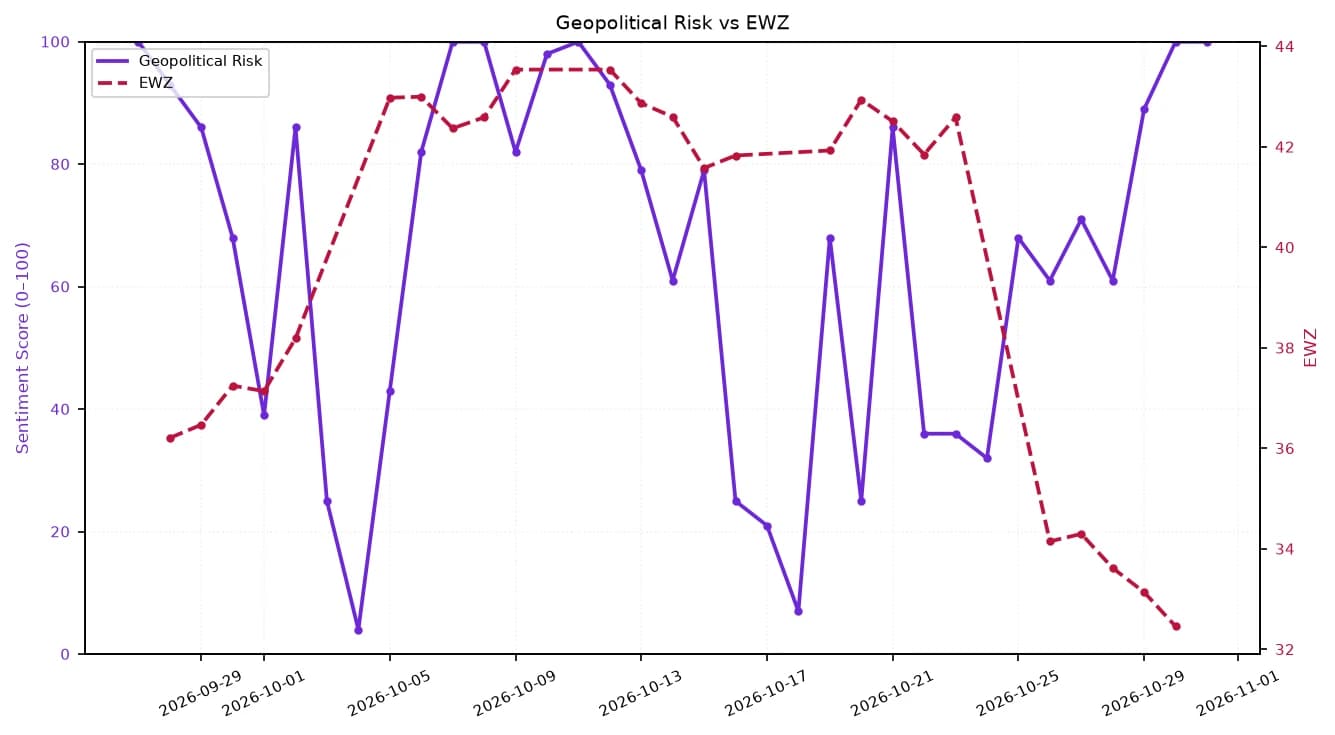
Brazilian assets have already reflected the political premium. The iShares MSCI Brazil ETF, EWZ, closed at $42.59 on Oct. 23, well above its 50-day moving average of $38.46 and 200-day average of $37.00, after a sharp run-up since early September. But the move has also left the ETF closer to technically stretched territory, with the relative strength index at 47.2 after touching 88.2 earlier in the month, suggesting traders have been repricing election odds quickly and may remain sensitive to debate headlines and polling.
Petrobras shares and the broader Brazil market are therefore likely to stay tied to perceptions of whether the eventual winner will defend state influence or push harder for market-led reform. Lula’s rhetoric supports companies and sectors that benefit from public spending and strategic intervention, while a Bolsonaro victory would be read as more favorable to privatization and tighter budgets, even if the debate offered limited clarity on how that would be implemented. The immediate market focus now shifts to the runoff itself and whether the final stretch of the campaign produces a clearer mandate on fiscal policy, asset sales and control of strategic industries.
| Entity | Gains | Losses |
|---|---|---|
| Lula / PT | ▲State-led policy agenda | ▼Privatization advocates |
| Flávio Bolsonaro / PL | ▲Law-and-order messaging | ▼Clear fiscal detail |
| Petrobras | ▲Protection from privatization | ▼Harder reform push |
| EWZ / Brazil equities | ▲Election-driven trading volume | ▼Policy uncertainty |