Brazil’s post-election polarization is moving beyond rhetoric and into social punishment, raising the risk that political conflict will increasingly shape consumer behavior, capital allocation and the country’s investment premium.
Brazil political polarization hits stocks and consumer confidence

The core economic significance is not the insult or the online harassment itself, but the signal that Brazil’s political divide is becoming embedded in everyday transactions and social networks. When voters are treated as enemies rather than opponents, trust erodes, moderation becomes harder and policy compromise gets more difficult. That matters for a large emerging market already contending with fragile sentiment, uneven growth and a still-sensitive local currency story.
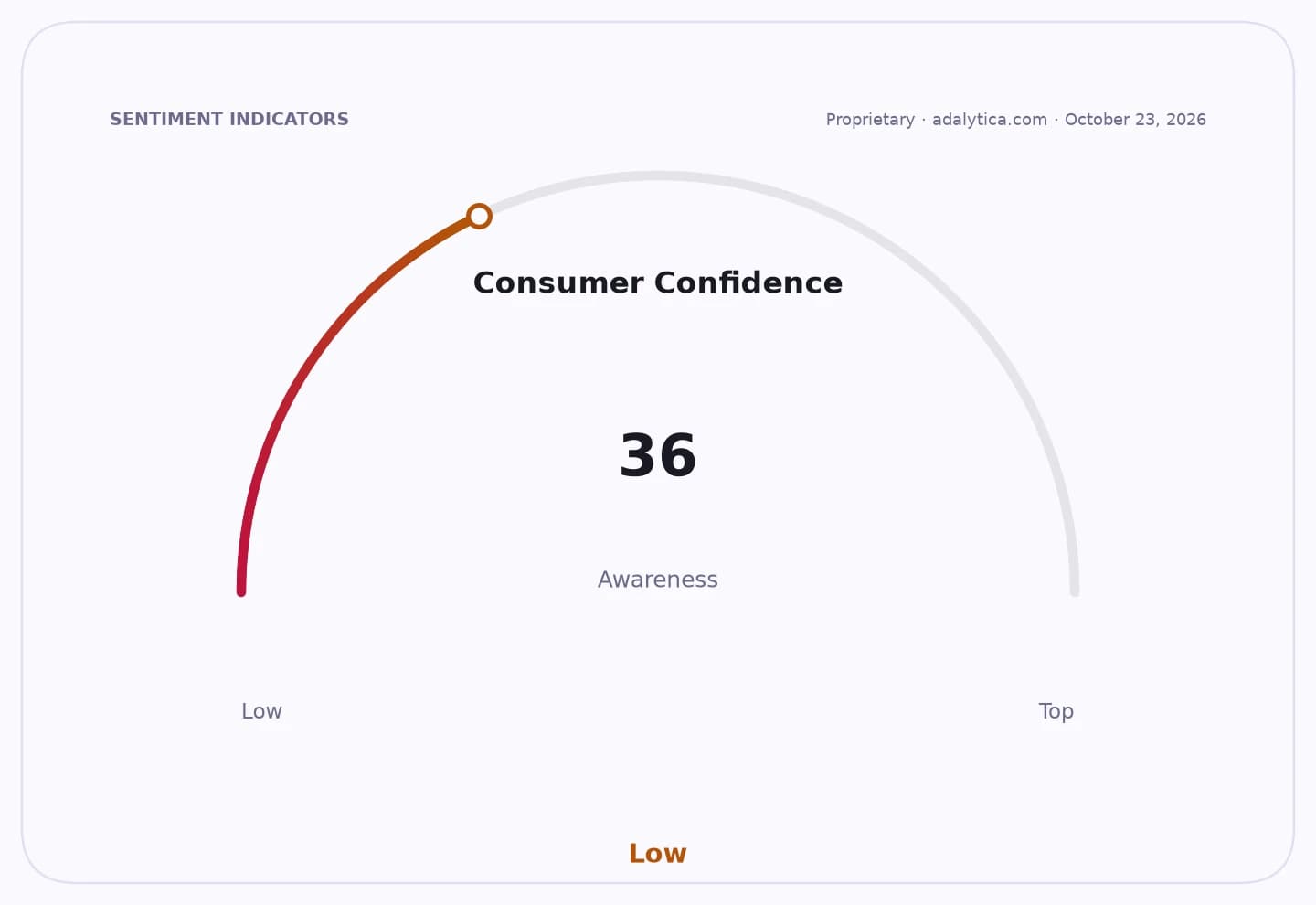
Sentiment Indicators

For investors, the immediate issue is not whether the episode changes Brazil’s fundamentals overnight. It is that heightened social fragmentation tends to raise the discount rate applied to Brazilian assets. That shows up first in volatility, then in lower consumer confidence, weaker private-sector investment and a greater sensitivity to headline risk around fiscal policy, institutions and elections. The broader market backdrop already reflects caution: U.S. data show the 10-year Treasury yield near 4.9%, while oil around $98 a barrel keeps a floor under inflation pressures globally, conditions that can amplify risk aversion across emerging markets.
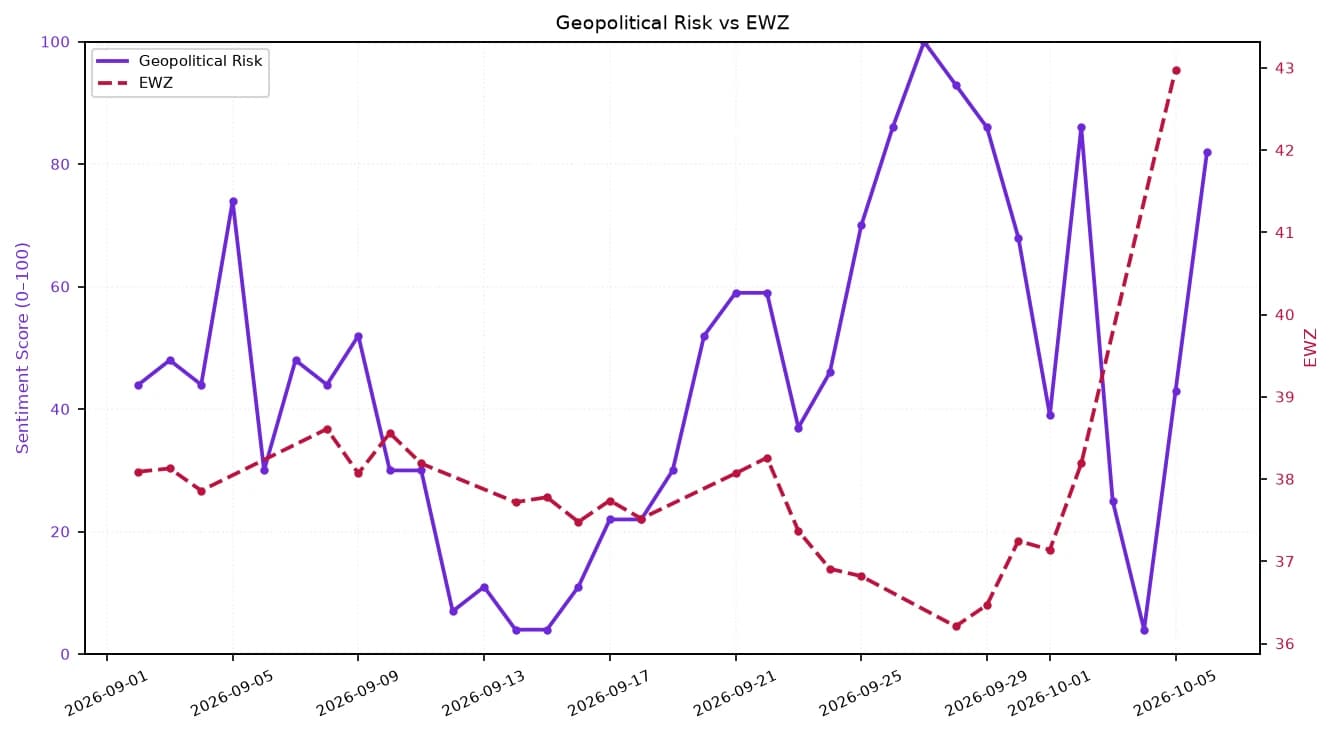
Brazil-linked assets have been volatile, underscoring how quickly political and macro narratives can collide. The iShares MSCI Brazil ETF, EWZ, dropped to 32.19 from 42.59 two weeks earlier, with its 14-day RSI sinking to 18.4, a conventional technical indicator that points to deeply oversold conditions. Petrobras ADRs also sold off sharply, with PBR falling to 18.84 from 26.16, while BRF slid to 13.31 from 20.19. Those moves suggest investors have been cutting exposure to Brazil as the political noise worsens, not just rotating within the market.
Geopolitical Risk vs EWZadalytica.com
Explore this data interactively — full history, time series and cross-market comparisons.

That reaction matters because Brazil’s equity story depends heavily on confidence in the domestic demand engine and on the government’s ability to keep policy credible. The University of Michigan consumer sentiment index in the U.S. has already fallen to 48.1 in recent readings, a reminder that weak confidence can become self-reinforcing; in Brazil, where household spending and political identification are tightly linked, that dynamic can be even more destabilizing. Social polarization can also sharpen pressure on companies exposed to local consumption, advertising, retail banking and discretionary spending, while benefiting defensive exporters with foreign-currency revenues.
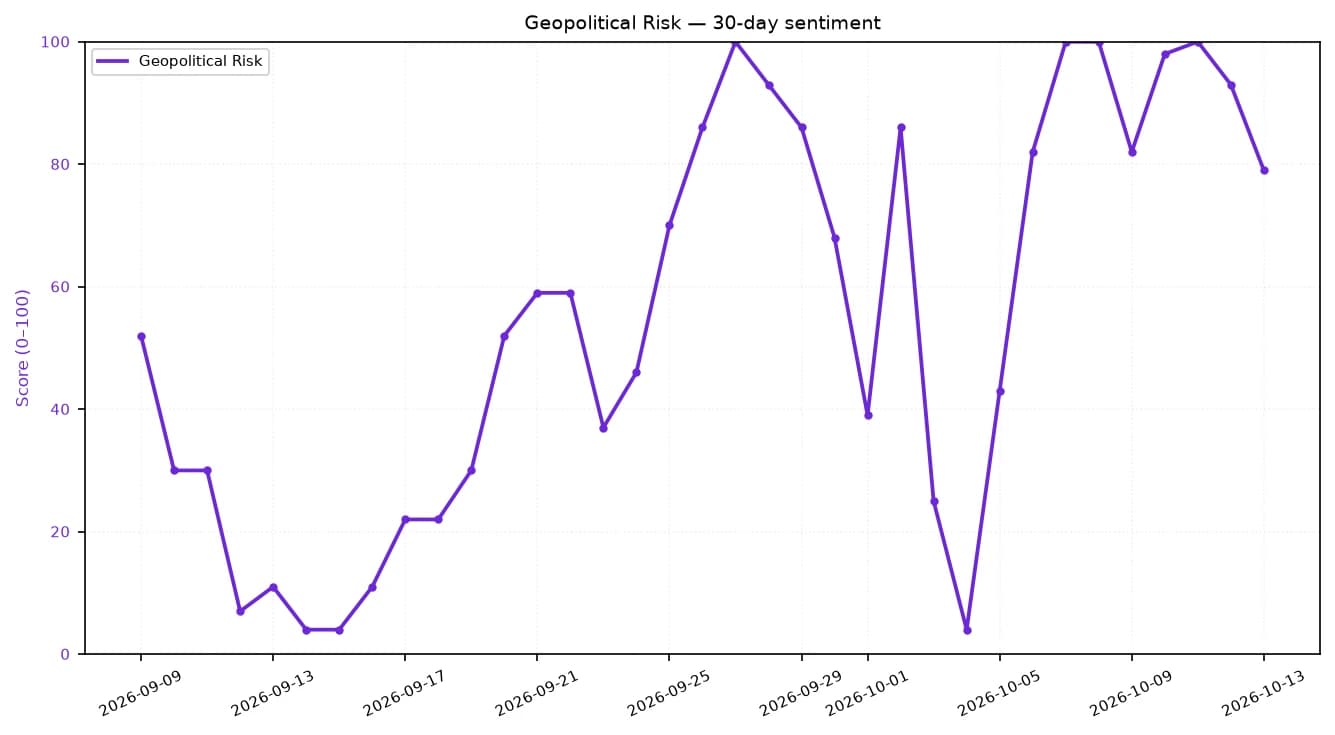
There is also a geopolitical layer. Brazil’s recent diplomatic friction with Argentina, tied to provocations involving Javier Milei, adds another strain to a region already marked by nationalist rhetoric and economic frustration. That matters for investors because Latin America risk is often repriced as a bloc when political tensions spill across borders. Adalytica’s Global Stability Sentiment has also slipped to 57, down 21 points in one day, suggesting a broader deterioration in perceived stability even as global equity awareness remains elevated.
The bull case is that Brazil’s institutions remain stronger than the street-level anger implies, and that the market can look through the noise if inflation, rates and fiscal execution stabilize. The bear case is that social punishment of political opponents hardens into a durable behavioral split, making governance more adversarial and weakening the consumption and investment backdrop. If that second path takes hold, the cost is not just reputational — it is a higher risk premium for Brazilian assets and a more fragile economic recovery.
For now, investors should watch whether political hostility stays confined to discourse or starts to change spending patterns, corporate guidance and the willingness of domestic capital to stay engaged. In Brazil, that distinction may decide whether this is a political flare-up or a more persistent market discount.
| Entity | Gains | Losses |
|---|---|---|
| Lula supporters | ▲Greater political visibility | ▼Social backlash |
| Bolsonaro-aligned voters | ▲Short-term mobilization | ▼Broader trust |
| Brazilian equities | ▲Oversold rebound potential | ▼Higher risk premium |
| Domestic consumers | ▲None | ▼Confidence and spending willingness |