Brazil’s presidential runoff is heading into the final hours with no clear favorite, as the latest Datafolha and Quaest polls put President Luiz Inácio Lula da Silva and senator Flávio Bolsonaro in technical ties and leave investors facing a binary outcome for Latin America’s largest economy.
Brazil runoff polls show Lula and Bolsonaro tied

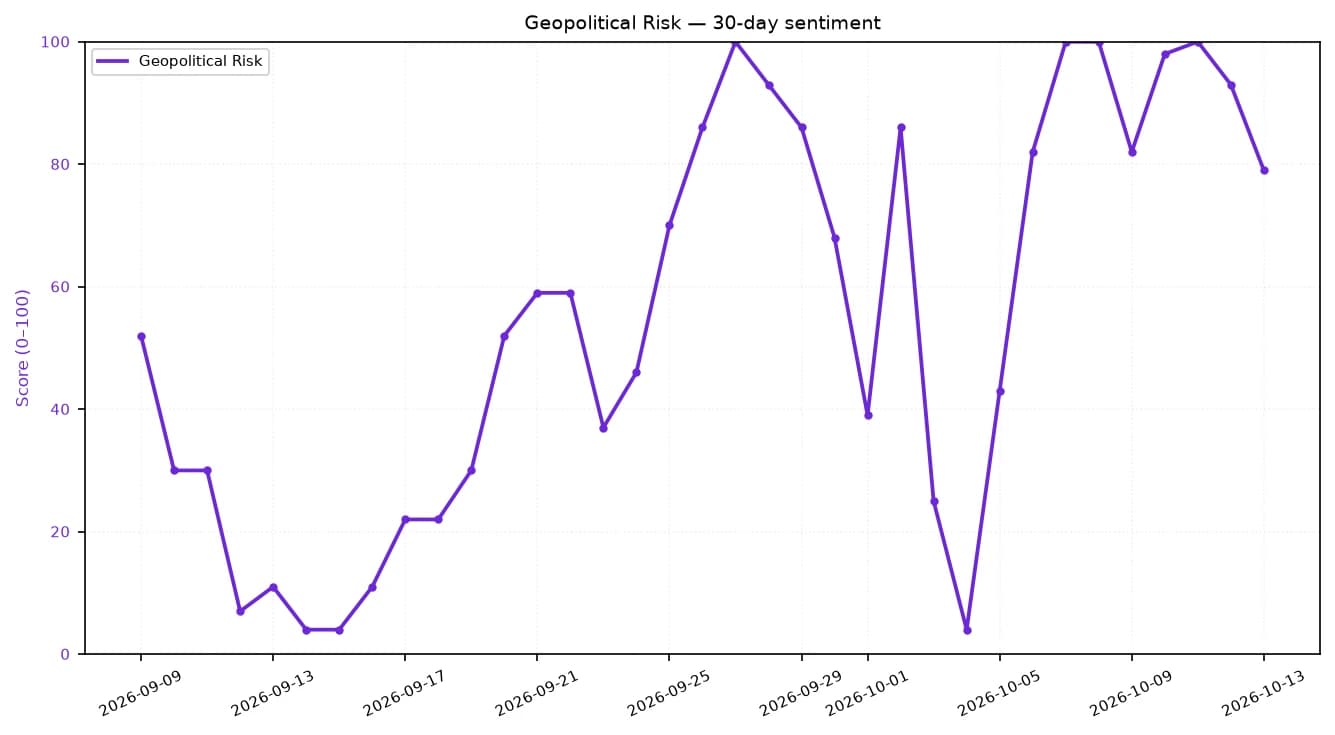
The surveys matter because the vote is likely to shape Brazil’s policy mix on fiscal discipline, social spending and state intervention at a time when markets are already pricing elevated political risk. Both polls showed the two candidates within each institute’s two-point margin of error, with Datafolha giving Bolsonaro 47% to Lula’s 46% in the previous reading and Quaest showing 45% to 44%. In valid votes, both were at 50%, underscoring how little room there is for a late move before polling stations open.
Sentiment Indicators

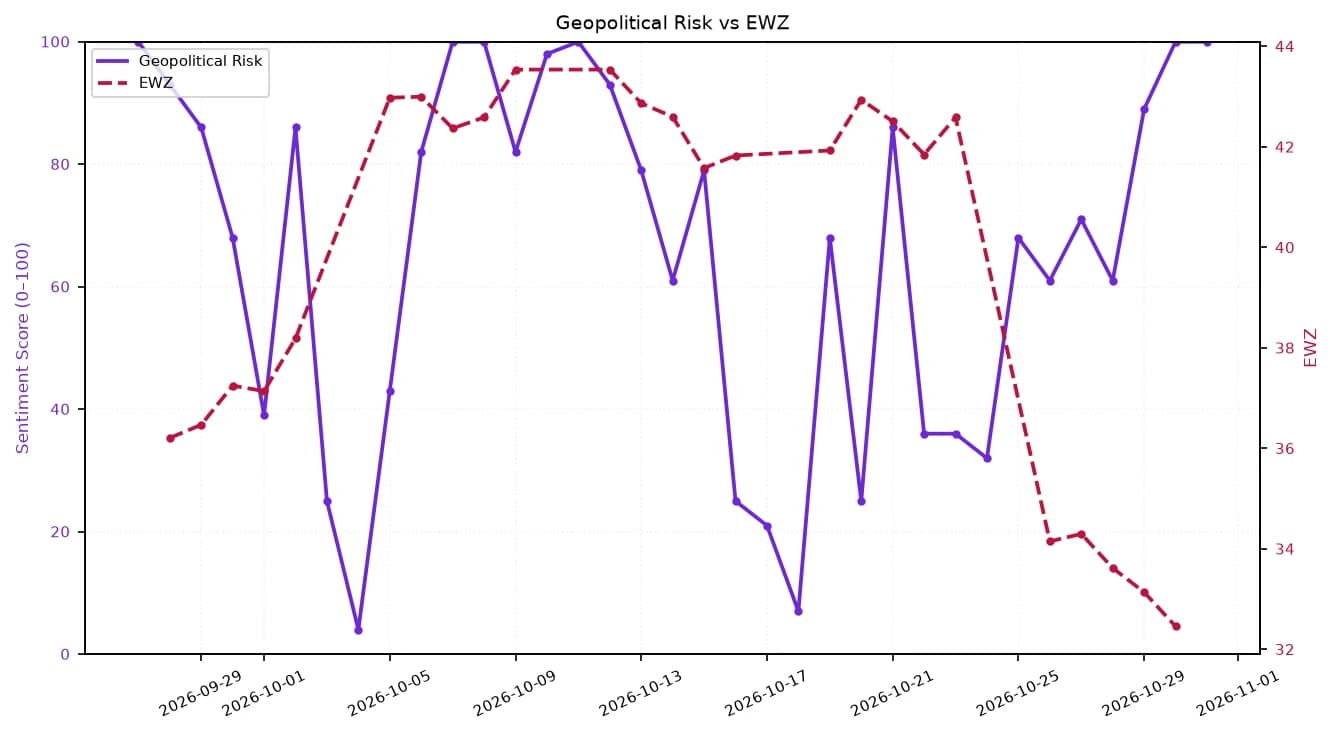
For investors, that means the race is not just about who wins, but about the likely market reaction to the next government’s economic agenda. A Lula victory would be associated with a more interventionist stance and a higher probability of greater public spending, while a Bolsonaro win would be read as more market-friendly and potentially less hostile to private capital. That distinction has already fed through to Brazilian assets: the EWZ exchange-traded fund, which tracks Brazilian stocks, has fallen sharply in the last few sessions after a recent run-up, dropping to $32.46 from $42.59 on Oct. 23, while Petrobras shares slid to $22.05 from $26.16 over the same period. The moves are consistent with positioning around election risk rather than a change in the underlying macro backdrop.
The polls were released after a TV Globo debate and amid an intensifying campaign centered on welfare spending, especially Bolsa Família, and on working conditions, including the end of the 6x1 schedule. The campaign has also turned increasingly combative over who can credibly protect low-income voters’ purchasing power. Lula’s camp has sought to frame Bolsonaro’s economic team as a threat to social programs, while the opposition has tried to portray the incumbent as a risk to fiscal stability. That kind of messaging can move undecided voters, but the fact that the new surveys partly captured the debate’s effect suggests the race remains essentially unchanged heading into Sunday’s vote.

Technically, Brazilian risk assets have become more volatile into the election. EWZ’s recent decline has pushed it below its 50-day and 200-day moving averages, while its RSI reading has sunk into oversold territory, a sign that traders have been cutting exposure quickly. Petrobras, which is especially sensitive to policy expectations around fuel pricing and state influence, has also weakened notably after trading above its 50-day and 200-day averages earlier in the month. The selloff suggests investors are reducing risk rather than making a full directional bet on the result.
The broader implication is that Brazil is entering the runoff with the market braced for either continuity or confrontation, but not certainty. A narrow result would likely keep volatility elevated into Monday, particularly if the loser questions the count or the winner has to negotiate a fragmented Congress. If the polls prove accurate, the real test for markets will begin after the ballot count, when investors start to judge whether the next administration can secure enough political support to govern without undermining fiscal credibility.
| Entity | Gains | Losses |
|---|---|---|
| Lula supporters | ▲Continuity of social programs | ▼Policy uncertainty if runoff narrows |
| Flávio Bolsonaro supporters | ▲Market-friendly policy hopes | ▼Risk of defeat in a dead heat |
| Brazilian equities | ▲Clarity after vote | ▼Pre-election volatility |
| Petrobras | ▲Potential policy continuity | ▼Exposure to state intervention fears |