Brazil’s approval of a shorter work week is less a symbolically friendly nod to workers than a policy decision that could ripple through hiring, wages and productivity in the country’s already fragile growth outlook.
Brazil shorter work week and EWZ market impact

For investors, that matters because labor rules sit at the center of Brazil’s competitiveness story. If companies are forced to absorb the same output with fewer hours, the immediate risk is higher unit labor costs. If firms respond by hiring more workers, the policy could support employment but squeeze margins. If they use automation and process improvements to offset the change, the reform could accelerate a shift toward higher productivity businesses over time.
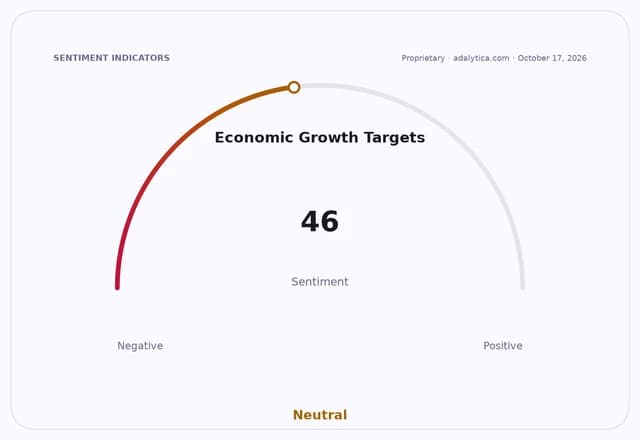
Sentiment IndicatorsⓘProprietary · adalytica.com · October 17, 2026
This is a snapshot — live sentiment, awareness and momentum for 130+ markets update continuously in the dashboard.Open AlphaPulse

The timing also matters. The move comes just before Brazil’s election, making it part economic policy and part political signal. Governments under pressure often lean toward measures that improve workers’ purchasing power or job quality, but that can complicate the outlook for employers and markets if it raises the cost of doing business. Investors in Brazilian equities are already watching for evidence of policy volatility, and any step that tilts the balance toward labor over business can weigh on sentiment, especially in sectors with heavy staffing needs.
That helps explain why Brazil-focused funds such as the iShares MSCI Brazil ETF, EWZ, have become a way to play not just commodity prices and fiscal policy, but also the country’s labor and reform backdrop. EWZ has surged to about $41.58, far above its 50-day moving average around $37.54 and its 200-day average near $36.69, a sign that enthusiasm has been strong even as momentum looks stretched. Technical readings such as a relative strength index near 71 suggest investors have already pushed the trade hard, leaving it vulnerable if the market starts to worry that labor reform could dent corporate profitability.
The broader Brazil thesis still hinges on whether the country can marry social protection with growth-friendly reform. That is the real investor question here. A shorter work week can be sold as a quality-of-life win, but its market impact will depend on implementation, exemptions and how quickly businesses can adapt. If productivity rises enough to offset the lost hours, the reform could be manageable. If not, it becomes another reminder that Brazil’s labor market remains a central constraint on long-term earnings growth.
For long-term investors, the right takeaway is not to chase the policy headline but to watch which companies can turn it into an advantage. Businesses with pricing power, automation capacity and strong free cash flow should handle the change better than labor-intensive peers. In a market where volatility can create opportunity, Brazil is still worth watching — but patience and diversification matter more than ever.
| Entity | Gains | Losses |
|---|---|---|
| Workers | ▲Better work-life balance | ▼Fewer hours on the job |
| Employers | ▲Incentive to automate | ▼Higher labor costs |
| Brazilian equities/EWZ | ▲Reform optimism | ▼Margin pressure fears |
| Labor-intensive sectors | ▲Some hiring support | ▼Profitability strain |