Brazil is pushing back against U.S. criticism over its anti-narcotics efforts, turning a law-and-order dispute into another test of already strained ties with Washington just as the two countries prepare to discuss tariffs and broader trade frictions.
Brazil U.S. drug policy dispute before tariff talks

The Brazilian justice ministry said it “refutes any allegations of failures or omissions” after a U.S. report flagged weaknesses in the country’s fight against transnational organized crime, even though it did not place Brazil on the list of 23 major drug-producing or transit countries. Brasília said the comments ignored recent enforcement measures, including a tougher anti-faction law approved in March and a national crime-fighting program launched in May.
Sentiment IndicatorsⓘProprietary · adalytica.com · September 17, 2026
This is a snapshot — live sentiment, awareness and momentum for 130+ markets update continuously in the dashboard.Open AlphaPulse
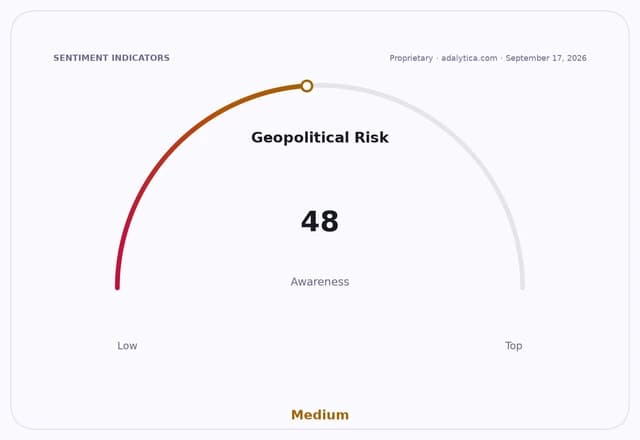
The dispute matters beyond rhetoric because it touches trade, security cooperation and diplomatic leverage at once. Brazil wants to show it is acting aggressively against organized crime, while also resisting what it sees as Washington using security and environmental issues to pressure Latin America’s largest economy. The U.S. report’s criticism may not carry formal legal consequences, but it adds another irritant at a time when both governments are already negotiating over tariffs imposed by President Donald Trump on Brazilian goods.
Those tariffs, which reached as high as 37.5% in July, have weighed on the relationship and are expected back on the table at a G20 meeting later this month in Milwaukee. Brazil called them unjustified, and the new exchange risks complicating any thaw by reinforcing the political tone of the dispute.
Geopolitical Risk vs EWZadalytica.com
Explore this data interactively — full history, time series and cross-market comparisons.Open AlphaPulse
For investors, the immediate market impact is likely to be indirect but important. Any widening of tensions can affect Brazilian assets, export expectations and appetite for risk in emerging markets, especially if the spat spills into trade negotiations or sanctions-style measures. Brazil-focused funds such as the EWZ ETF have already been trading in a technically extended state, while broader Brazil leveraged exposure through BRZU remains highly volatile; both are sensitive to headlines that alter the outlook for capital flows and policy risk.
The episode also underlines how security cooperation has become part of the broader Brazil-U.S. bargaining framework. Brazil said it has already proposed joint steps on money laundering, intelligence-sharing and arms trafficking, but has yet to receive a formal response from the Trump administration.
With tariff talks approaching and bilateral relations still shaped by ideological and political cross-currents, investors will be watching for whether the two governments can compartmentalize the drugs issue or whether it becomes another obstacle to a deal.
| Entity | Gains | Losses |
|---|---|---|
| Brazil government | ▲Shows anti-crime resolve | ▼Faces renewed U.S. criticism |
| U.S. administration | ▲Pressures Brasília | ▼Risks worsening bilateral ties |
| Brazilian exporters | ▲Potential tariff relief if talks improve | ▼Higher trade-policy uncertainty |
| Brazil-focused ETFs (EWZ, BRZU) | ▲Could benefit from de-escalation | ▼Vulnerable to headline-driven volatility |