Brega Oil Marketing Company’s partnership with OLA Energy on a new Tajoura oil warehouse is aimed at easing one of Libya’s most persistent economic bottlenecks: keeping fuel flowing reliably through a fragile supply-and-distribution network.
Brega and OLA Energy build Tajoura oil warehouse
The project, whose foundation stone has been laid, sits inside Brega’s 2025-2029 strategy and is intended to improve storage capacity, inventory management and operating flexibility. In a country where energy logistics are as politically and operationally sensitive as production itself, additional storage is not just an infrastructure upgrade; it is a buffer against disruptions, stock mismatches and bottlenecks that can quickly ripple through transport, power and broader consumer activity.
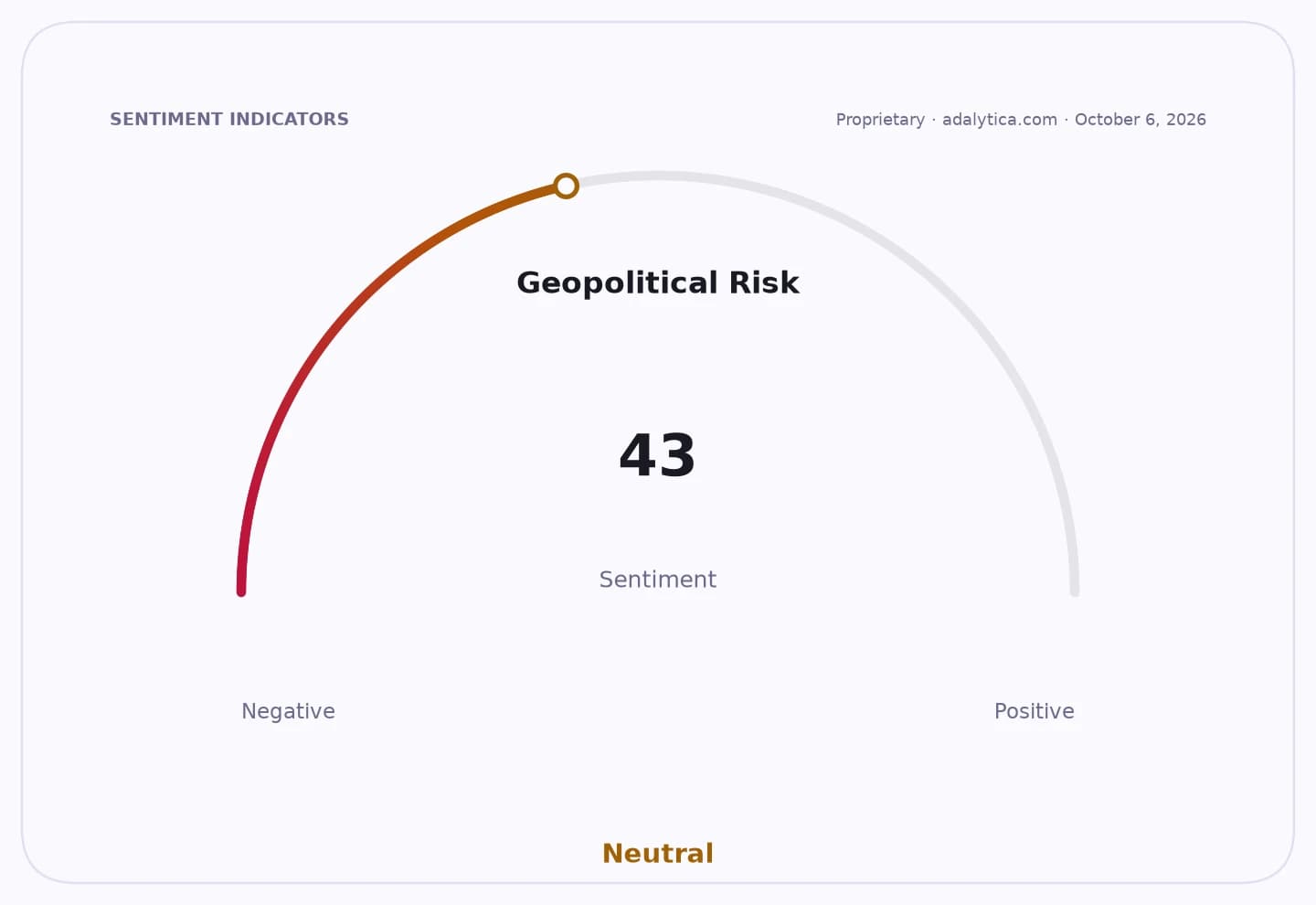
Sentiment IndicatorsⓘProprietary · adalytica.com · October 16, 2026
This is a snapshot — live sentiment, awareness and momentum for 130+ markets update continuously in the dashboard.Open AlphaPulse
The timing matters because global oil markets remain sensitive to supply interruptions and shipping risk, with tanker security and Middle East tensions still adding to price volatility. When crude prices rise and freight costs tighten, downstream operators with thin logistics capacity face higher working-capital pressure and greater risk of local shortages. That makes warehousing and distribution assets strategically valuable even in a market that is not short of crude.
For Libya, the investment also carries macro significance. The country’s oil sector remains the main source of fiscal revenue and foreign exchange, but domestic fuel logistics have often lagged production ambitions. Better storage and distribution infrastructure can reduce losses, improve service reliability and make the downstream system more resilient at a time when governments across the region are trying to insulate their economies from external shocks. It can also support a more stable operating environment for private partners such as OLA Energy, which depend on predictable throughput and inventory control.
Investors in the wider energy complex will read the project as a small but meaningful sign that downstream capex is being directed toward resilience rather than just volume growth. That is particularly relevant for regional fuel marketers, storage operators and service providers that benefit when countries invest in logistics capacity. It is less immediately material for international producers such as BP and TotalEnergies, but it fits a broader industry pattern: in a tighter and more volatile oil market, infrastructure that improves storage, dispatch and supply-chain optionality tends to command a premium.
The key question now is execution. If the warehouse helps reduce distribution frictions and strengthens stock management, it could become a template for further downstream investment in Libya. If project delivery slips, however, the economic payoff will be limited by the same operational constraints that have long weighed on the sector.
| Entity | Gains | Losses |
|---|---|---|
| Brega Oil Marketing Company | ▲Better storage control | ▼Higher project execution risk |
| OLA Energy | ▲Stronger local footprint | ▼Capital tied up in infrastructure |
| Libyan fuel users | ▲Fewer supply bottlenecks | ▼Little short-term relief if delayed |
| Regional oil logistics rivals | ▲None | ▼Potentially less room for market share |