Brent crude jumped 3.88% to $98.29 a barrel as a supply shock in southeastern Europe and fresh geopolitical risk in the Middle East revived fears of tighter global inventories and higher fuel costs.
Brent Crude Rises on Croatia Pipeline Spill
The move pushes Brent back above the $95 level that traders have been watching as the market prices in disruption risk rather than just demand trends. A damaged JANAF pipeline in Croatia spilled about 500,000 liters of crude, forcing Serbian refiner NIS to seek emergency releases from state reserves to avoid a production halt at the Pančevo refinery.
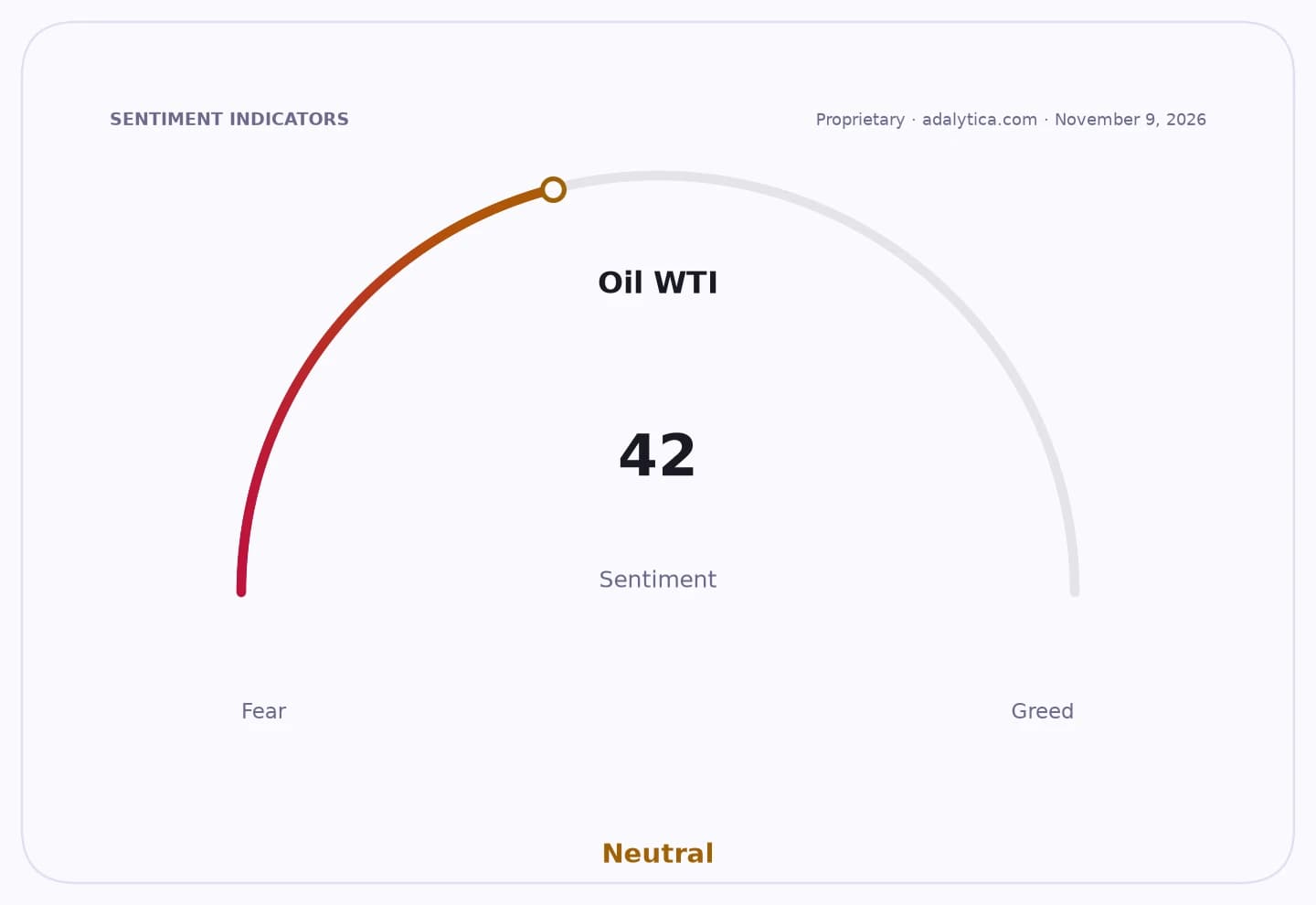
Sentiment Indicators
That matters because oil markets are already sensitive to any sign that spare capacity is being tested. Disruptions to a key regional pipeline can quickly tighten crude and product supply in Central and Southeast Europe, lifting import costs for refiners and pressuring margins for consumers and industries that rely on diesel and heating fuel.
The rally also comes against a backdrop of renewed concern over Saudi energy infrastructure and rising risk around the Strait of Hormuz, two chokepoints that can move global benchmarks when traders fear retaliation or a broader supply interruption. Brent’s advance underscores how quickly the market is repricing a premium for geopolitical instability after periods of relative calm.
Energy shares and oil-linked funds tend to benefit when crude spikes, while refiners, airlines and industrial users face higher input costs. U.S. benchmark-sensitive funds such as USO and Brent-linked products like BNO have already reflected the firmer tape, while the energy sector ETF XLE has held near the mid-$60s as investors weigh stronger upstream cash flow against broader market volatility.
For investors, the key question is whether the move is a one-off risk premium or the start of a more durable rally driven by supply outages and escalating regional tensions. Near term, traders will watch for repairs on the JANAF line, any further disruption in the Middle East and signs that governments tap reserves or move to cushion local fuel markets.
| Entity | Gains | Losses |
|---|---|---|
| Oil producers | ▲Higher realized prices | ▼Demand destruction risk |
| Energy ETFs / longs | ▲Mark-to-market upside | ▼Volatility if supply fears fade |
| Refineries / airlines | ▲None | ▼Higher feedstock and fuel costs |
| Consumers / importers | ▲None | ▼More expensive gasoline and diesel |