Brent crude slid 2.14% to $104.32 a barrel on Friday after a sharp run-up the previous session, as traders pared geopolitical risk premiums tied to the Middle East.
Brent crude falls 2.14% to $104.32
The pullback matters because crude at this level still keeps global inflation pressure elevated, but the drop shows how quickly oil markets can unwind when fears of supply disruption ease. West Texas Intermediate fell 2.33% to $92.41 a barrel, underscoring that the move was broad-based rather than limited to the Atlantic benchmark.
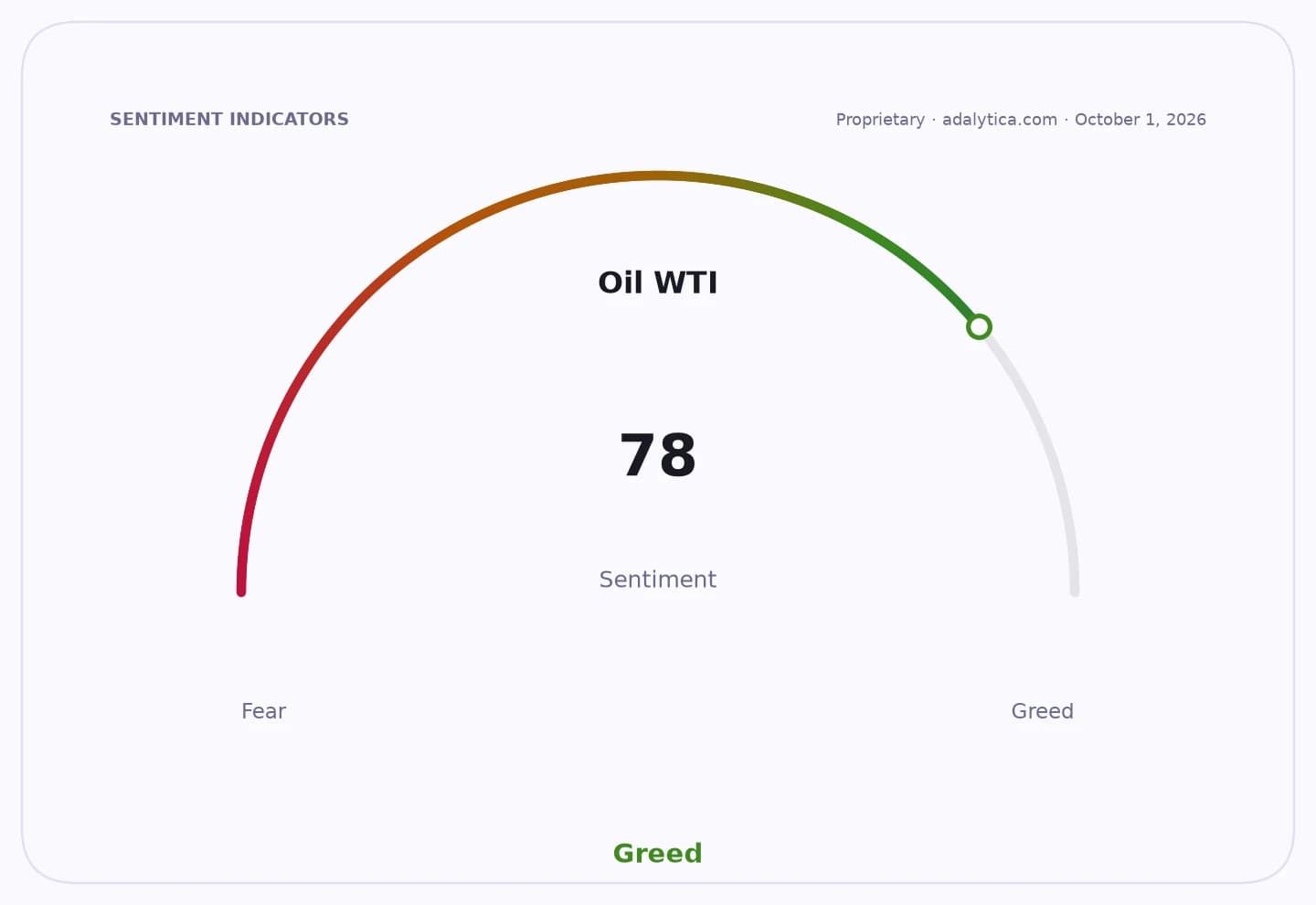
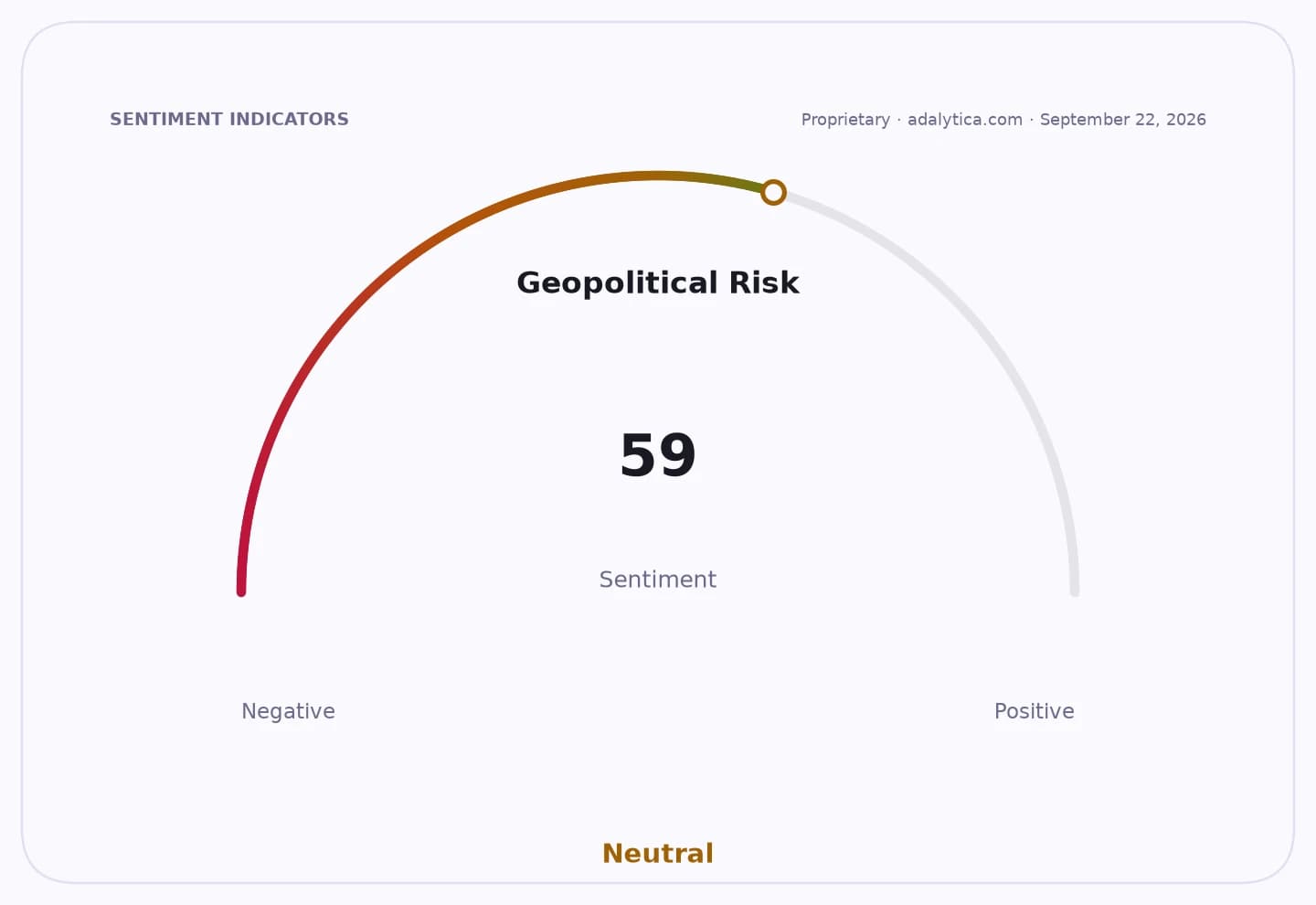
Sentiment IndicatorsⓘProprietary · adalytica.com · October 2, 2026
This is a snapshot — live sentiment, awareness and momentum for 130+ markets update continuously in the dashboard.Open AlphaPulse
Oil has been one of the market’s most sensitive geopolitical trades, with prices whipping higher and lower on signs of escalation or de-escalation in the region. Brent’s slide comes after it had surged above $105 a barrel, a reminder that traders remain highly exposed to any fresh disruption in a market already primed for volatility.
For consumers and central banks, sustained prices above $100 keep the risk of stickier inflation alive by feeding into transport, freight and manufacturing costs. For producers, however, the price level remains supportive of cash flow and margins, especially for major exporters and international oil groups.
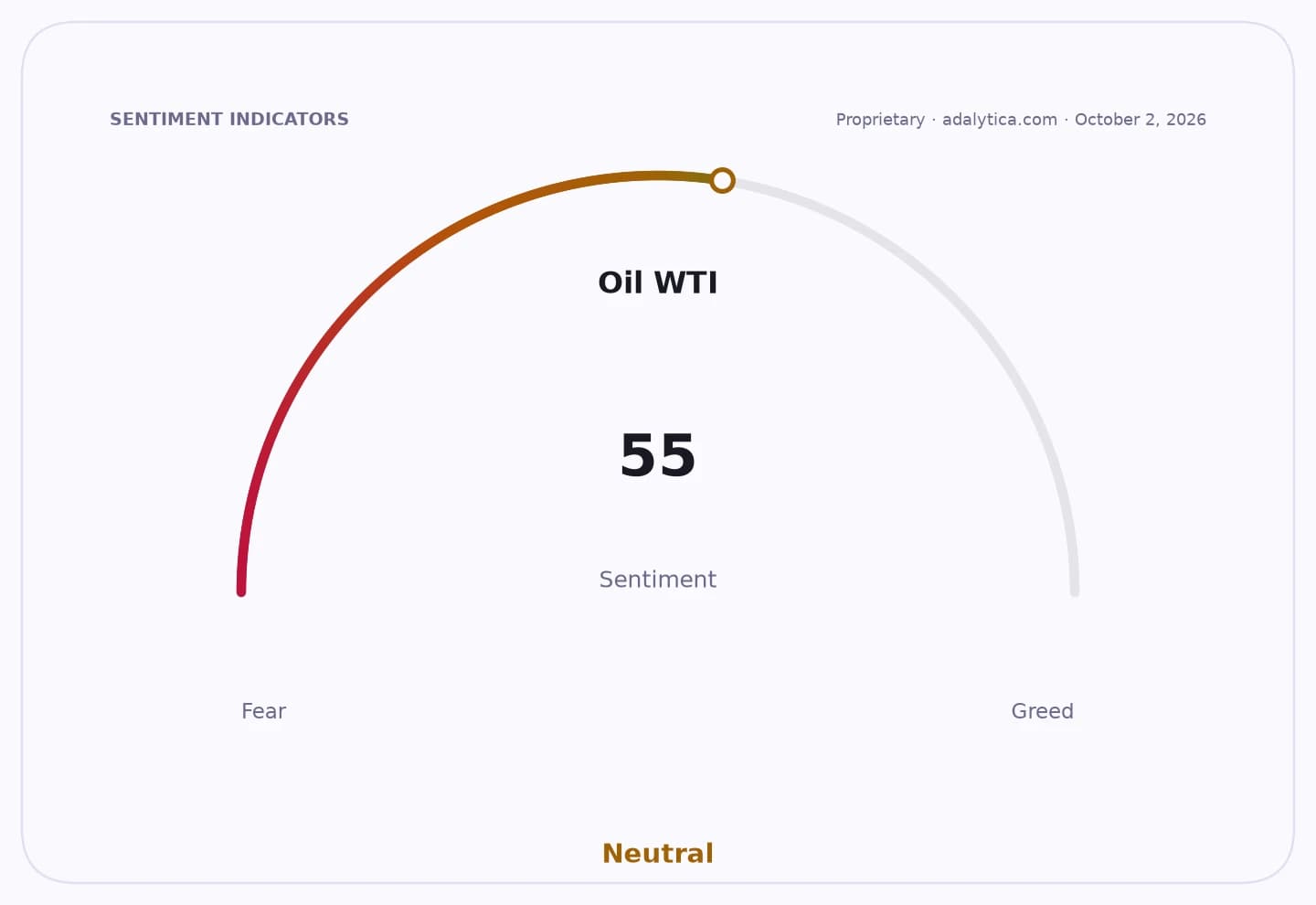
The move also fed through to oil-linked funds and energy equities, which have been trading closely with headline risk. BNO, the United States Brent Oil Fund, rose to $62.95 in the latest session after earlier swings that left its 50-day moving average well below spot, while Adalytica’s Oil WTI Trade Signals snapshot showed neutral sentiment but extreme fear in awareness, a sign of how fast positioning can change.
Chevron and Exxon Mobil, which have both flagged the impact of crude-price swings on earnings, stand to benefit from higher realized prices if tensions keep supply risk in focus. But refiners, airlines and other fuel consumers face a more difficult cost environment if Brent holds near triple digits.
Investors will now watch for any further Middle East headlines, as well as inventory data and OPEC+ supply signals, to see whether this is a brief geopolitical retracement or the start of another leg higher.
| Entity | Gains | Losses |
|---|---|---|
| Oil producers | ▲Higher realized prices | ▼— |
| Consumers | ▲— | ▼Higher fuel and transport costs |
| Brent-linked funds | ▲Volatility trading gains | ▼Near-term price whipsaw risk |
| Central banks | ▲— | ▼Stickier inflation pressures |