European refiners are paying up for physical crude after a key Saudi export route went offline, and that matters because the squeeze is hitting the part of the market that determines who actually gets barrels tomorrow, not just where futures trade.
Saudi pipeline outage lifts Europe crude premiums
The disruption to Saudi Arabia’s East-West pipeline has exposed how fragile Europe’s supply balance can be when Middle Eastern crude is diverted toward Asia and North Sea grades become the fallback. Brent futures have been hovering around $100 to $104 a barrel, but the real shock has been in spot cargoes: the premium for Johan Sverdrup crude to dated Brent jumped from about 60 cents in early September to roughly $35 a barrel by mid-month.
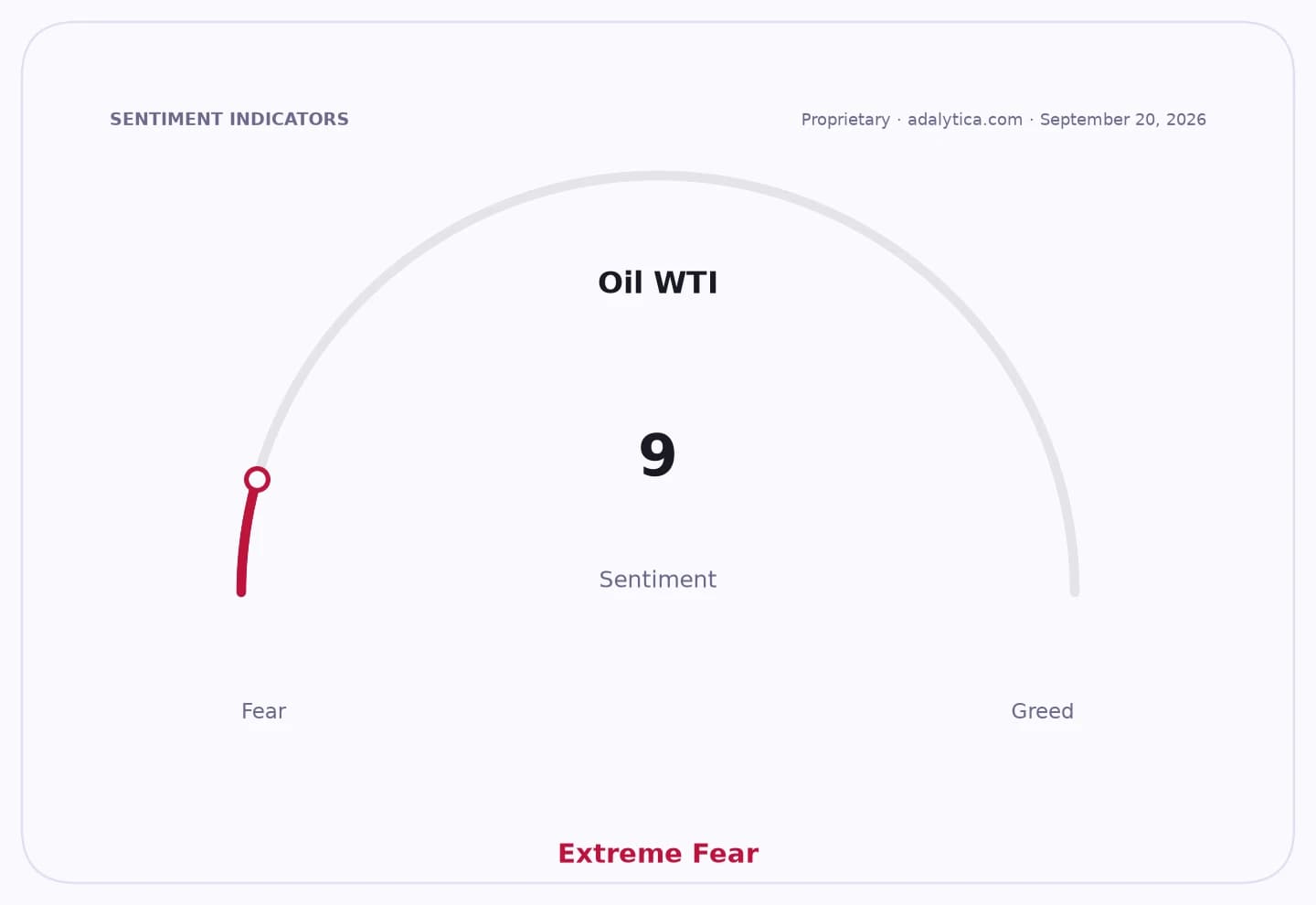
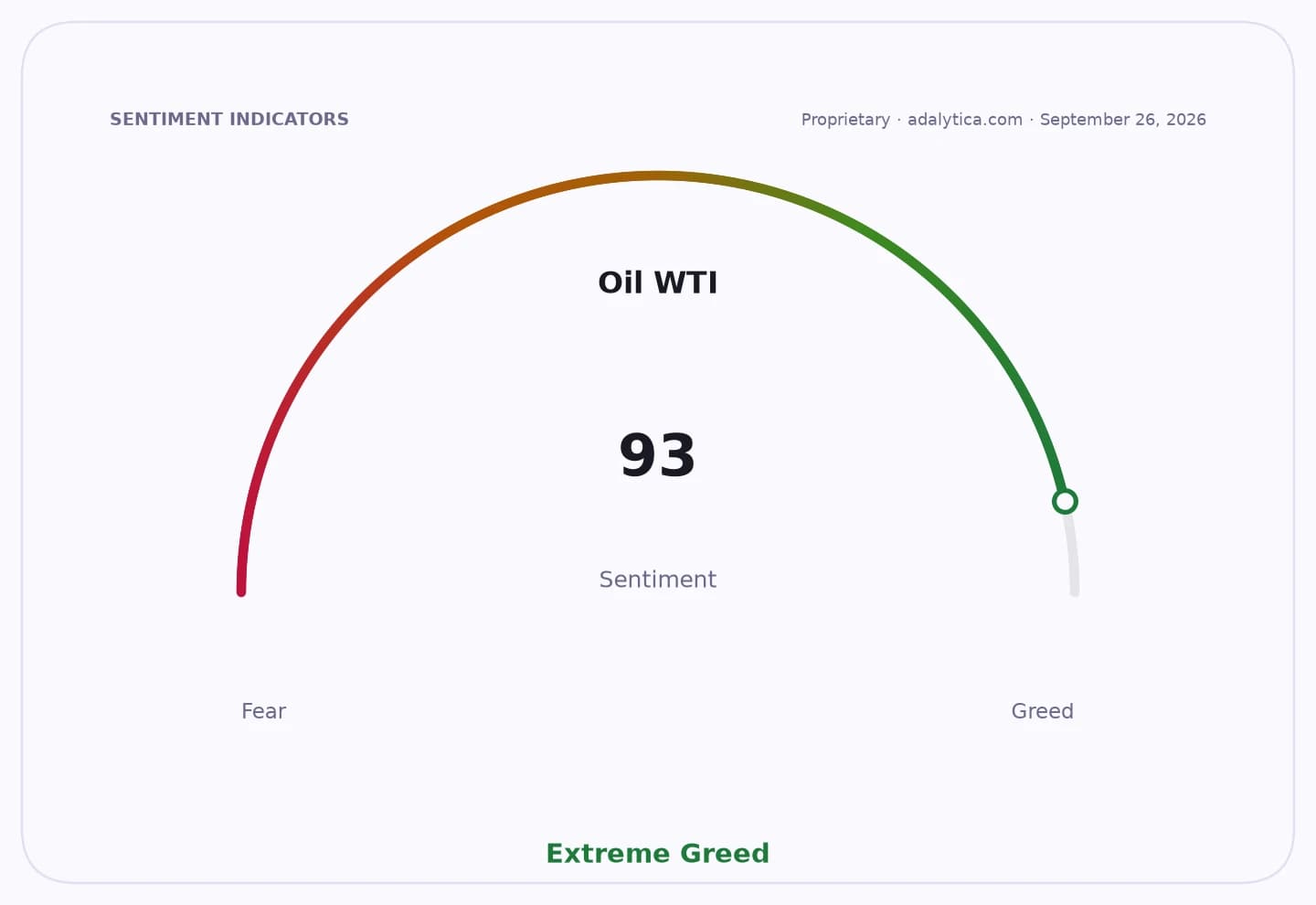
Sentiment IndicatorsⓘProprietary · adalytica.com · September 26, 2026
This is a snapshot — live sentiment, awareness and momentum for 130+ markets update continuously in the dashboard.Open AlphaPulse
That gap is the story. Futures prices capture broad expectations and speculative positioning, but physical differentials reflect immediate scarcity. For refineries built to process medium-sour barrels, the shortage forces a costly scramble to keep units running. Those costs do not stay contained at the refinery gate; they eventually show up in gasoline and diesel prices, especially in import-dependent parts of Eastern Europe.
Poland’s Orlen is a good example of how quickly the pressure spreads through the system. After turning away from Russian supply in 2023 and splitting imports roughly evenly between Saudi Arabia and Norway, the company has had to launch more than 10 emergency tenders since Sept. 11 after Saudi Aramco suspended some deliveries under long-term contracts for next month. When a large buyer starts competing in the spot market, the whole region feels it.
The economics are straightforward. The pipeline outage at three pumping stations has removed a major logistical artery just as Asian demand is absorbing much of the crude moving through the Strait of Hormuz. Saudi supply may partially resume soon, but a full repair is expected to take at least six weeks, long enough to keep the market tight and the physical premium elevated.
For investors, the immediate beneficiaries are upstream producers and energy names with pricing leverage, while refiners face margin pressure unless they can pass through higher feedstock costs. That helps explain why energy ETFs and large integrated producers remain sensitive to every fresh supply shock, even when headline Brent prices do not move as violently as spot differentials. Conventional technical gauges on energy funds such as XLE also show the sector has already been strong, with the fund trading well above its 200-day moving average even after a recent pullback.
The bigger takeaway is that oil scarcity is becoming increasingly regional, not just global. In a world where shipping routes can be disrupted quickly and Asia can outbid Europe for cargoes, proximity to supply is turning back into a competitive advantage. That is why investors should keep watching not only Brent, but also the physical market spreads that reveal where real barrels are getting scarce.
| Entity | Gains | Losses |
|---|---|---|
| Upstream oil producers | ▲Higher realized prices | ▼Refiners' input-cost squeeze |
| European refiners | ▲None | ▼Costlier feedstock, tighter supply |
| Saudi exporters | ▲Strong Asian demand | ▼Lost flexibility to Europe |
| Energy investors | ▲Higher cash flow potential | ▼Margin pressure in refining |