Oil prices rose as much as 3.8% after U.S.-Iran talks failed to produce a breakthrough, lifting fears that tensions in the Middle East could threaten crude flows and keep energy markets on edge.
Oil rises after U.S.-Iran talks fail
The move matters because Iran sits on some of the world’s largest oil reserves and any escalation around its exports, shipping lanes or regional proxies can quickly ripple through global supply, push up fuel costs and complicate inflation forecasts. A prolonged stalemate also reduces the odds of sanctions relief that could have brought more Iranian barrels back to market.
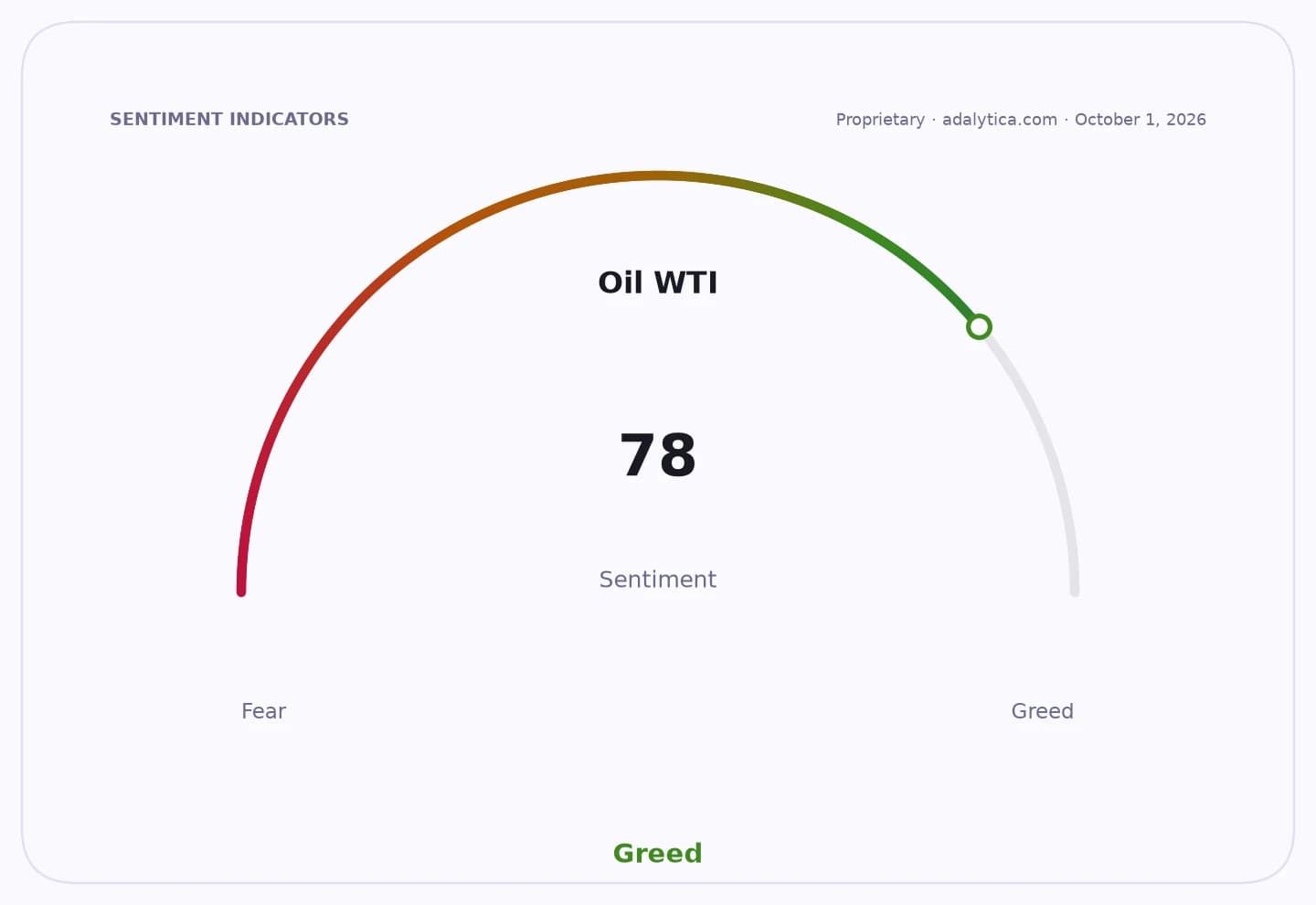
Sentiment IndicatorsⓘProprietary · adalytica.com · October 1, 2026
This is a snapshot — live sentiment, awareness and momentum for 130+ markets update continuously in the dashboard.Open AlphaPulse
U.S. crude benchmarks have been highly reactive to the diplomatic back-and-forth. West Texas Intermediate settled around $90.28 a barrel on Oct. 1 after trading near $89.38 the prior session, while the United States Oil Fund, which tracks front-month crude, held near $145.66 after a sharp run-up earlier in the month.
The backdrop is already tight enough to amplify each headline. WTI is far above its 50-day moving average, while the fund’s relative strength index remains elevated even after the latest pullback, showing the market is still digesting a strong geopolitical premium rather than a simple demand-driven move.
Energy equities also rose with the crude rally. The Energy Select Sector SPDR Fund closed around $61.50, hovering near its 50-day moving average and well above its 200-day average, a sign investors are still favoring producers and refiners when oil prices firm.
For investors, the key risk is that diplomacy remains the dominant catalyst for crude in the near term. Any sign of renewed talks could quickly unwind some of the risk premium, while further deadlock or broader regional escalation could keep oil supported and add pressure to airlines, transport firms and consumer-sensitive sectors.
| Entity | Gains | Losses |
|---|---|---|
| Oil producers | ▲Higher crude prices | ▼Demand-sensitive sectors |
| Energy equities | ▲Better cash-flow outlook | ▼Oil importers |
| Iran hardliners | ▲Leverage in talks | ▼Sanctions relief prospects |
| Airlines and refiners | ▲None | ▼Higher input costs |