Brent crude’s drop back below $105 a barrel is a warning shot for energy bulls: the market is rapidly unwinding the geopolitical premium that had been baked into prices, and that reversal matters for inflation, central banks and every stock tied to oil’s next move.
Brent crude falls below $105 as oil premium fades
The trigger is a sharp selloff across the complex. Brent fell more than 7.5% in the session, while U.S. benchmark WTI slumped more than 7% to $96.57, erasing part of the recent spike that followed Middle East supply fears. The move is not just about one headline; it shows traders are reassessing how much disruption is really embedded in prices and whether physical supply damage will match the market’s worst-case assumptions.
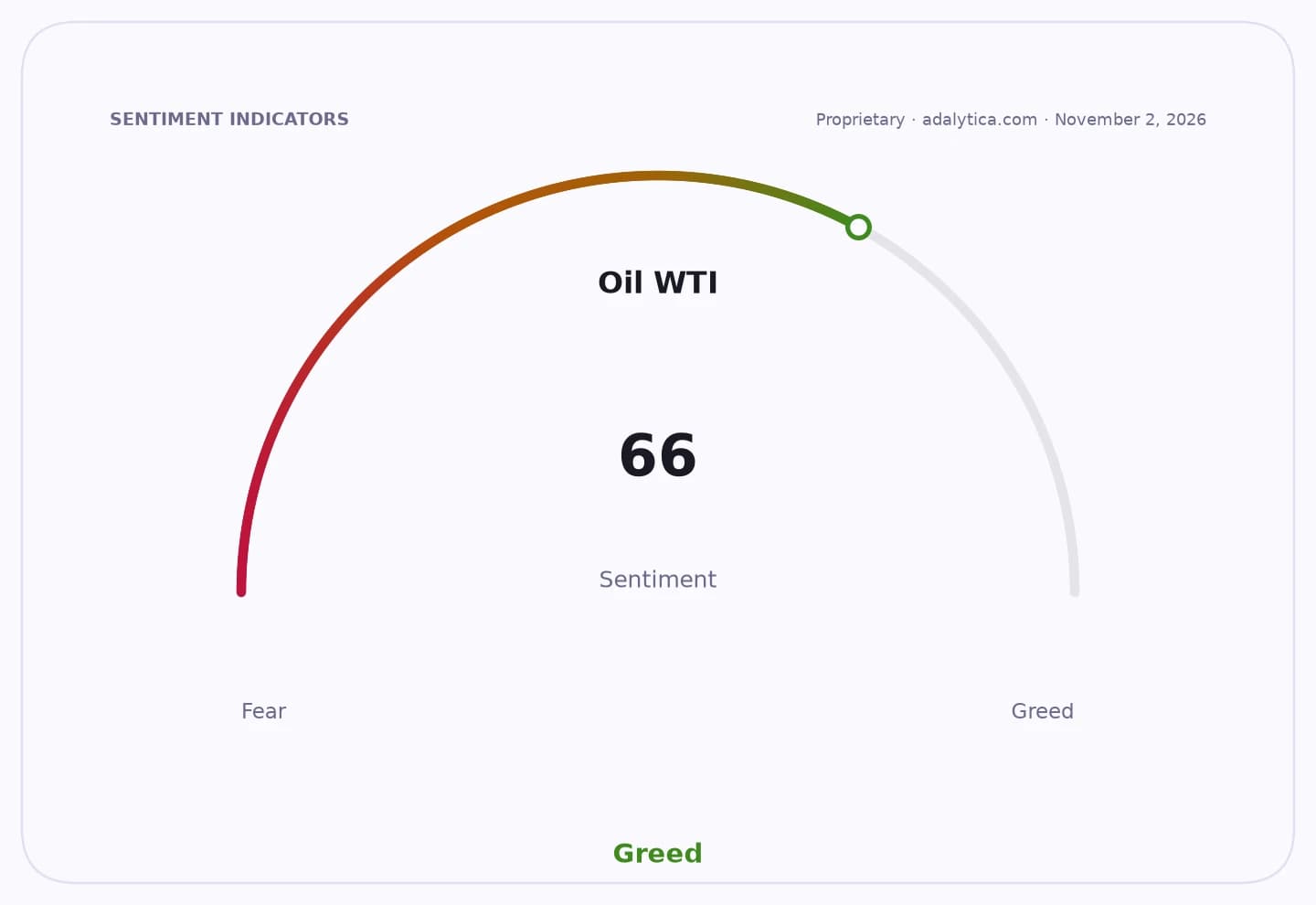
Sentiment Indicators
That matters economically because oil is still the cleanest transmission mechanism from geopolitics to the real economy. A move from above $105 toward the high $90s eases pressure on fuel costs, shipping, airline margins and consumer inflation expectations. It also cuts against the narrative that energy shocks will force policymakers to stay tighter for longer. With the U.S. 10-year Treasury yield near 4.94% and the dollar still volatile, a softer oil tape reduces one of the most immediate upside risks to inflation prints.
For investors, the big takeaway is that the oil trade has become a sentiment trade again. Brent and WTI had been pricing in a sustained war-risk premium, but the market is now leaning toward a more benign supply picture. That puts recent winners such as energy equities and oil-linked funds under pressure. BNO, the Brent ETF, fell to $65.95 on Nov. 2 after trading as high as $71.39 just days earlier, while USO dropped to $156.87 from $168.83. The technical picture has cooled too, with USO’s relative strength index easing sharply from overbought levels, a sign that the rally had become stretched even before this pullback.
The market is also telling a broader macro story: oil is flashing less inflation alarm, even as geopolitical risk remains elevated. That creates a more attractive setup for consumers, transport names and rate-sensitive parts of the market, while forcing crude bulls to ask whether the recent surge was a trading overshoot rather than the start of a new leg higher. If Brent cannot hold above the recent breakout zone, the next move could be less about a supply shock and more about a reset in expectations.
For now, the opportunity may be shifting from chasing crude higher to owning the beneficiaries of lower fuel costs. Airline, logistics and consumer-exposed stocks should gain if the retreat in oil persists, while upstream producers and leveraged energy ETFs may need to give back some of the fast-money gains. The next catalyst is whether geopolitical tensions translate into real barrels lost — or whether this selloff proves the market had simply gone too far, too fast.
| Entity | Gains | Losses |
|---|---|---|
| Airlines and shippers | ▲Lower fuel costs | ▼Less urgency on fare hikes |
| Consumers | ▲Cheaper gasoline outlook | ▼Smaller disinflation hedge |
| Oil producers | ▲— | ▼Lower crude realizations |
| Energy ETFs such as USO/BNO holders | ▲Volatility traders | ▼Momentum longs |