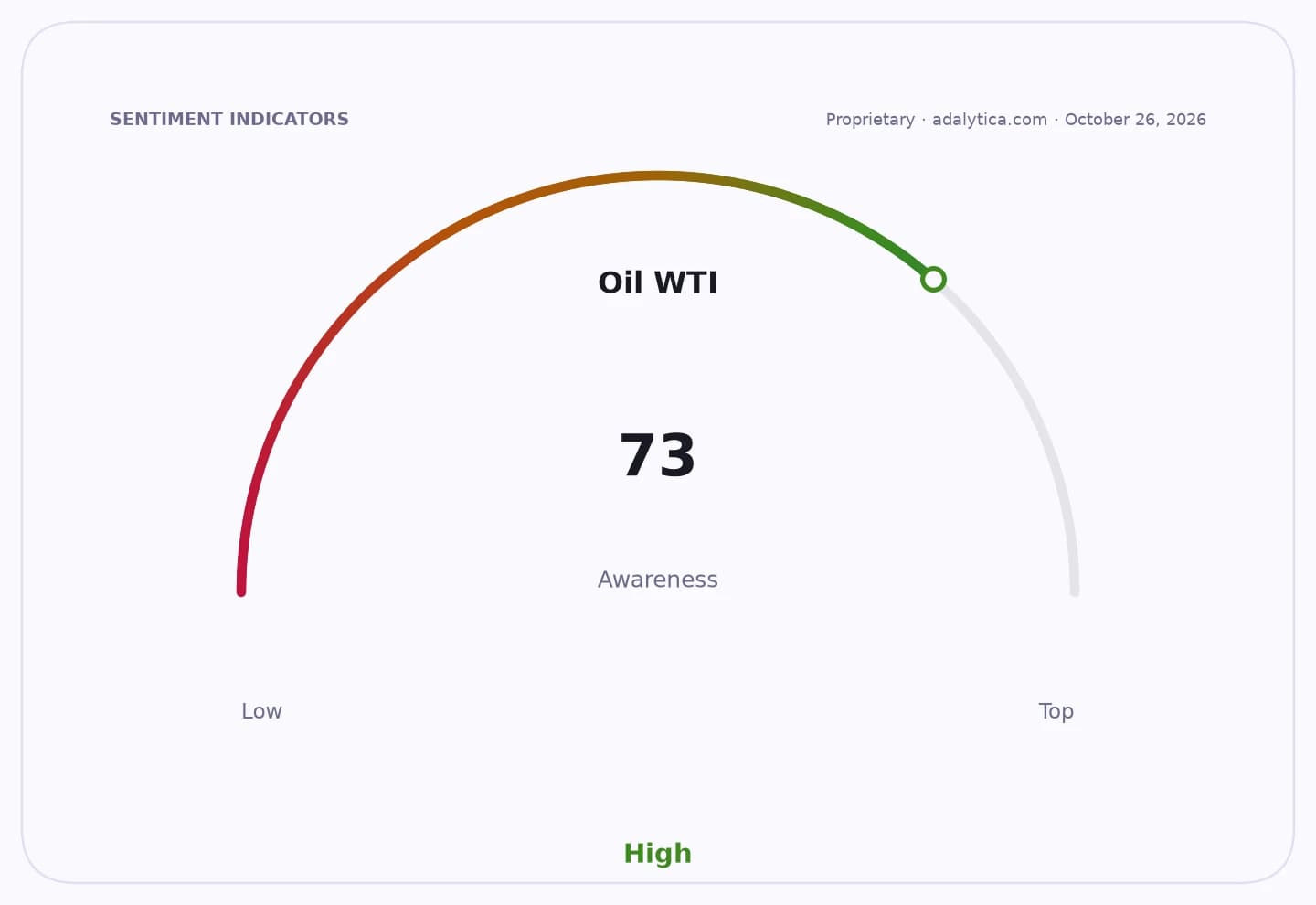
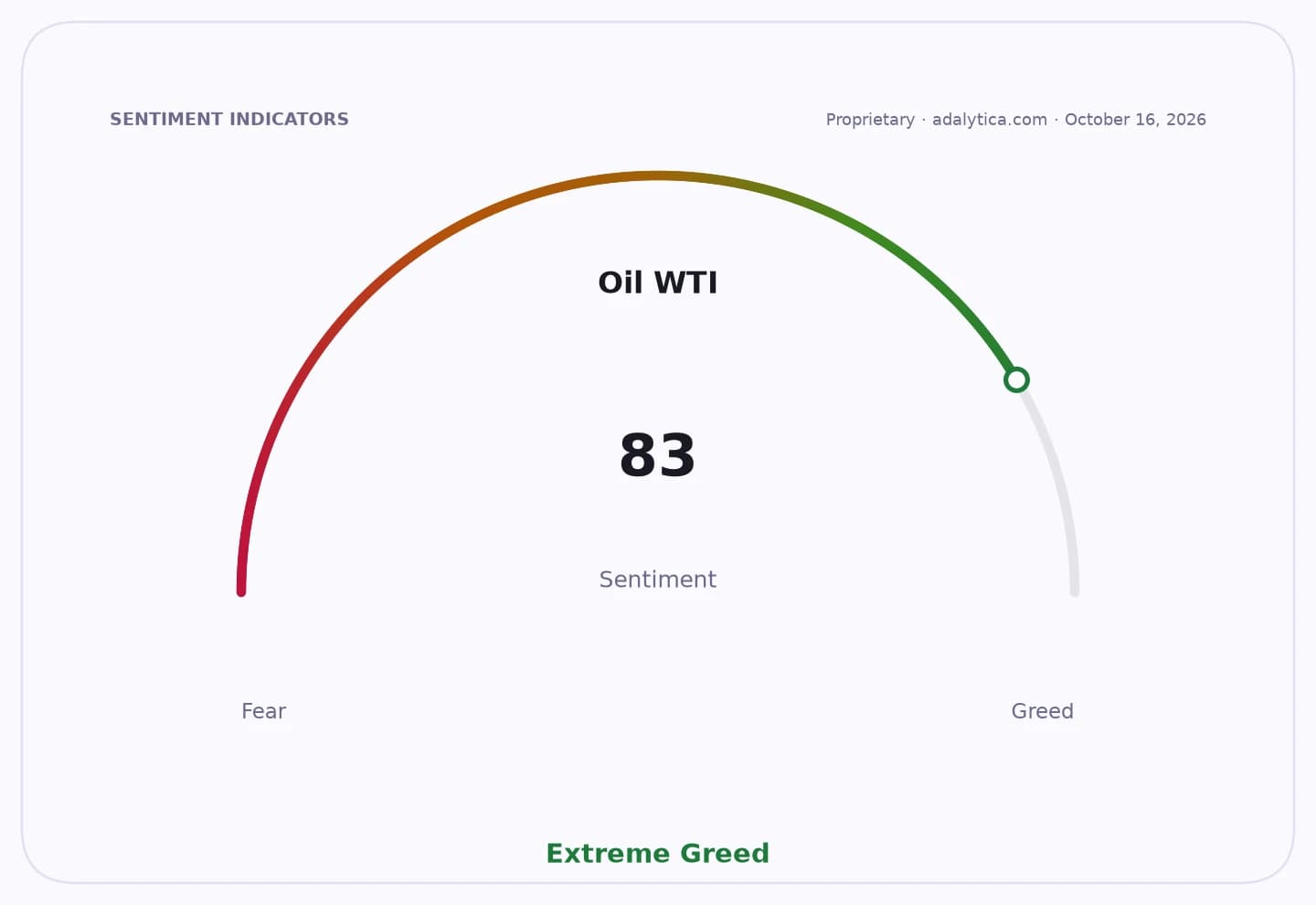
Oil prices are holding near recent highs as traders balance the risk of fresh supply disruptions in the Middle East against signs that U.S. inventories are tightening, keeping a geopolitical premium under the market even as prices pause after a sharp run-up.
Oil Prices Hold Near Highs on Supply Risks
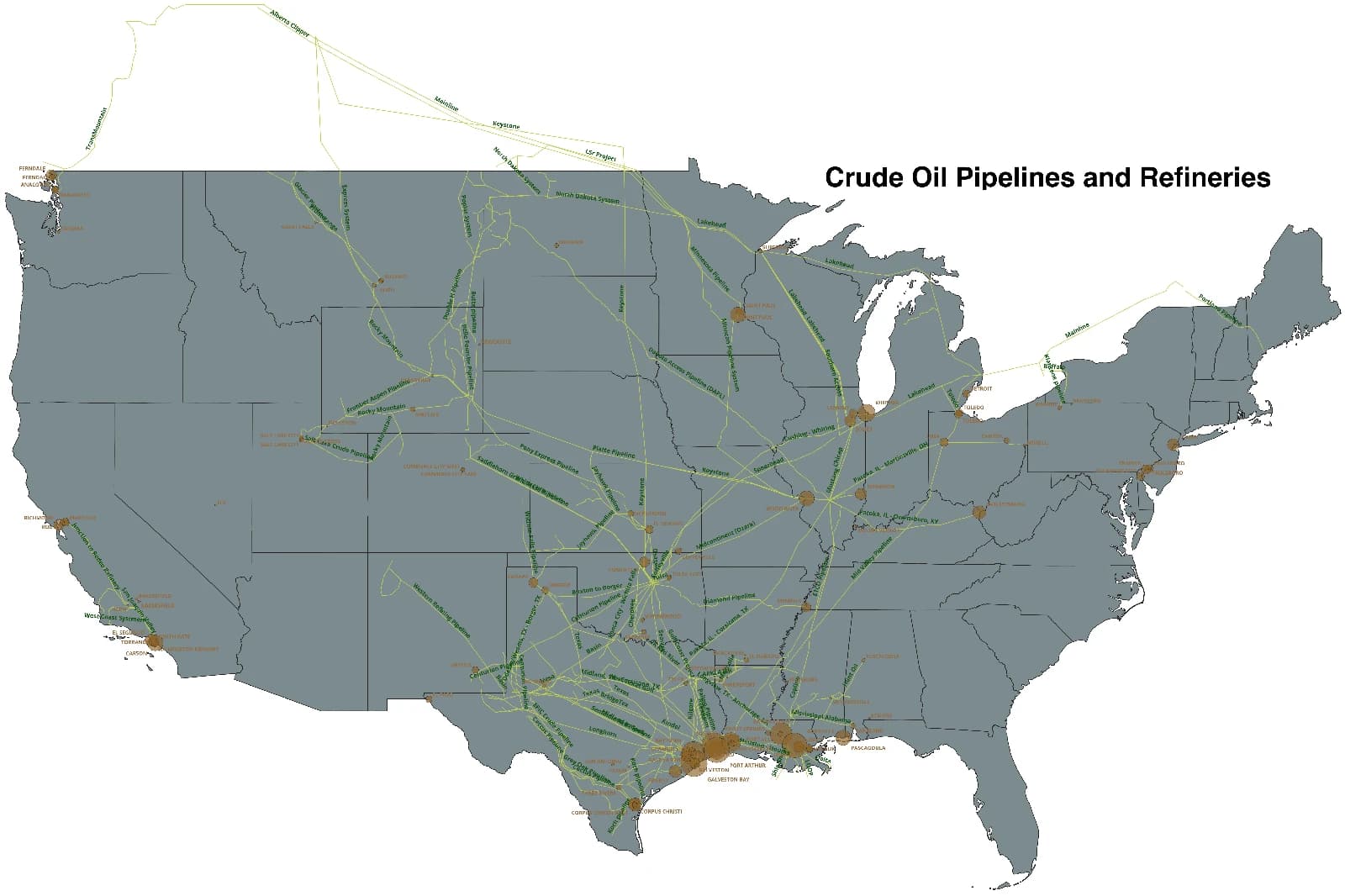
The macro significance is that crude is no longer trading on demand alone. The market is being priced by a combination of security risk, shipping disruption concerns and visible inventory tightness in the United States, the world’s biggest consumer of oil. That mix tends to support prices even when growth signals are uneven, because any additional outage can hit an already tighter balance.
Sentiment IndicatorsⓘProprietary · adalytica.com · October 27, 2026
This is a snapshot — live sentiment, awareness and momentum for 130+ markets update continuously in the dashboard.Open AlphaPulse

West Texas Intermediate was steady around $100 a barrel on the latest session after touching $103.27 on Oct. 23 and $101.76 on Oct. 26, while the U.S.-listed oil fund USO slipped to $163.71 from a recent peak of $169.53. The fund remains well above its 50-day moving average of $147.93 and its 200-day average of $122.55, underscoring how much of the recent move has already been absorbed into asset prices. At the same time, RSI readings near 78 suggest the market is still technically stretched, even if the trend remains firm.
The immediate driver remains geopolitics. Attacks on Saudi oil facilities, Houthi activity in Yemen and assaults on vessels in the region have revived fears of supply disruption across the Strait of Hormuz and wider Gulf shipping routes. Those risks matter because they can remove barrels quickly, while replacing them takes time, logistics and often political coordination. The latest move higher also reflects how quickly risk premiums can return to the market when tension flares in key producing regions.
DCOILWTICO — macro contextadalytica.com
Explore this data interactively — full history, time series and cross-market comparisons.Open AlphaPulse
Lower U.S. stockpiles reinforce the bullish case. When inventories are being drawn down, refiners and traders have less buffer against an outage, which makes the market more sensitive to any escalation. That dynamic is particularly important for consumers and downstream industries because it can keep gasoline, diesel and jet fuel costs elevated even if global demand is not accelerating sharply.
Credit markets are sending a more cautious signal, but not a contradictory one. The high-yield credit spread at about 3.3 percentage points remains above the lows seen earlier in the year, suggesting investors are still factoring in macro and geopolitical uncertainty. Yet energy equities have continued to outperform, with the XLE energy ETF at 68.39, far above its 50-day average of 64.43 and 200-day average of 57.81, reflecting expectations that upstream producers and integrated majors will continue to benefit from firm crude prices.
For producers such as Chevron, Occidental and ConocoPhillips, the backdrop supports cash flow, buybacks and balance sheet repair. The bull case is that supply risk stays elevated while inventories stay tight, allowing crude to hold a premium over levels justified by demand alone. The bear case is that any easing in Middle East tensions or a demand slowdown could unwind the geopolitical bid quickly, especially with technical indicators already signaling overbought conditions.
For investors, the key question is whether this is a temporary risk rally or the start of a more durable floor for oil. As long as the market keeps seeing threats to supply routes and evidence of tightening stockpiles, crude is likely to remain volatile but supported.
| Entity | Gains | Losses |
|---|---|---|
| Oil producers | ▲Higher realized prices | ▼Demand destruction risk |
| Energy equities | ▲Cash-flow uplift | ▼Valuation pullback if crude reverses |
| Consumers/importers | ▲— | ▼Higher fuel and shipping costs |
| Shorts/price hedgers | ▲— | ▼Losses from persistent risk premium |