Brent crude fell 1.1% to $103.60 a barrel on Tuesday as traders reduced geopolitical risk premiums ahead of U.S. legislative elections that could shape Washington’s next move in the Iran conflict.
Brent crude falls on Iran conflict de-escalation bets
The January contract settled $1.17 below Monday’s close of $104.77 on the Intercontinental Exchange, with investors weighing whether the U.S. will lean toward diplomacy after the vote or resume bombarding Iran alongside Israel. The drop extends a slide from recent highs and reflects a market increasingly trading on headlines rather than fundamentals.
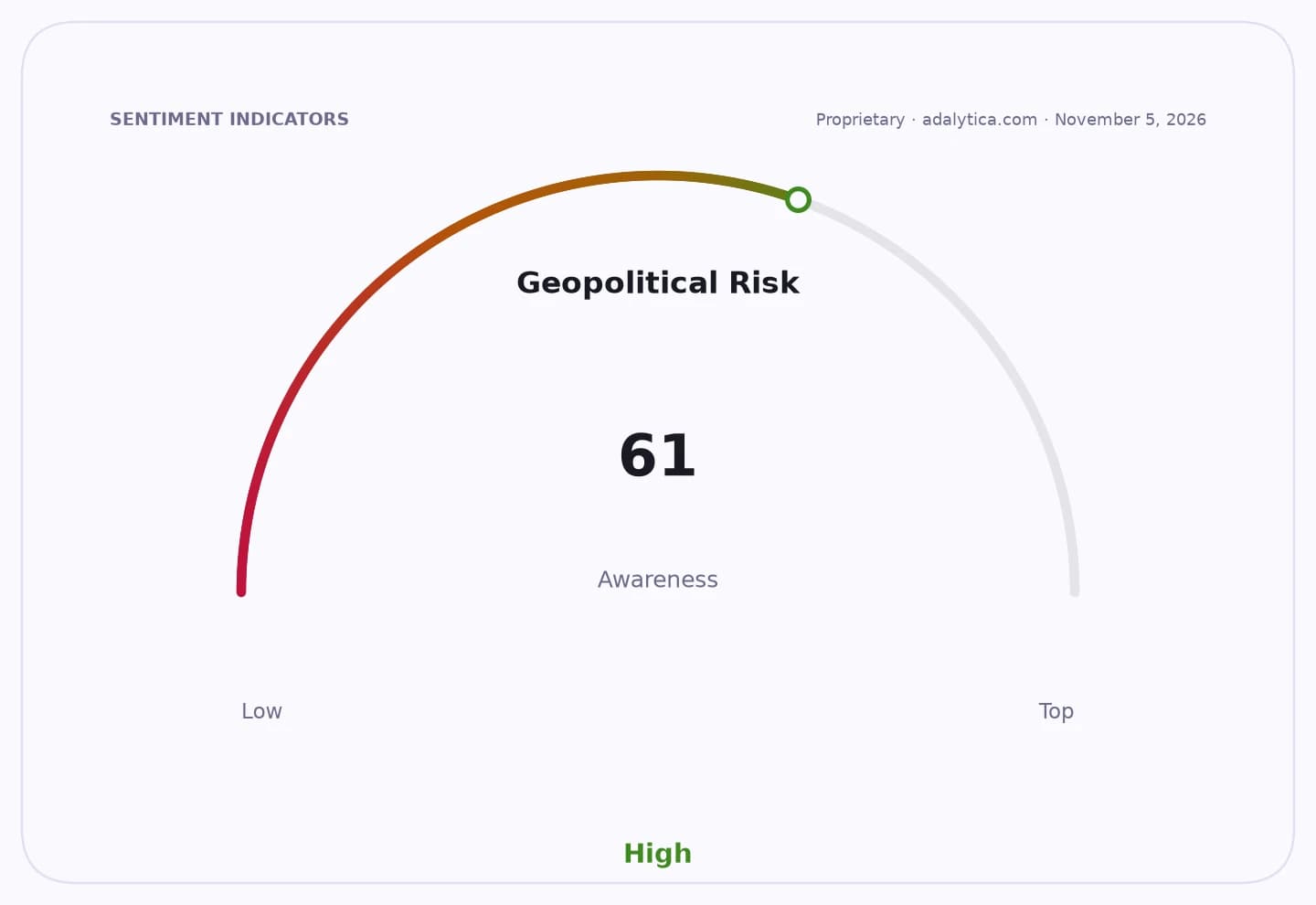
Sentiment Indicators
Oil has been among the most sensitive assets to the conflict, with fears over Gulf supply disruptions pushing prices sharply higher at times this year. Brent’s move lower signals that some traders are betting on a de-escalation, even as the broader risk to flows through the Middle East remains unresolved.
The pullback matters economically because crude is a direct input into transport, shipping and manufacturing costs, and a sustained easing in prices would feed through to lower inflation pressure in importing economies. That also gives central banks a little more room if energy costs stop reinforcing sticky consumer prices.
For investors, the move hits energy shares, oil-linked ETFs and inflation hedges in the near term, while offering relief to airlines, refiners and other fuel-intensive industries. U.S. oil funds also came under pressure, with USO falling 8.1% to $145.41 and BNO dropping 8.7% to $60.40 in the latest session, underscoring how quickly positioning can unwind when geopolitical risk fades.
The broader backdrop remains volatile. Goldman Sachs has raised its longer-term Brent outlook to as high as $140 a barrel by 2027 on supply-disruption risks and weaker Gulf output, suggesting Tuesday’s decline may be tactical rather than a structural turning point. Traders will now focus on the election result and any sign of a policy shift toward negotiation or renewed military escalation.
| Entity | Gains | Losses |
|---|---|---|
| Fuel users | ▲Lower input costs | ▼Energy price inflation relief fades if crude rebounds |
| Airlines and refiners | ▲Cheaper jet fuel and feedstock | ▼Less upside if oil spikes again |
| Oil producers | ▲Higher prices if tensions return | ▼Near-term price momentum after today’s drop |
| Oil ETF holders | ▲Positioning opportunities on volatility | ▼Mark-to-market losses from the selloff |