Brent crude’s climb to around $95 a barrel is reasserting oil as the market’s most important macro variable, tightening inflation expectations, lifting energy shares and keeping pressure on consumers and central banks alike.
Brent crude near $95 lifts energy stocks
The move matters because it is happening against a backdrop of falling inventories and renewed geopolitical anxiety, not just a short-lived speculative burst. U.S. crude stocks dropped by 4.45 million barrels, far more than expected, while worries over potential supply disruptions and fading prospects for U.S.-Iran negotiations have added a risk premium to the market. That is the kind of combination that can keep crude elevated longer than traders expect.
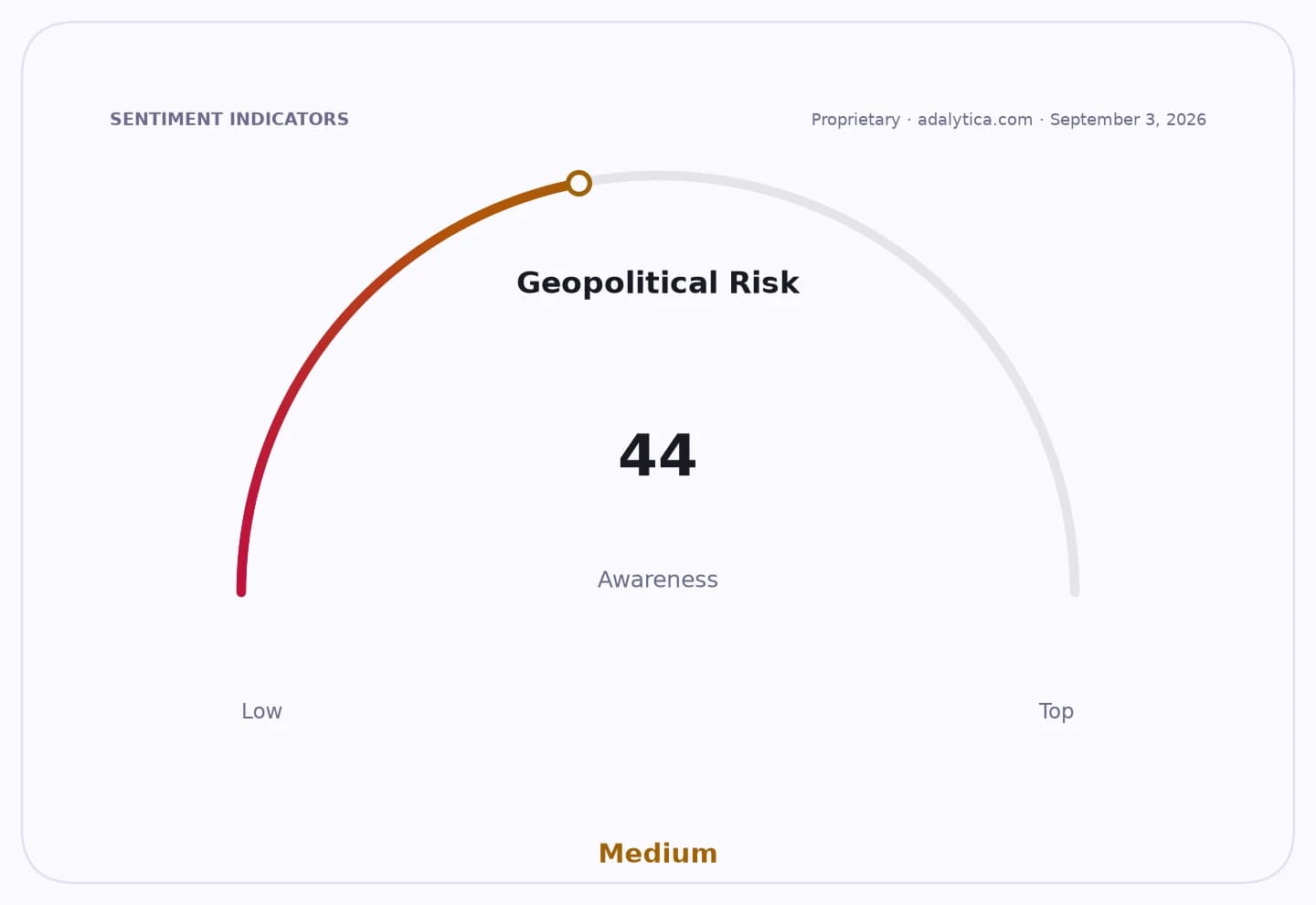
Sentiment IndicatorsⓘProprietary · adalytica.com · September 3, 2026
This is a snapshot — live sentiment, awareness and momentum for 130+ markets update continuously in the dashboard.Open AlphaPulse
For investors, the message is straightforward: energy producers and oil-linked funds are regaining pricing power, while airlines, refiners, chemical makers and consumer-facing companies face a fresh margin squeeze. Inflation is the bigger second-order effect. A Brent price near $95, if sustained, feeds directly into transport costs and broader input prices, making it harder for goods inflation to cool and limiting room for policymakers to declare victory.
The market is already responding. The U.S. Oil Fund and the broader energy sector have pushed higher, with oil ETFs trading well above their 50-day and 200-day moving averages. XLE has rallied to the mid-60s, while USO is back near 142, both showing strong momentum by conventional technical measures such as the 50-day moving average, RSI readings and MACD. Brent-linked BNO has also rebounded sharply, underscoring that this is not just a single-contract move but a broader repricing of the energy complex.
Oil WTI — 30-day sentimentadalytica.com
Explore this data interactively — full history, time series and cross-market comparisons.Open AlphaPulse
This is where the opportunity becomes asymmetric. The market often treats higher crude as a one-dimensional inflation threat, but for capital allocators it is also a cash-flow story. Integrated producers, offshore drillers and oilfield service names tend to benefit as upstream budgets firm and balance sheets strengthen. Chevron, Exxon Mobil, Occidental Petroleum and Halliburton all have direct leverage to a sustained move in benchmark prices, while the ETF trade through XLE and USO remains the cleanest expression of the thesis.
The deeper narrative is that the world is still underinvested in energy security. When supply tightens and geopolitics flares, oil does not merely move as a commodity — it acts like a tax on the economy and a transfer of wealth to producers. If Brent can hold above $90 and press toward the high-90s, the next leg is likely to be driven by inventory draws, policy headlines and position chasing. For investors, that argues for staying overweight energy and underestimating the staying power of the oil shock at your own risk.
| Entity | Gains | Losses |
|---|---|---|
| Brent crude producers | ▲Higher realized prices | ▼Demand destruction risk |
| Energy ETFs like XLE/USO | ▲Strong momentum | ▼Late buyers if oil reverses |
| Airlines and transport firms | ▲Lower fuel bills only if crude eases | ▼Higher jet fuel costs |
| Consumers and inflation-sensitive sectors | ▲N/A | ▼Rising input and shipping costs |