Crude oil’s sharp rebound is the clearest reminder that inflation is not dead, just dormant.
Brent Near $95 as Oil Rebound Raises Inflation Risk

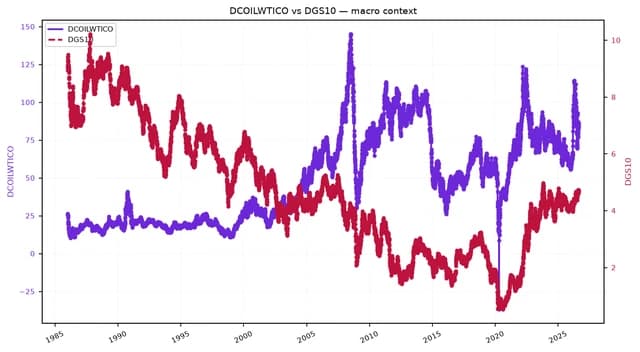
Brent is now close to $95 a barrel, with U.S. oil prices jumping about 6% in a week as geopolitical tension tightens the market and investors quickly reprice the risk of a supply shock. That matters because energy is the economy’s most important input cost: when oil moves higher, transport, manufacturing, chemicals and consumer goods all feel it, often with a lag that shows up in headline inflation and corporate margins.
The move is showing up where it counts. The oil rally has pushed energy-linked funds higher, with U.S. Oil Fund shares up to about $134.64 and Brent-linked BNO around $53.80, both well above their 50-day moving averages. The technical picture suggests momentum is still positive, but short-term readings are getting stretched, with BNO’s RSI near 71 and USO’s around 68, a sign that traders have been chasing the move rather than quietly accumulating it.
The bigger story is not just a tighter crude market, but a more fragile one. The latest jump follows renewed concerns over U.S.-Iran tensions and a repricing of supply from Russia and Venezuela, which had previously offered buyers discounts. Indian refiners, in particular, have already been forced to pay up for barrels, a sign that the market is losing some of its spare cushion even before any true disruption hits.
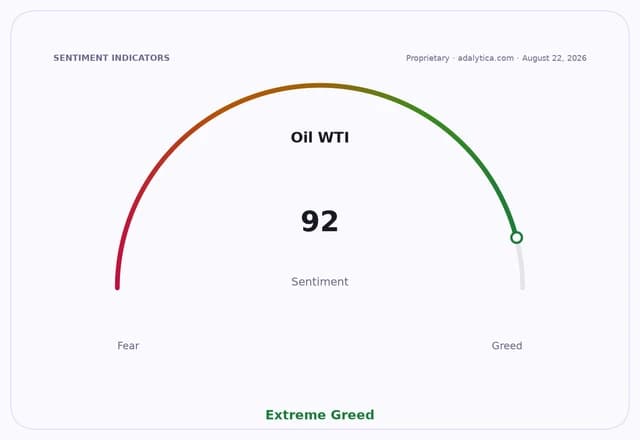
That is why investors should care beyond the energy sector. Higher oil can boost near-term earnings for producers, pipeline operators and energy ETFs, but it usually works against the rest of the market by squeezing consumers and pressuring margins. That trade-off helps explain why broad equity sentiment has softened even as oil sentiment has turned euphoric: Adalytica’s Oil WTI Trade Signals show “Extreme Greed,” while S&P 500 signals have slipped into “Fear.”
For long-term investors, the key question is whether this is just a geopolitical spike or the start of a more durable energy uptrend. If tensions ease, oil can give back gains quickly, as history shows. But if supply stays tight, the ripple effects could keep inflation sticky and support energy cash flows for longer than most portfolios expect. For now, oil belongs on the watchlist — and so does the consumer’s ability to absorb another round of higher fuel costs.
| Entity | Gains | Losses |
|---|---|---|
| Energy producers | ▲Higher realized prices | ▼Refining margins if crude outruns product prices |
| Oil ETFs and traders | ▲Momentum and price gains | ▼Late buyers if prices reverse |
| Consumers | ▲None | ▼Higher fuel and goods costs |
| Broad equities | ▲Energy stocks may outperform | ▼Margin pressure and inflation risk |