Oil prices are diverging after a sharp pullback, with Brent edging higher while U.S. crude continues to slide, underscoring how quickly geopolitics and physical market tightness are giving way to a broader risk-off move in energy.
Brent and WTI Diverge as Oil Pulls Back
The split matters because oil is a key input for inflation, transport costs and producer cash flow, and the latest move suggests traders are reassessing near-term demand against still-elevated supply risk. Brent, the global benchmark, rose to $98.23 a barrel in the latest session in the data, while West Texas Intermediate fell to $91.30, leaving U.S. crude notably weaker than its international peer.
Sentiment Indicators
That gap has widened as WTI lost more ground in recent trading than Brent, with U.S. futures down from $101.94 on May 1 to $91.30 on the latest reading, while Brent has eased from $114.44 to $98.23 over the same stretch. The divergence is important for investors because it changes margins for refiners, the valuation case for upstream producers and the trading economics for export-heavy producers versus U.S.-focused operators.
The move also shows up in fund proxies. USO, which tracks WTI-linked exposure, closed at 148.41, below its 50-day moving average of 152.22, while Brent-linked contracts remain above their own recent support but have also lost momentum. WTI’s relative weakness suggests traders are pricing a softer U.S. crude balance than the global market, even as Brent keeps a premium.
DCOILWTICO vs DCOILBRENTEU — macro contextadalytica.com
Explore this data interactively — full history, time series and cross-market comparisons.
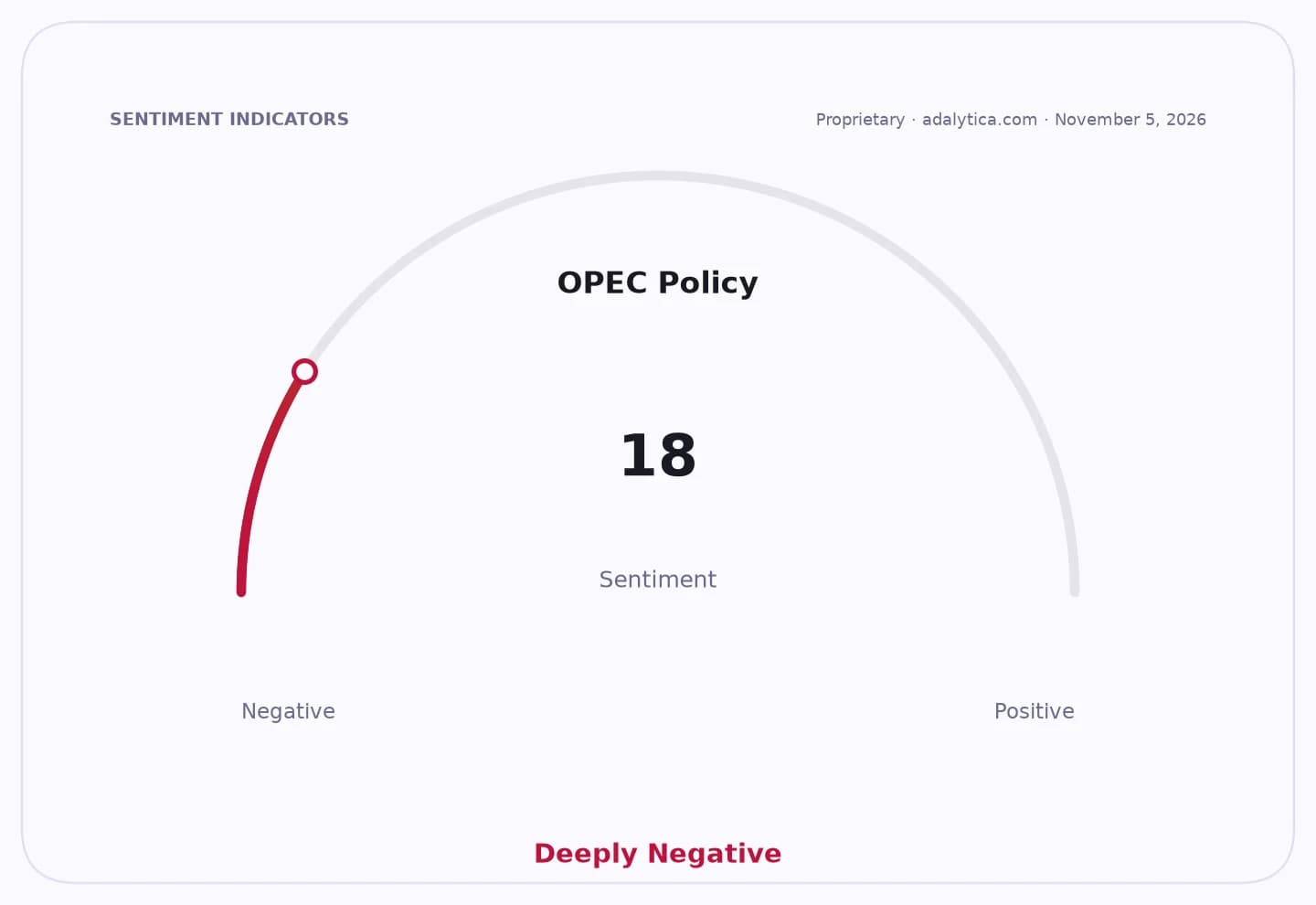
Technical indicators point to fading upside, not a clean reversal. WTI’s RSI reading is down to 37.7, while Brent’s is 37.5, levels that suggest momentum has cooled after a powerful run-up earlier this year. On Adalytica’s Oil WTI Trade Signals, sentiment sits at 60, a neutral reading, while awareness is 33, indicating the market is watching the move but has not turned strongly directional.
The broader backdrop is still defined by volatile supply expectations. Recent company filings from Chevron and ConocoPhillips flag uncertainty in crude-price assumptions, while refiners such as Marathon Petroleum continue to cite crack spreads and crude differentials as key drivers of margins. For investors, that keeps energy equities sensitive not just to outright oil prices, but to whether Brent’s premium over WTI persists.
The next catalyst is whether the recent pullback extends or stabilizes around current levels, with traders still watching Middle East risks, OPEC+ discipline and signs of slower demand into the year-end. If Brent holds up while WTI keeps easing, the market could increasingly favor international producers and refiners with flexible feedstock access over U.S.-centric crude exposure.
| Entity | Gains | Losses |
|---|---|---|
| Brent-linked producers | ▲Stronger benchmark pricing | ▼Less upside if pullback deepens |
| WTI-linked producers | ▲Lower input costs for some U.S. buyers | ▼Weaker crude revenue |
| Refiners | ▲Cheaper feedstock if WTI softens | ▼Margin pressure if demand cools |
| Oil consumers | ▲Relief at the pump and in logistics | ▼Less benefit if prices rebound |