India’s BRICS summit is set to showcase a bloc trying to turn geopolitical fragmentation into a practical economic agenda, with food and energy resilience at the top of the list as war, sanctions and trade shocks keep pressuring supply chains.
BRICS Summit Focuses on Food and Energy Resilience
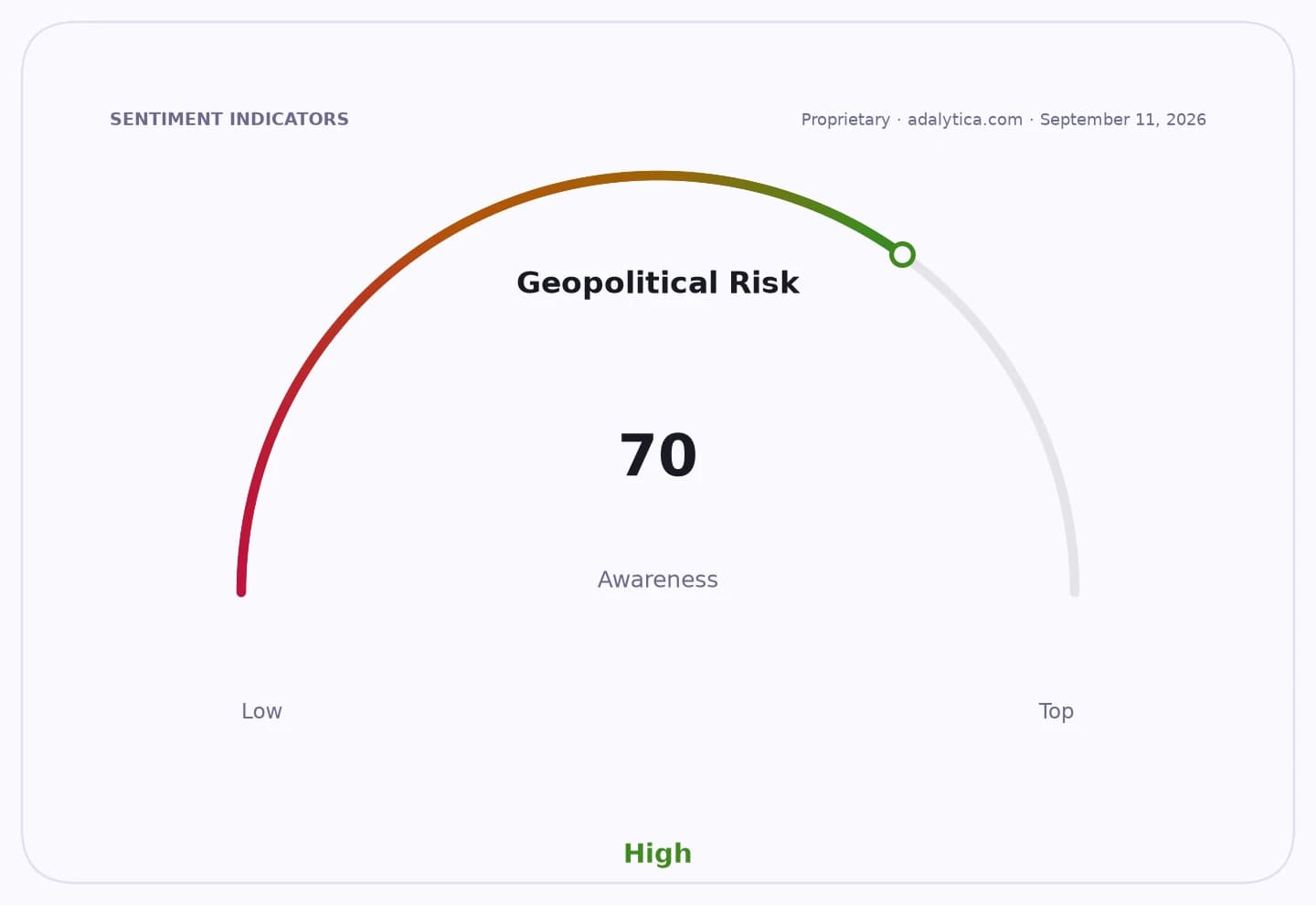
That matters because the 11-member grouping now accounts for roughly 40% of global GDP and about 26% of trade, giving any coordinated push on commodities, logistics and financing potential spillover beyond the summit room. For India, which is using its chairship to emphasize resilience, innovation, cooperation and sustainability, the message is that BRICS wants to be seen less as a political statement and more as a stabilizing force for economies exposed to external shocks.
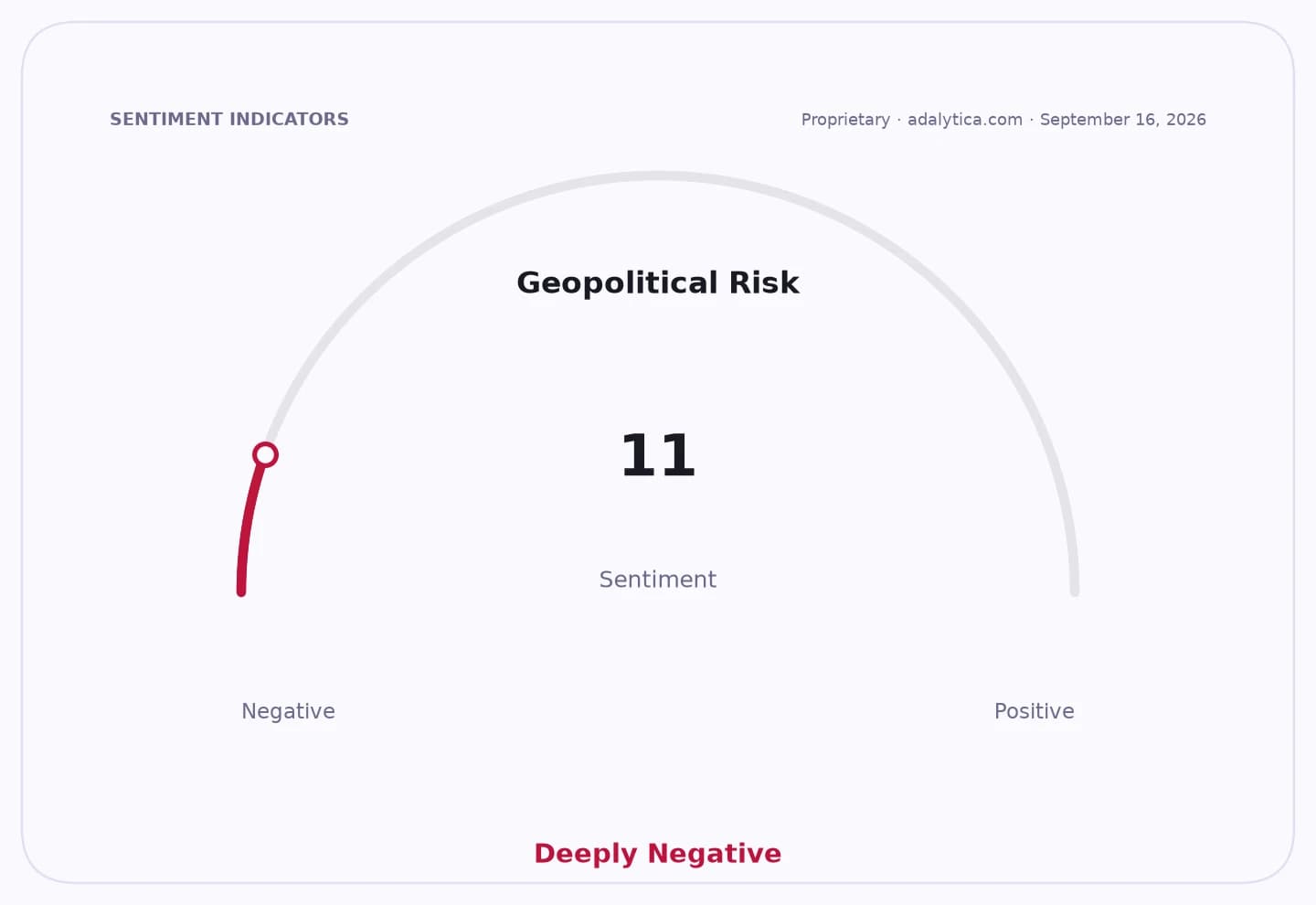
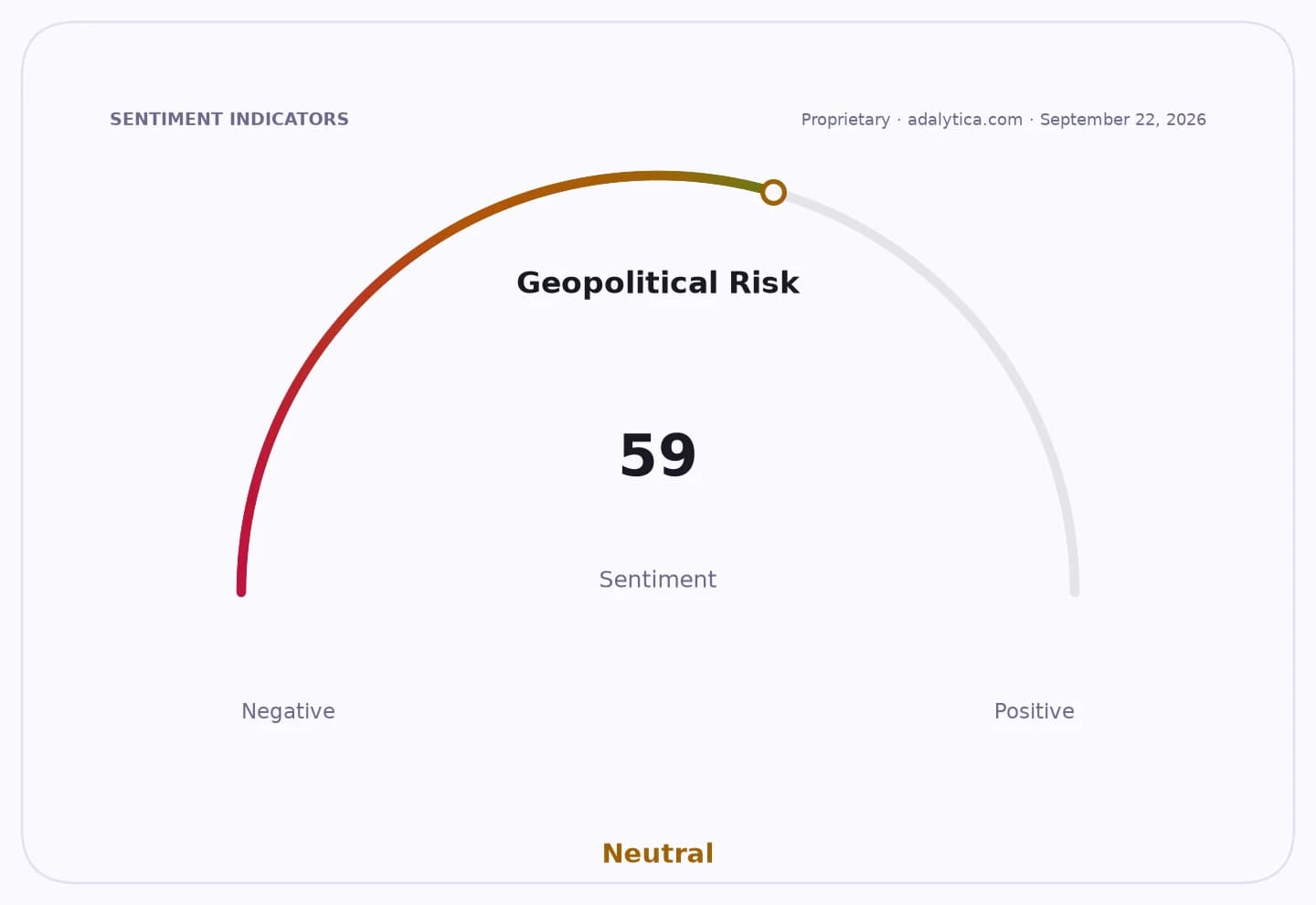
Sentiment IndicatorsⓘProprietary · adalytica.com · September 11, 2026
This is a snapshot — live sentiment, awareness and momentum for 130+ markets update continuously in the dashboard.Open AlphaPulse
The timing is pointed. The summit in New Delhi comes as the Russia-Ukraine war continues to distort grain, fertilizer and energy flows, while tensions in West Asia have raised fresh concerns about shipping chokepoints such as the Strait of Hormuz. At the same time, President Donald Trump’s tariff and trade policies are adding a new layer of uncertainty for emerging-market exporters and importers alike. Against that backdrop, leaders are expected to discuss collective resilience in food, energy, health, disaster reduction and critical supply chains.
For investors, the practical implication is that BRICS is leaning into themes that can affect inflation, commodity pricing and trade routing. Food security initiatives can support demand for agricultural logistics, storage, processing and cross-border trade finance, while energy resilience efforts keep the focus on oil, gas and alternative supply corridors. India’s emphasis on intra-BRICS trade, investment, connectivity and high technology also points to a broader attempt to reduce dependence on Western-dominated payment, shipping and financing channels.
DCOILWTICO vs PPIACO — macro contextadalytica.com
Explore this data interactively — full history, time series and cross-market comparisons.Open AlphaPulse

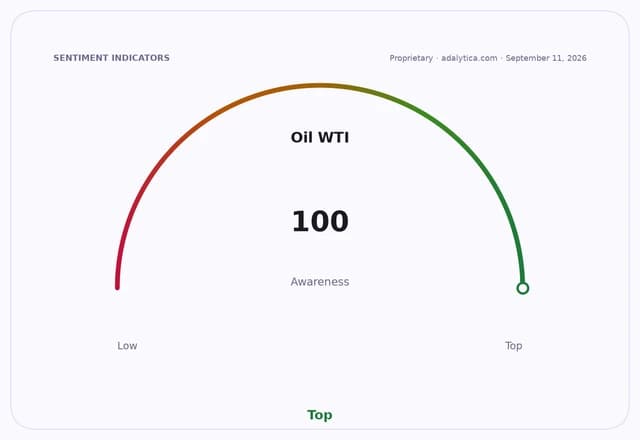
The market backdrop underscores why that matters. Brent-related WTI crude benchmarks remain sensitive to geopolitical risk, with prices still elevated enough to keep energy equities supported. The XLE energy ETF has climbed to the mid-60s, while agricultural exposure through the WEAT wheat ETF and the broader DBA agriculture fund has also firmed, reflecting how traders continue to price in weather, war and policy risk across staple markets. Adalytica’s Global Stability Sentiment gauge sits at 30, in “fear,” while its oil trade signal remains in “extreme fear,” a sign that markets still view geopolitical shocks as a live tail risk even when headline prices pause.
Yet the summit also exposes BRICS’ limits. The group still works by consensus, and disagreement between Iran and the United Arab Emirates over the West Asia crisis has left the final joint statement uncertain with only days to go. That is a reminder that BRICS can amplify shared concerns, but translating them into coordinated action is harder when members sit on different sides of key geopolitical disputes.
If leaders can produce the New Delhi Declaration and a credible agenda on food and energy resilience, the bloc may reinforce its pitch as a hedge against a more fractured global order. If not, investors may conclude that BRICS remains better at signaling dissatisfaction with the system than delivering the policy coordination needed to blunt the next supply shock.
| Entity | Gains | Losses |
|---|---|---|
| BRICS members | ▲resilience agenda | ▼policy fragmentation |
| India | ▲leadership profile | ▼consensus risk |
| Commodity producers | ▲supply-chain demand | ▼price volatility |
| Import-dependent economies | ▲diversification options | ▼higher shock exposure |