Australian households are entering another stretch of mortgage pain because even a modest rise in repayments can force families to cut essentials, and Brisbane has emerged as the country’s most stressed market in a new ranking of bill anxiety.
Brisbane tops Australian bill stress ranking
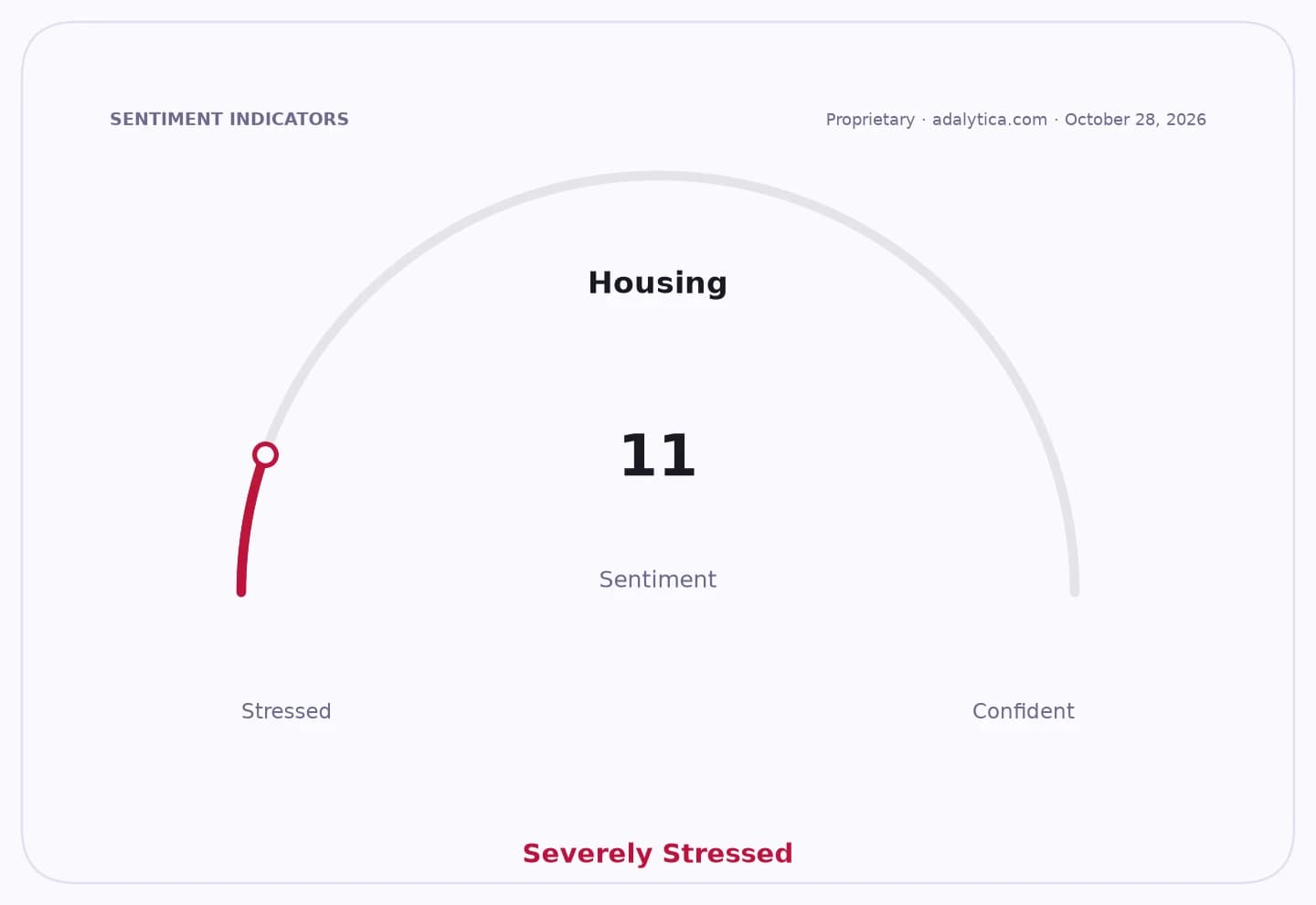
That matters because the problem is no longer just about stretched borrowers in a few overheated suburbs. It is becoming a broader household-income issue, with the latest research suggesting that a $20 increase in weekly rent or mortgage costs could push some Australians into sacrificing food, medication or other necessities. For lenders, that raises the risk of arrears and softer credit demand. For investors, it reinforces the case for caution on consumer-sensitive sectors and on banks exposed to residential credit deterioration.
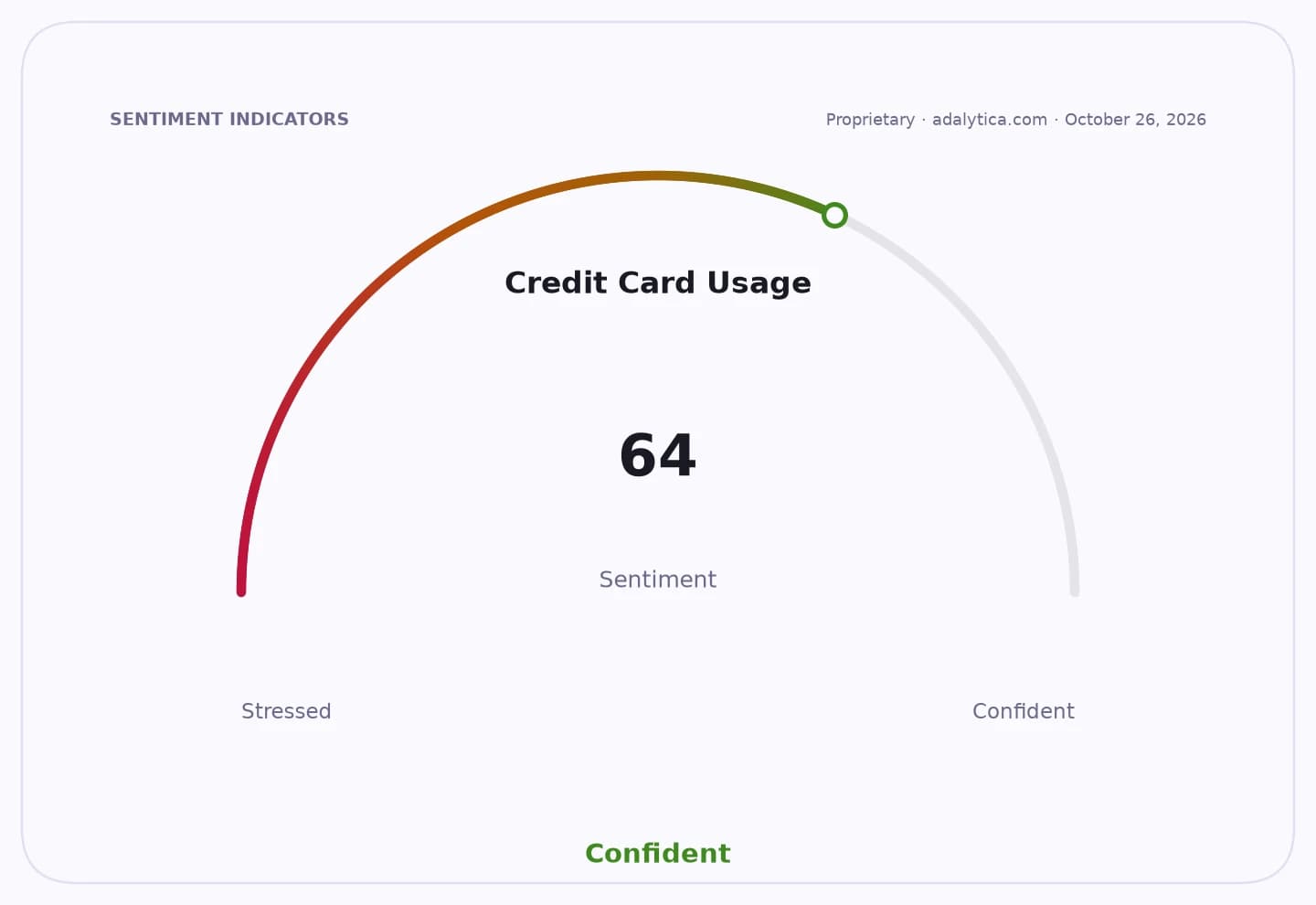
Sentiment Indicators
The strain is showing up against a backdrop of still-elevated borrowing costs. The U.S. 10-year Treasury yield has held close to 5%, while the two-year yield is near 4.7%, underscoring how restrictive global funding conditions remain. In the US, the average 30-year fixed mortgage rate has also climbed back above 7%, a reminder that households on both sides of the Pacific are still dealing with the lagged effects of a sharp rate-hiking cycle.
Australian borrowers have had some relief in lending standards, with banks recently dropping a six-month waiting period for new loans as the housing market softens. But easier access to credit does not mean easier repayment capacity. The more important economic reality is that household balance sheets remain fragile after years of inflation in essentials and rising debt-service costs. That fragility is exactly what a stress ranking captures: not just where prices are rising, but where households are closest to the edge.
For banks, the key issue is whether this translates into a meaningful rise in delinquencies or just more hardship applications and refinancing activity. Large lenders have so far managed credit quality, but they are not immune if unemployment rises or if rates stay higher for longer. The financial sector, represented in the U.S. by the XLF ETF, has been trading with its 50-day moving average only modestly above its 200-day average, suggesting investors are not pricing a full-blown credit event, but neither are they dismissing the risk of a slowdown in loan growth and fee income.
The market signal from bond proxies is similar: the iShares 7-10 Year Treasury Bond ETF, IEF, has stabilized after earlier weakness, reflecting a market still searching for the path of policy rates rather than assuming a rapid easing cycle. That leaves mortgage holders exposed to a long period of expensive debt service if central banks move only gradually.
For Brisbane, the headline ranking is a warning that Australia’s housing stress is increasingly regional and income-sensitive rather than purely a Sydney-versus-Melbourne property story. For policymakers, it is another indication that cost-of-living pressure is still filtering through the economy. And for investors, it is a reminder that household resilience — not just house prices — will determine how much damage higher rates ultimately do to banks, retailers and the broader consumer sector.
| Entity | Gains | Losses |
|---|---|---|
| Australian banks | ▲Lending volumes from looser standards | ▼Higher arrears risk |
| Mortgage borrowers | ▲Refinancing access | ▼Repayment pressure |
| Consumer staples | ▲Defensive demand | ▼Discretionary spending |
| Brisbane households | ▲— | ▼Highest bill stress |