BTCS has sold more than half its Ether holdings for about $43.8 million to slash decentralized finance debt, a move that underscores how sharply the crypto selloff is forcing leveraged corporate treasuries to de-risk.
BTCS Sells Ether to Cut Aave Debt
The Nasdaq-listed blockchain company said in a Monday SEC filing that it sold about 27,300 ETH on Friday and used the proceeds to repay Aave loans, cutting its outstanding borrowings on the lending protocol by roughly 81% to about $10.5 million. The company said the repayment was aimed at limiting liquidation risk as volatility intensified across digital assets.
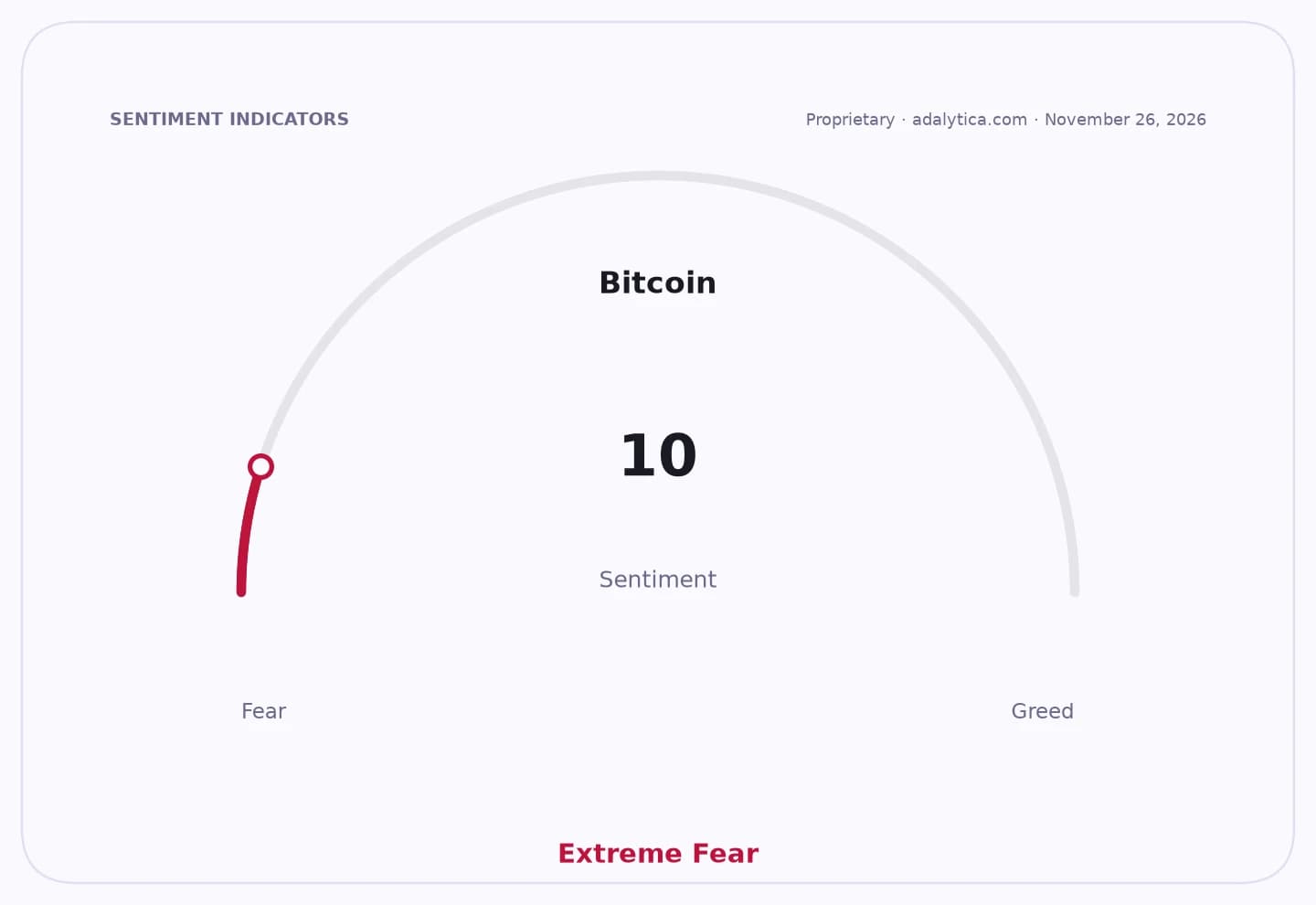
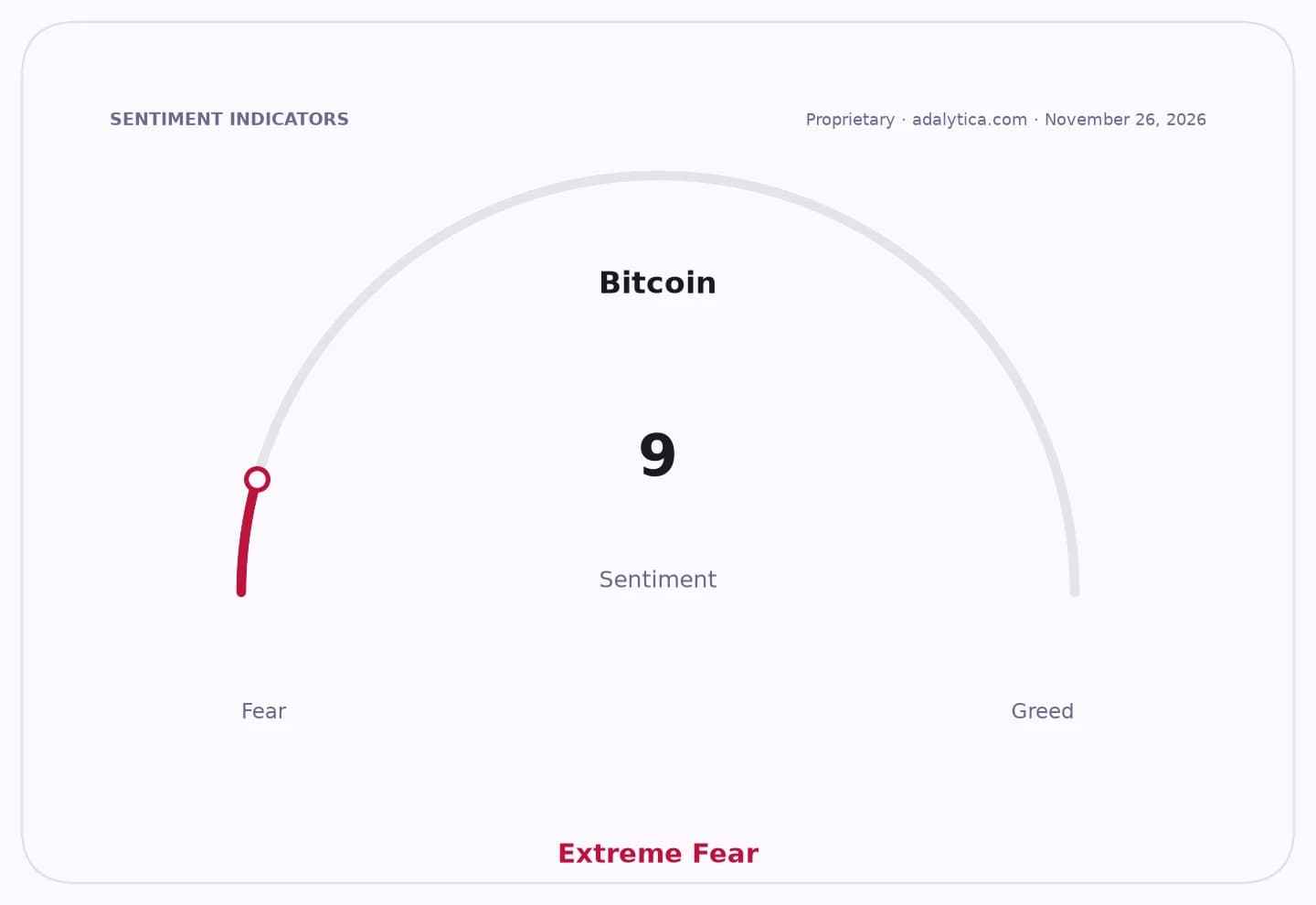
Sentiment Indicators
BTCS’s remaining Aave positions carried a loan-to-value ratio of about 32% after the transaction, while the company also said it temporarily exited liquidity pool positions in its Imperium DeFi business to reduce further exposure. It still had about 24,245 ETH after the sale, with cash and digital assets valued at $61 million as of Sunday.
The move is a reminder that Ether’s slide is no longer just a mark-to-market problem for holders. When prices fall fast enough, companies that borrowed against crypto assets are forced to shrink balance sheets, sell inventory or raise cash to stay ahead of liquidation thresholds, tightening liquidity across the market.
Ether was trading around $1,743 on Monday evening UTC, down 37.7% over the past year and 24.8% over the past 30 days, according to CoinGecko. BTCS shares have also been under heavy pressure, closing at 55 cents on Nov. 25 after trading above $1.50 earlier this year, with standard technical indicators showing the stock well below its 50-day and 200-day moving averages and its RSI in deeply oversold territory.
The sale came as other crypto treasury strategies split sharply. CoinShares disclosed last week that it sold its entire ETH treasury position and half its Solana holdings in October to fund buybacks, while BitMine Immersion Technologies kept buying, adding another 7,819 ETH over the past week and lifting its holdings to 6,085,564 ETH, or 4.98% of total supply.
For investors, the contrast highlights a market dividing between forced sellers and buyers with deeper capital cushions. If Ether weakens further, leveraged holders such as BTCS could face more balance-sheet pressure, while accumulation strategies at larger players like BitMine may continue to absorb supply, setting up a wider tug-of-war over a market still under stress.
| Entity | Gains | Losses |
|---|---|---|
| BTCS | ▲Lower liquidation risk | ▼Ether exposure |
| Aave lenders | ▲Reduced default risk | ▼Less interest income from BTCS |
| BitMine | ▲Lower average entry on accumulation | ▼Marks on existing holdings remain volatile |
| Ether shorts | ▲Pressure from distressed selling | ▼Demand from treasury buyers |