Interest in buying homes in the Buenos Aires metro area has climbed to its highest share in years, with purchase searches now close to half of all property queries as cheaper mortgage credit brings buyers back into the market.
Buenos Aires home purchase searches hit 48%

The shift matters because it marks a move away from a rent-dominated market toward one where financing is again shaping transaction flow. Zonaprop said purchase demand reached 48% of all searches on its platform in 2026, up 9 percentage points since January and above the long-term average of 38%. That puts buying interest nearly level with traditional rental demand at 49%, while temporary rentals account for just 3% of searches.
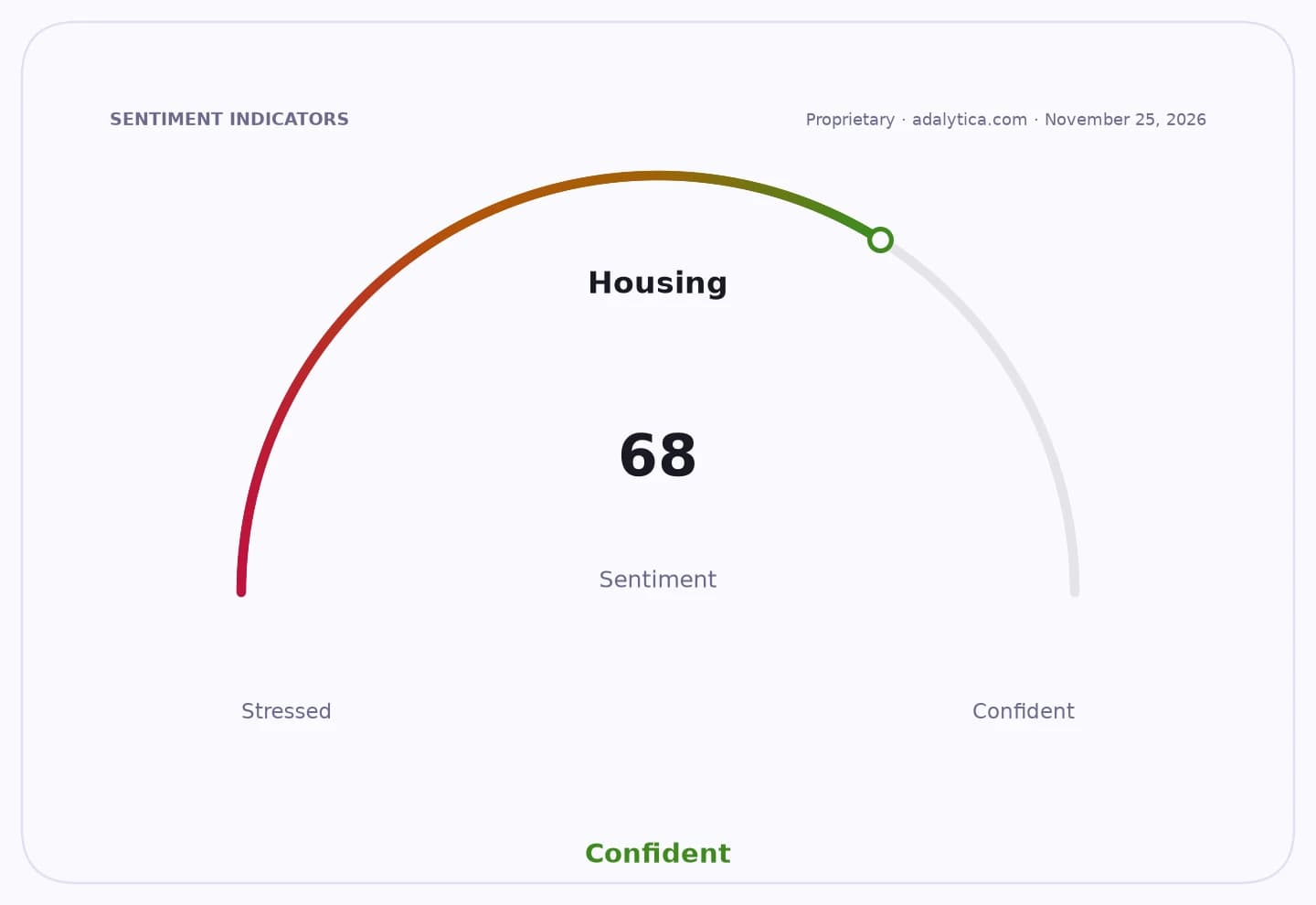
Sentiment Indicators
The recovery is being driven largely by mortgage lending, which has become more accessible after years of tight credit conditions. The average rate on UVA-indexed loans is 7.5%, down from 9% in 2025, and 19% of deeds through September were completed with a mortgage. Searches filtered as “apt for credit” have risen 35% since January, suggesting that financing is not only supporting interest but also filtering buyers into the market by budget and eligibility.
For the broader housing market, the implications are significant. More financing typically increases liquidity, shortens selling times and supports prices in the most affordable segments first. In this cycle, the strongest demand is concentrated in smaller units and lower ticket sizes: in CABA, GBA Oeste and GBA Sur, properties below $100,000 lead contacts per listing, while in GBA Norte the strongest interest is in homes up to $157,000. Two- and three-room units dominate searches, reinforcing the idea that households are still highly rate-sensitive and affordability constrained.
The pattern also points to a market recovering unevenly. Apartments account for 66% of purchase searches, but the sharpest pressure falls on PH units, which receive far more inquiries than average apartments in several submarkets. That suggests buyers are hunting for relative value and space rather than simply returning to the broadest segment of the market. Houses, by contrast, are still seeing weaker interest, while land remains the least sought-after asset class.
For banks, the revival in mortgage demand could support loan growth, though the scale remains modest by regional standards. For developers, brokers and sellers, the return of financing improves the odds of closing transactions, but only in price bands where incomes and credit limits overlap. The question now is whether the rebound in mortgage access can be sustained enough to broaden demand beyond the current core of lower-priced units and turn search interest into a durable recovery in deeds and prices.
| Entity | Gains | Losses |
|---|---|---|
| Buyers with mortgage access | ▲Easier entry to homeownership | ▼Still constrained by affordability |
| Sellers of sub-$100,000 homes | ▲Higher demand and faster turnover | ▼Buyers of larger homes |
| Banks and mortgage lenders | ▲Loan growth and origination volume | ▼Cash-only market participants |
| Renters / temporary rental market | ▲Lower competition for rentals | ▼Share of housing demand |