House prices in the Czech Republic still rose year on year in the third quarter, but the latest market data suggest the rally is losing steam as sales volumes soften, listings rise and sellers start cutting prices.
Czech House Prices Rise as Sales Slow

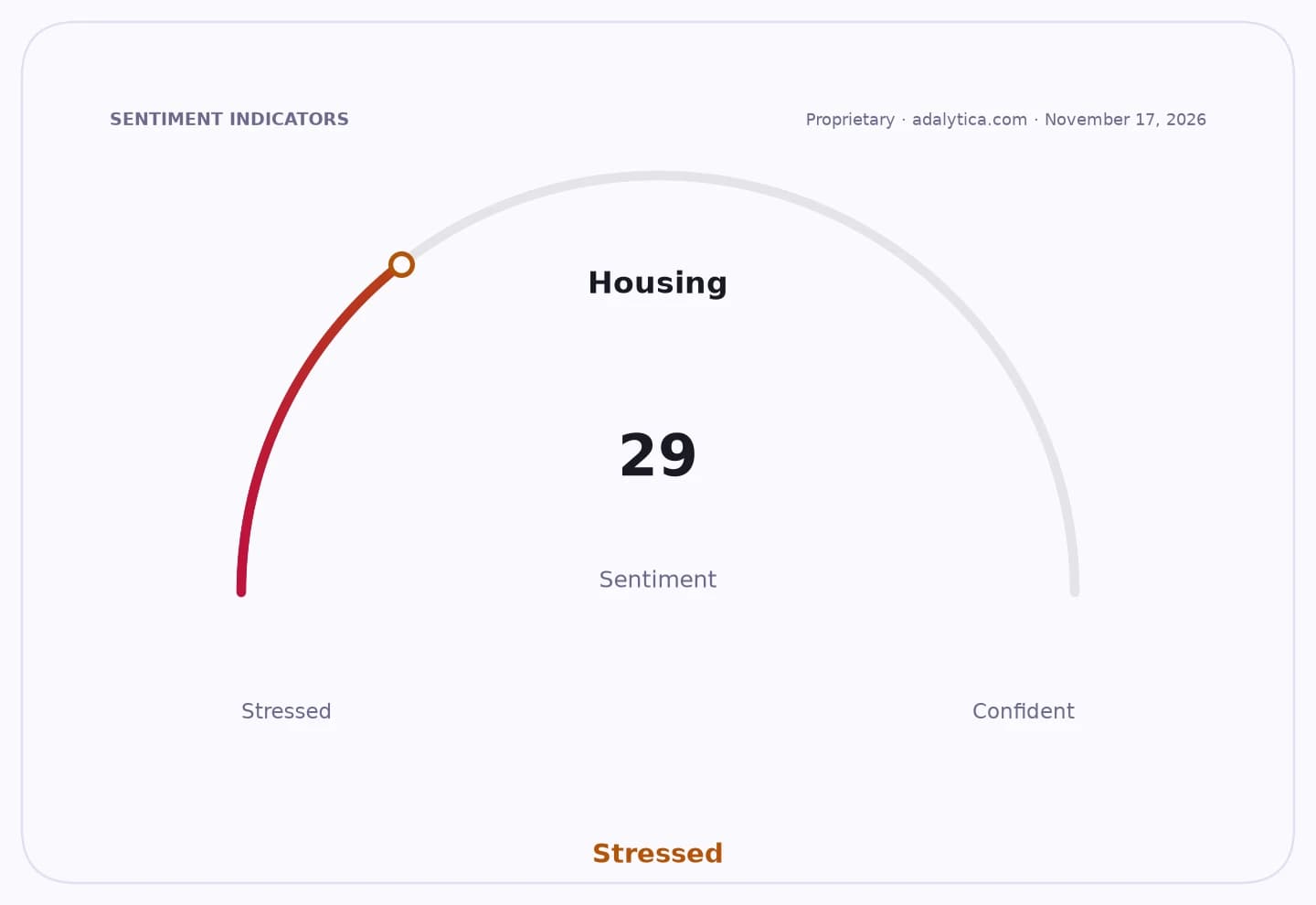
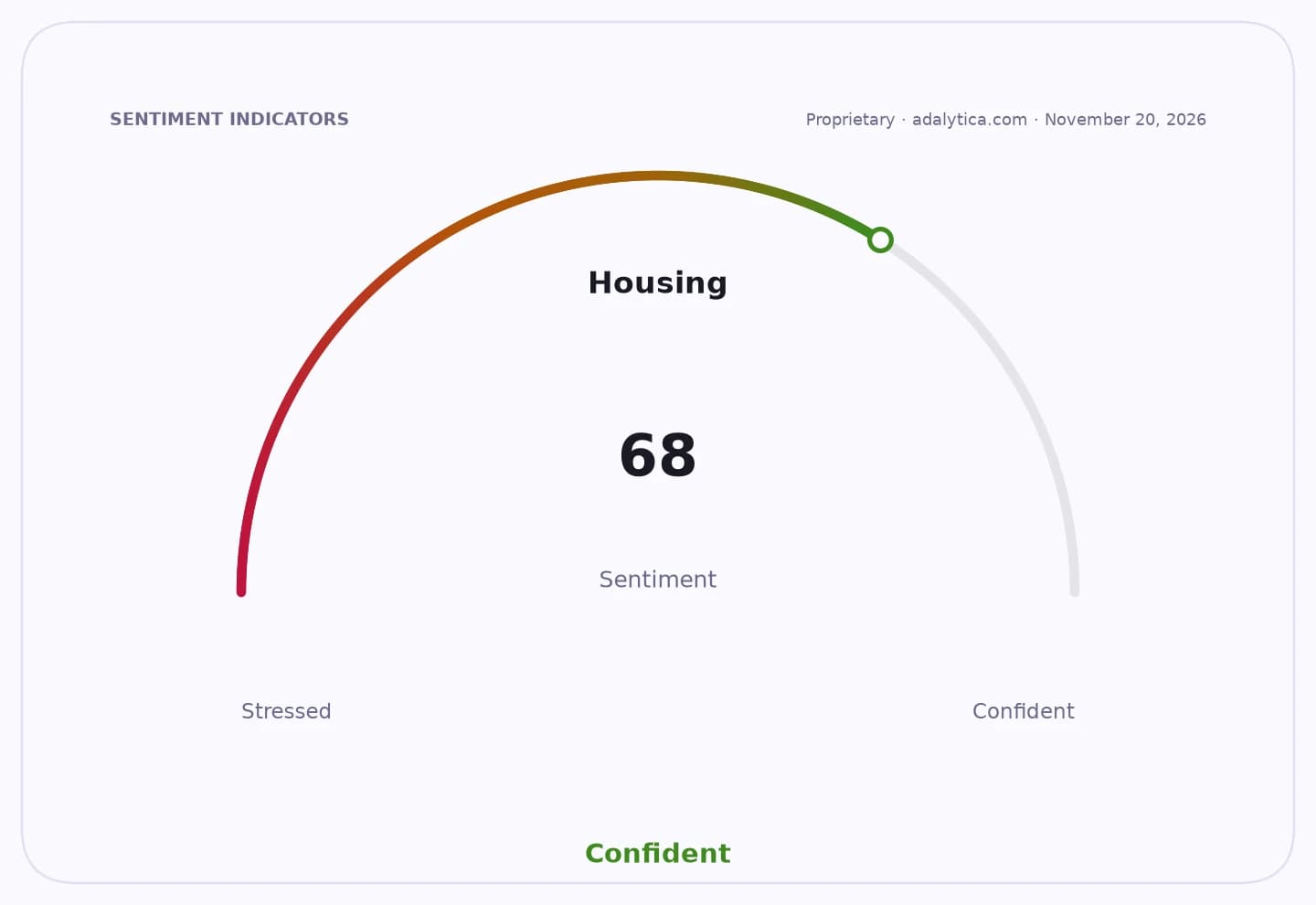
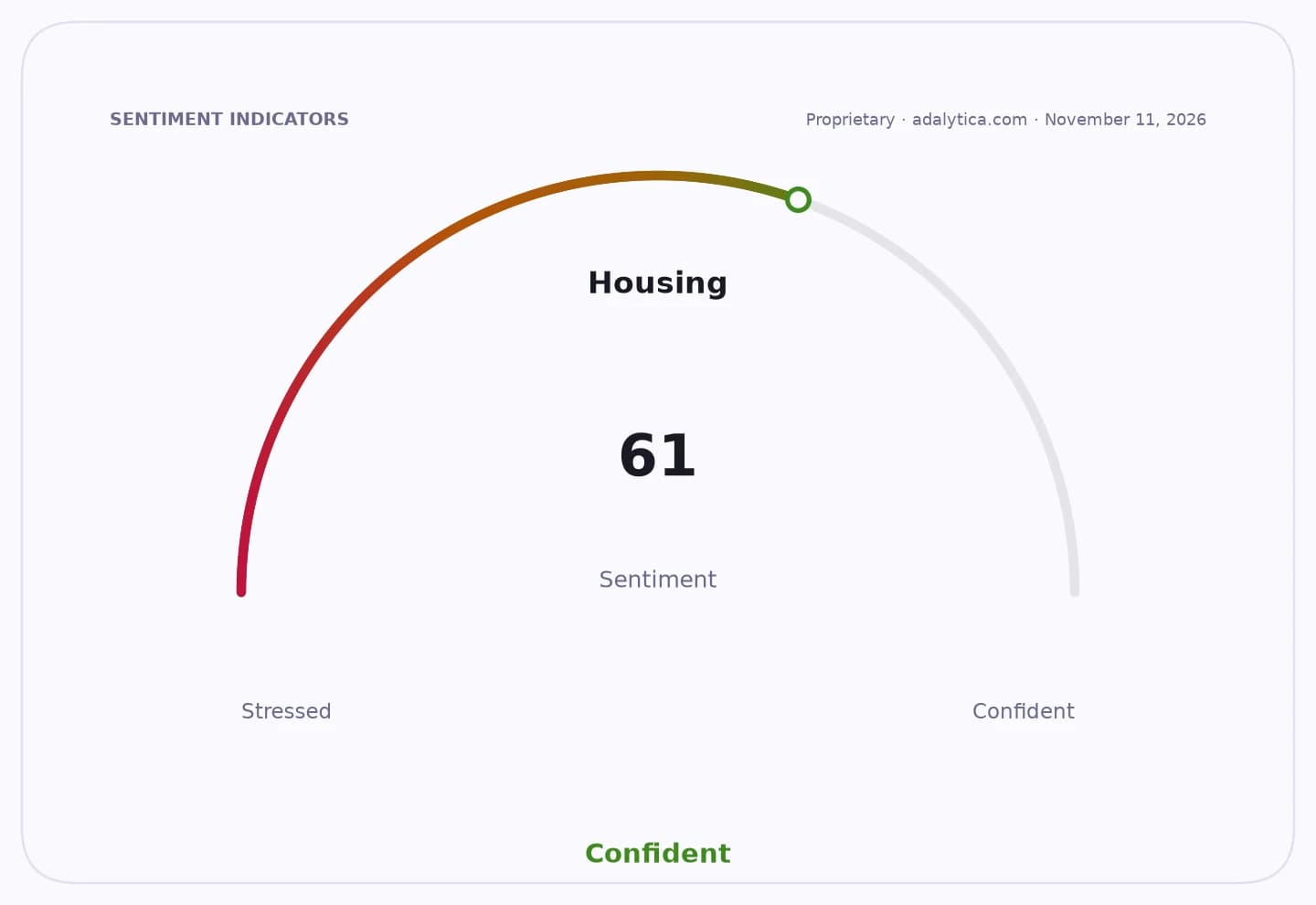
The divergence matters because housing remains one of the clearest gauges of household demand, financing conditions and consumer confidence. Even with asking prices still climbing in most regional cities, the shift toward longer selling times and more frequent discounts points to a market that is becoming less seller-friendly after several quarters of gains.
Sentiment Indicators
Housing
Valuo’s analysis of asking prices showed average house prices rose across most monitored regional capitals in 3Q 2026, with Prague still the most expensive market at 115,958 crowns per square meter, up 5% from a year earlier. Brno followed at 92,088 crowns per square meter, up 8%.
The sharpest annual increases came in Hradec Králové, where average asking prices jumped 16% to 85,012 crowns per square meter, followed by Olomouc at 74,120 crowns, up 15%, and Ústí nad Labem at 49,181 crowns, up 12%. By contrast, České Budějovice was essentially flat year on year at 68,388 crowns per square meter.
For buyers, the financing burden is still heavy. Thirty-year mortgage rates in the U.S. benchmark were around 7.28% in the latest reading, while Czech market commentary cited mortgage offers near 6%, levels that remain high enough to keep monthly payments elevated and affordability stretched.
That is starting to show in trading behavior. Valuo said the number of sales has been falling in recent weeks, supply is building and sellers are more often accepting discounts, suggesting demand is weakening even as headline prices remain higher than a year ago.
The tension between sticky asking prices and softer transaction momentum is important for developers, lenders and housing-related investors because it usually precedes slower price growth or outright price cuts. For homebuilders and mortgage originators, a cooling resale market can eventually mean fewer deals, longer sales cycles and more pressure on volumes.
In the broader housing complex, U.S.-listed homebuilder ETF ITB and homebuilder ETF XHB have both pulled back from earlier highs, while Zillow shares have remained volatile as the U.S. housing market stays constrained by elevated mortgage rates and affordability pressure. The Czech data point in the same direction: prices are still up, but the balance of power is shifting.
The key question now is whether the recent drop in sales and rise in listings turn this from a pause into a more durable slowdown through the winter months.
| Entity | Gains | Losses |
|---|---|---|
| Buyers | ▲More room to negotiate | ▼Less urgency to overpay |
| Sellers | ▲Higher nominal prices year on year | ▼Weaker pricing power |
| Homebuilders | ▲Potential demand for affordable stock | ▼Slower resale market and volumes |
| Mortgage lenders | ▲Stable financing demand if buying holds up | ▼Affordability pressure can curb new loans |