Bund futures are trading close to a key technical level as fresh Middle East tensions and weaker risk appetite push investors back into European government debt, even as the market remains vulnerable to a pullback toward 119.19 points.
Bund Futures Near 119.19 as Middle East Tensions Rise

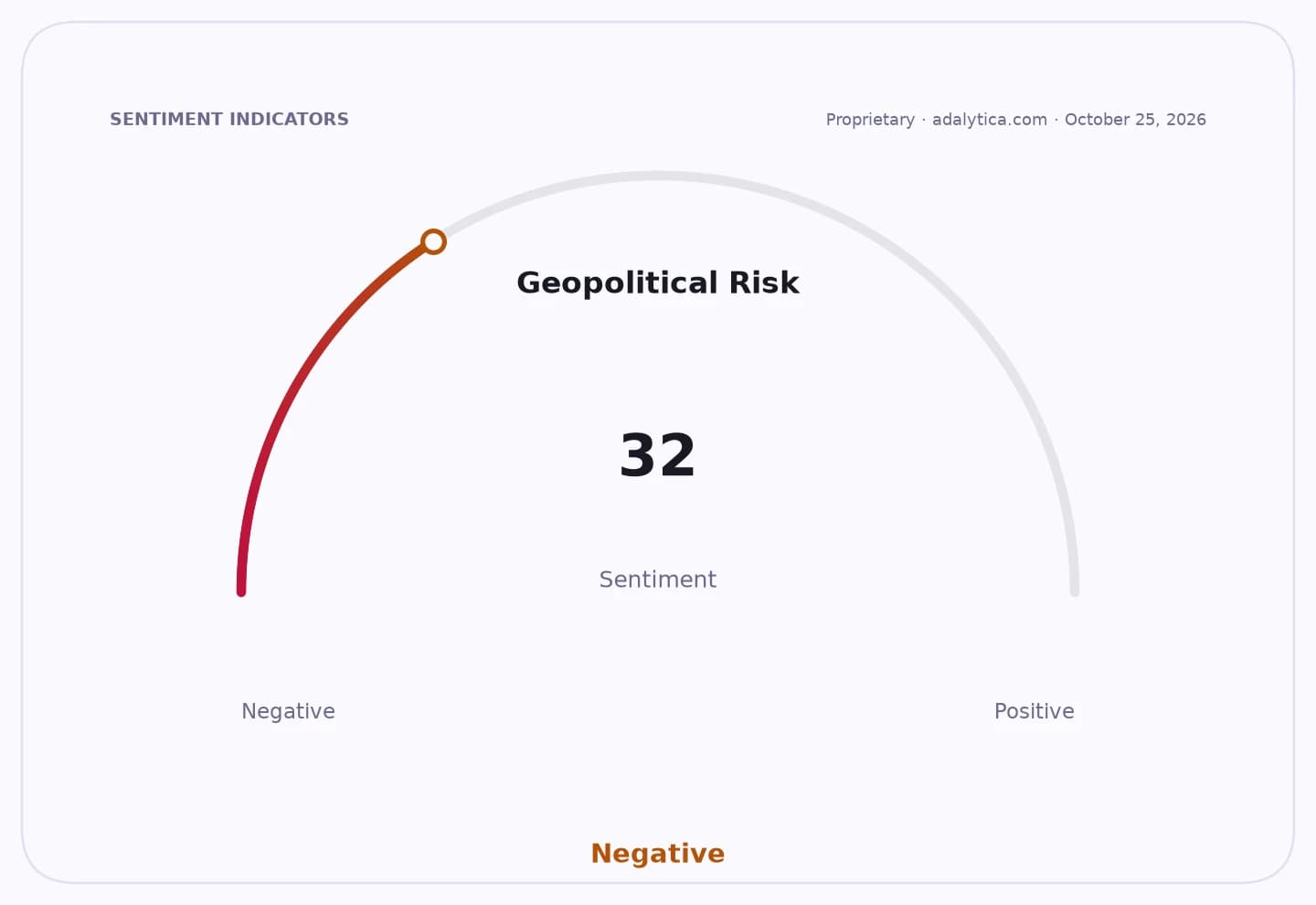
The move matters because German Bunds remain the euro zone’s benchmark safe asset, and even a modest shift in demand can reset financing conditions across Europe. When investors get nervous about oil prices, growth and policy spillovers, they tend to buy Bunds, pressuring yields lower and supporting futures — a pattern visible again after reports that the U.S. military was preparing new strikes on Iran.
Sentiment Indicators
That backdrop hit equities and briefly lifted energy prices, before President Donald Trump ruled out an imminent attack and gave markets some relief. The ebb and flow has left European rates fragile, with benchmark French 10-year yields rising as high as 4.97% before easing back, while the spread to Bunds did not widen further.
For Bund traders, the key question is whether the contract can hold its recent gains or slips back toward the cited 119.19-point area, where technical support may be tested. The Bundesbond market is also watching U.S. data, including Michigan sentiment, though economists expect it to stay subdued and offer little immediate relief for duration bulls.
Adalytica’s euro trade signals show extreme fear in the single currency, underscoring how quickly geopolitical headlines are overpowering normal rate and growth drivers. By contrast, U.S. Treasury bond signals are more neutral, suggesting the bid for safety is stronger in Europe than across the Atlantic for now.
The near-term catalyst is any further escalation in the Middle East, along with shifts in oil prices and U.S. data that could either reinforce or unwind the flight to quality.
| Entity | Gains | Losses |
|---|---|---|
| Bund futures | ▲Safe-haven bids support prices | ▼A rebound in risk appetite |
| German bond bulls | ▲Lower yields, stronger defensive demand | ▼Rising growth or inflation fears |
| European equities | ▲None from this move | ▼Geopolitical risk, higher oil prices |
| French sovereign debt | ▲Spillover support from Bund demand | ▼Wider spreads if stress returns |