Republicans are pouring more than $4.3 million into California’s 13th Congressional District in an attempt to flip the nation’s narrowest House seat, but the bigger question for investors in politics, not markets, is whether money can overcome a structural Democratic lean and a candidate who has already survived by 187 votes.
California 13th House Race Attracts GOP Spending
The race matters because it is a test of whether national Republican spending can still pry loose an increasingly expensive battleground seat even after California’s redistricting and a broadly favorable environment for Democrats have tilted the district on paper. For House control, every marginal seat counts, and this one has already shown how little separates victory from defeat: Gray won in 2024 after a month-long count, then Republicans lost by a margin that was smaller than the cost of many cable-ad buys.
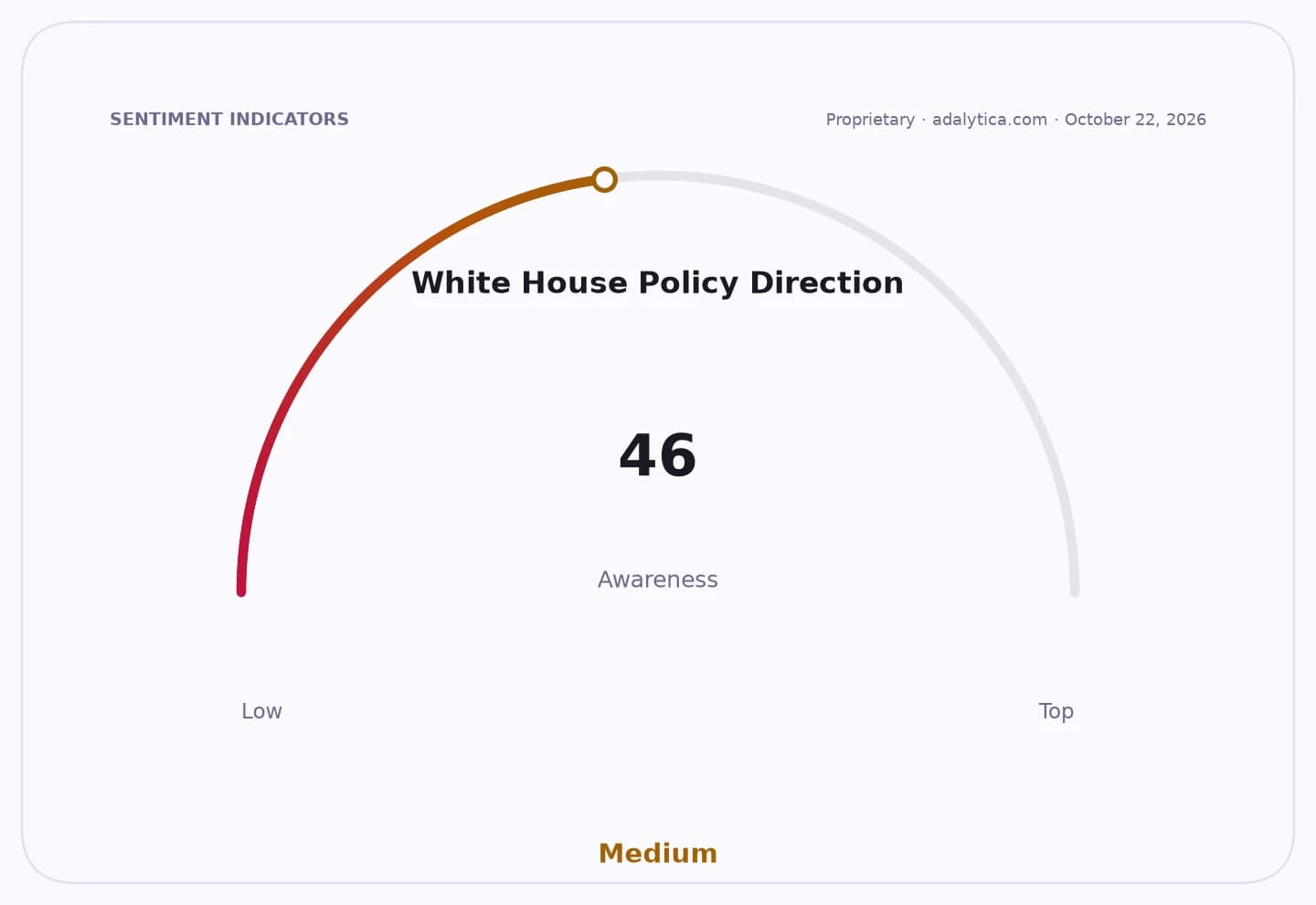
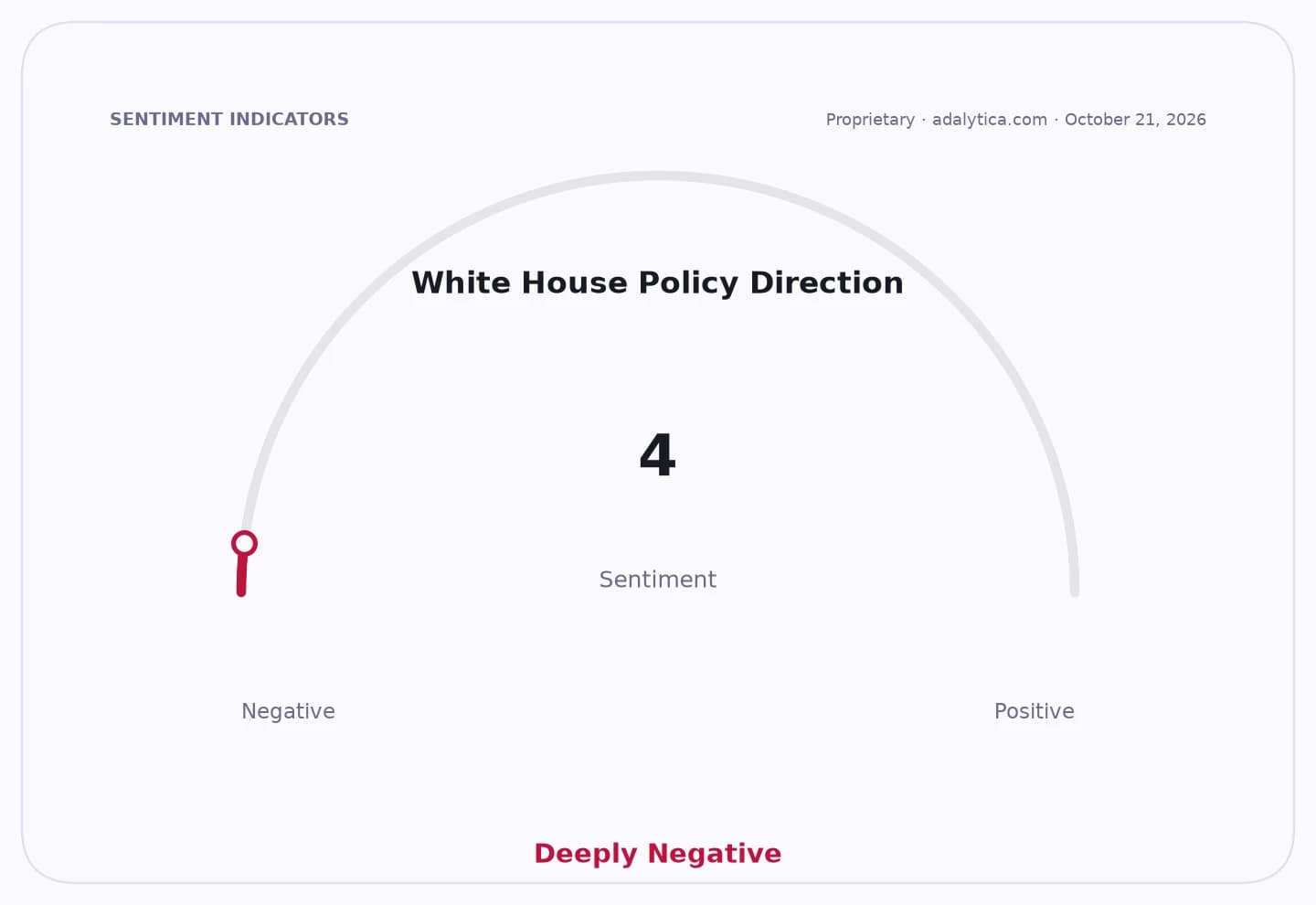
Sentiment IndicatorsⓘProprietary · adalytica.com · October 19, 2026
This is a snapshot — live sentiment, awareness and momentum for 130+ markets update continuously in the dashboard.Open AlphaPulse
The Congressional Leadership Fund, the House GOP’s main super PAC, had spent more than $4.34 million by Oct. 11, according to campaign filings, while the House Majority PAC had spent less than $400,000. That spending gap underscores the Republicans’ determination to make the seat competitive despite the district’s recalibration under Proposition 50, which was designed to strengthen Democratic prospects and weaken five GOP incumbents elsewhere in California.
That asymmetry also speaks to the GOP’s strategic calculus. Republicans have relatively few realistic pickup opportunities in California, so resources are concentrated where a nominee can plausibly appeal to split-ticket voters. Their candidate, former Stockton Mayor Kevin Lincoln, is betting that affordability, crime and immigration can still move enough “Valleycrats” — registered Democrats willing to cross over — to offset the district’s blue tilt.
Gray, meanwhile, is leaning on a different kind of insurance: local incumbency, bipartisan branding and a campaign built around retail politics. He has already secured endorsements from the California Farm Bureau and highlighted work with Republican lawmakers on telehealth and geothermal policy. That matters because the district’s electorate appears less ideological than transactional, rewarding lawmakers seen as delivering on water, roads and farm technology rather than party orthodoxy.
The GOP’s attack line is also pointed at Gray’s past rather than his congressional record. Lincoln and Republican outside groups are hammering his 2017 vote for a California transportation bill that included a 12-cent gas-tax increase and higher vehicle registration fees, casting him as part of the state’s affordability problem. They have also alleged conflict-of-interest issues tied to a construction company in which Gray owns a minority stake and from which he disclosed receiving more than $366,000 in 2023 and 2024. Gray rejects the implication, and the issue is likely to play differently depending on whether voters prioritize ethics concerns or local project delivery.
For investors in broader political risk, the race is a reminder that redistricting, candidate quality and turnout can matter as much as national mood. A Democratic edge on paper does not guarantee safety if Republicans can nationalize the contest around cost of living, crime and anti-Biden or anti-state-tax sentiment. But the opposite is also true: when Democrats can turn a race into a referendum on local infrastructure, farm policy and bipartisan dealmaking, outside money often has diminishing returns.
The outcome will help gauge how far Republican spending can stretch in a Democratic-leaning state and whether Gray’s 187-vote margin was an anomaly or a warning. If he survives again, it will reinforce the view that California’s newly drawn seats remain vulnerable to candidate-specific crosswinds. If Lincoln narrows the gap materially, Republicans will have a useful template for competing in blue terrain without needing a full statewide tide.
| Entity | Gains | Losses |
|---|---|---|
| Adam Gray | ▲Incumbency; bipartisan image | ▼Vulnerability to ethics attacks |
| Kevin Lincoln / GOP | ▲A realistic pickup target | ▼Need to overcome district tilt |
| House Republicans | ▲Chance to flip a seat | ▼Large spend with uncertain payoff |
| House Democrats | ▲Hold a key seat | ▼Must defend despite favorable map |