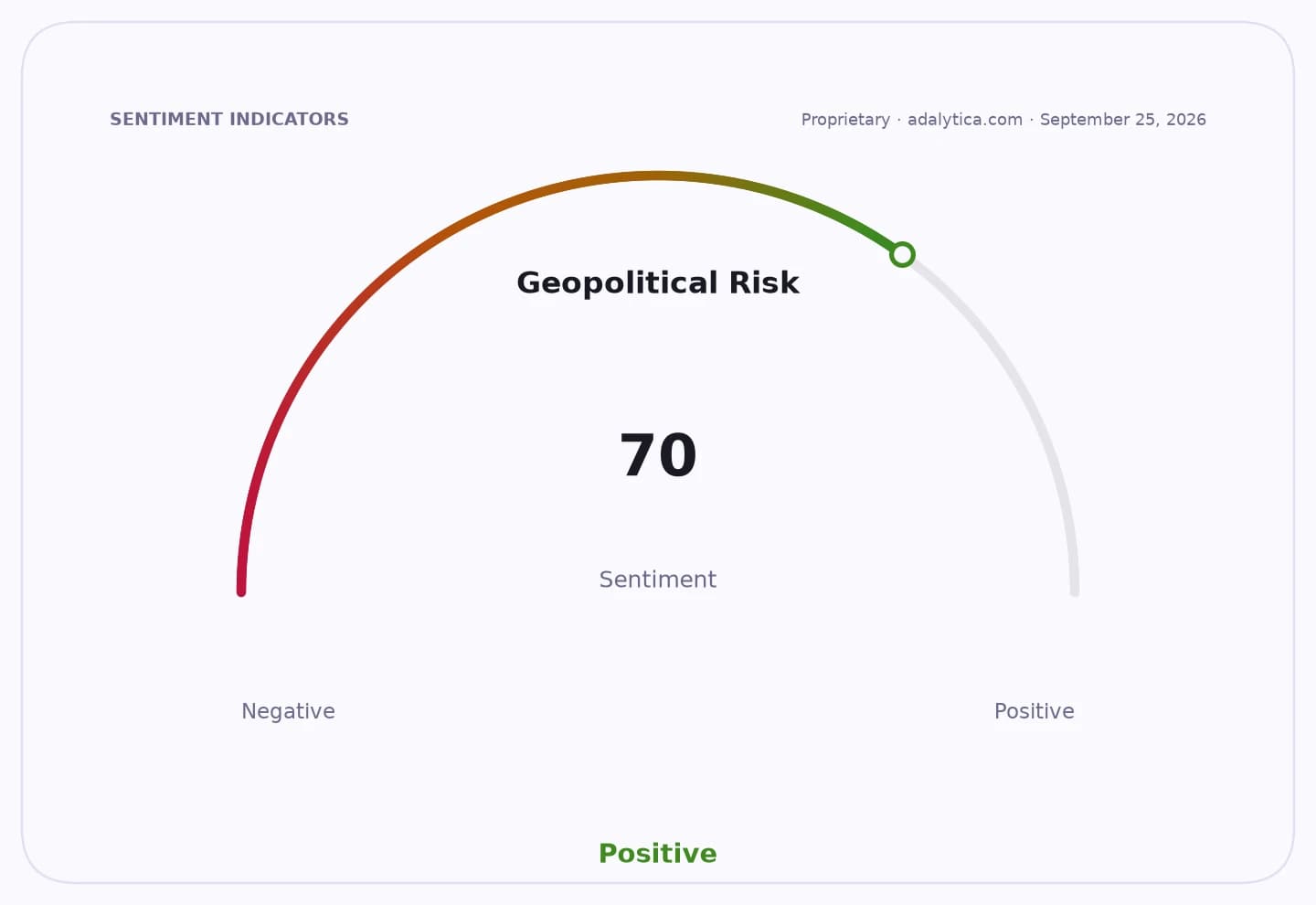
Cameroon’s classification as a speculative-risk borrower is the key development for debt markets because it signals that investors will demand a higher premium to fund the country, even as global borrowing costs remain uncomfortably high.
Cameroon risk label lifts borrowing costs

That matters economically because sovereign risk labels affect everything from bond yields to access to financing and the pace of fiscal adjustment. For a lower-rated borrower, a speculative designation can narrow the pool of willing lenders, raise refinancing costs and complicate debt management at a time when many emerging markets are already under pressure from tighter external financing conditions.
Sentiment IndicatorsⓘProprietary · adalytica.com · July 17, 2026
This is a snapshot — live sentiment, awareness and momentum for 130+ markets update continuously in the dashboard.Open AlphaPulse

The backdrop is a global rates environment that is still restrictive by recent standards. The US 10-year Treasury yield was at 4.58% in the latest forecast, only slightly below 4.62% earlier in the week, keeping the risk-free benchmark elevated. For countries such as Cameroon, that creates a difficult transmission channel: when the base rate stays near multi-year highs, any increase in sovereign risk perception translates quickly into more expensive dollar funding.
Currency and emerging-market sentiment are not offering much relief. The iShares MSCI Emerging Markets ETF has retreated from a late-May peak above 67 to 64.19, while a broad technical picture shows the fund trading below both its 50-day and 200-day moving averages. The yen, often a proxy for global risk appetite and carry dynamics, has also drifted weaker, with the FXY ETF at 56.45 and below its short- and long-term moving averages. That combination suggests investors remain selective about risky external borrowers rather than reaching for yield indiscriminately.
The label also fits a wider pattern across sovereign credit. Senegal is preparing to bring in Lazard as it faces financing pressure, a reminder that frontier and lower-rated emerging markets are increasingly being forced into more active liability management. In that context, Cameroon’s speculative-risk status is not just a rating headline; it is a warning that access to markets may become more conditional, more expensive and more dependent on reforms, funding support or restructurings.
For investors, the immediate implication is that Cameroon’s existing debt could become less attractive relative to peers with stronger external buffers, while lenders will likely seek wider spreads and tighter terms on new issuance. The bear case is that a higher risk label becomes self-reinforcing, making refinancing more difficult and squeezing fiscal space. The bull case is that clearer risk pricing can force earlier adjustment and limit complacency, especially if policymakers respond with credible consolidation and external funding plans.
For now, the story is less about a single spread move than about the direction of travel: elevated global yields, cautious emerging-market positioning and rising sovereign stress are combining to make speculative-risk borrowers more vulnerable. If Cameroon cannot anchor financing on firmer terms, the cost of delay will show up quickly in budget pressure, rollover risk and weaker investor demand.
| Entity | Gains | Losses |
|---|---|---|
| Existing lenders | ▲Higher risk premia | ▼Greater default risk |
| Cameroon | ▲Clearer market pricing | ▼Higher borrowing costs |
| Safer sovereign peers | ▲Relative investor inflows | ▼Less capital available |
| Dollar bond investors | ▲Wider potential yields | ▼More price volatility |