Qatar’s forced LNG outage is accelerating a global scramble for supply, with buyers and investors pushing to lock in long-term contracts from the U.S. and Southeast Asia while reviving projects from Argentina to Timor-Leste and Tanzania.
Qatar LNG Outage Spurs Long-Term Supply Deals

The immediate economic significance is that a disruption in the world’s most important LNG hub is no longer a short-lived price event; it is reshaping procurement strategy across the gas market. With about 17% of Qatar’s export capacity disabled after March strikes and repairs on damaged liquefaction trains potentially taking up to three years, utilities and traders are being pushed to secure supply farther ahead in the cycle, even at the cost of higher long-dated commitments.
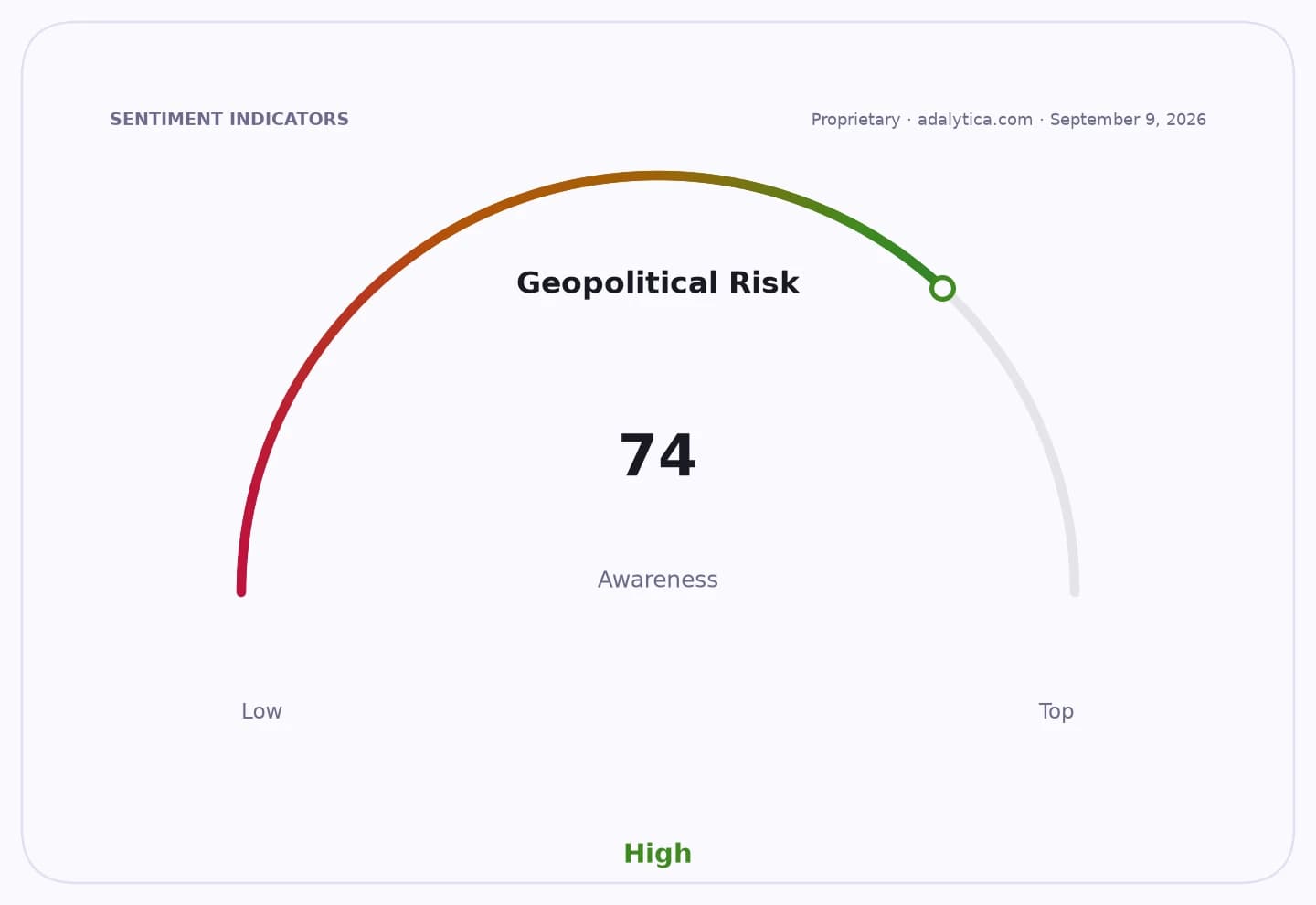
Sentiment IndicatorsⓘProprietary · adalytica.com · September 25, 2026
This is a snapshot — live sentiment, awareness and momentum for 130+ markets update continuously in the dashboard.Open AlphaPulse
That shift was visible at the Gastech conference in Bangkok, where organizers said agreements announced or advanced carried an estimated value of $60 billion. Among the clearest examples was a 20-year LNG supply deal between China Gas Holdings and Venture Global LNG in Louisiana, and a 35-year production-sharing and gas sales agreement in the Malaysia-Thailand Joint Development Area. The economics of these contracts matter because they extend visibility on volumes at a time when buyers are increasingly treating security of supply as a strategic asset, not just a commodity purchase.
The Qatar disruption has also exposed how quickly concentration risk can turn into balance-sheet risk. WoodMac estimates repair costs for damaged Qatari gas-processing capacity at about $5.8 billion, while QatarEnergy has pushed back the first production unit at North Field East to the first half of 2027. Force majeure declarations on some contracted supplies have been extended into November 2026. For buyers, that means the shortfall is not a temporary nuisance but a multi-year planning problem.
The broader market message is that long-term LNG contracting is back in favor after years of hesitation. Renewed interest in Argentina, Timor-Leste and Tanzania shows that buyers are willing to back frontier projects if they can diversify away from geopolitically exposed supply. Timor-Leste’s plan for a 5-million-tonne-a-year plant tied to Greater Sunrise and a 1.5-million-tonne facility using remaining Bayu-Undan gas fits that logic: even undeveloped resources gain value when incumbents stumble.
For investors, the winners are obvious. U.S. LNG exporters such as Venture Global stand to benefit from buyers seeking contractual flexibility and geographic diversification. Shell and other global gas players with diversified portfolios should also gain from tighter long-term LNG pricing power and stronger demand for offtake-backed projects. The losers are Qatar and, by extension, any buyer heavily exposed to a single supply corridor, as the outage raises execution risk and forces a re-rating of the reliability premium embedded in future contracts.
The timing is especially important because this supply reallocation is happening while energy markets remain sensitive to geopolitics and crude prices are already reacting to diplomatic signals in the Middle East. The result is a stronger case for LNG developers with sanctions-safe jurisdictions, existing export infrastructure and credible project timelines. For buyers, the next test will be whether they can trade up-front contract costs for resilience without locking into expensive volumes just as new supply from the U.S. and elsewhere comes online.
| Entity | Gains | Losses |
|---|---|---|
| U.S. LNG exporters | ▲More long-term contracts | ▼Less room for spot pricing |
| QatarEnergy | ▲— | ▼Repair costs, lost export capacity |
| Buyers/diversified utilities | ▲Supply security | ▼Higher long-term commitments |
| Frontier project developers | ▲Renewed investor interest | ▼Execution and financing pressure |