Joe Wilson’s renewed backing for Morocco’s sovereignty over Western Sahara matters because it reinforces Washington’s most consequential diplomatic signal on a dispute that has long shaped North African stability, trade and security alignments.
Morocco Gets Joe Wilson Backing on Western Sahara
The South Carolina Republican, who chairs the Congressional Morocco Caucus, said after meeting Foreign Minister Nasser Bourita on the sidelines of the UN General Assembly that “peace, stability and prosperity” in the region rest on Morocco’s sovereignty over the territory. He also praised President Donald Trump’s position, underscoring that the U.S. recognition announced during Trump’s first term remains a central pillar of Rabat’s international lobbying campaign.
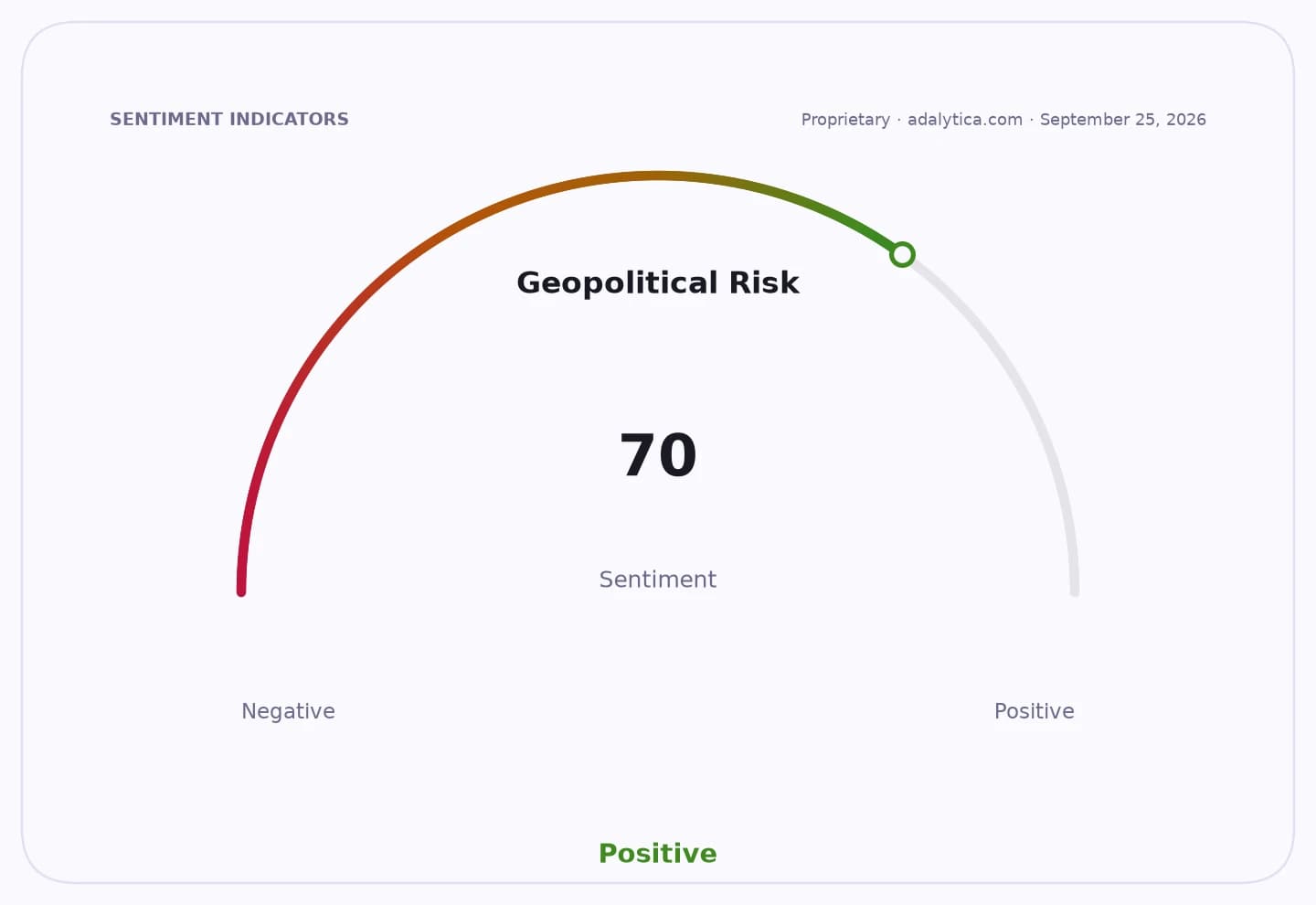
Sentiment IndicatorsⓘProprietary · adalytica.com · September 25, 2026
This is a snapshot — live sentiment, awareness and momentum for 130+ markets update continuously in the dashboard.Open AlphaPulse
For Morocco, the value of that support is less symbolic than strategic. Rabat has spent years trying to translate bilateral backing into a broader diplomatic consensus at the United Nations, where the Western Sahara dispute remains unresolved and where rival narratives over self-determination and autonomy continue to divide capitals. Each public endorsement from a U.S. lawmaker gives Morocco more cover as it argues that its autonomy proposal is the only realistic basis for a settlement and that recognition of its sovereignty is becoming the emerging diplomatic baseline.
The timing is also important. Morocco has stepped up its international outreach as it seeks to consolidate support from Africa, Latin America and Europe, including recent endorsements from countries such as Cabo Verde, Chile, Panama, Sierra Leone, Mauritius and Denmark. That trend does not resolve the conflict, but it does alter the diplomatic balance: the more governments that endorse Morocco’s position or autonomy plan, the harder it becomes for opponents to keep the issue framed as an open-ended decolonization question.
Investors and policy makers should read the comments through the lens of regional risk. Western Sahara is not a market event in the narrow sense, but the dispute affects Morocco’s geopolitical premium, its relationships with Gulf and Western partners, and the broader investment case for a country that markets itself as a stable gateway to Africa. A stronger U.S.-Morocco relationship supports that narrative, particularly in defense, infrastructure and cross-border commerce, while also reducing the odds of a sharper diplomatic rupture with Washington.
The bear case is that high-profile endorsements, even from influential members of Congress, do not change the legal or UN framework overnight. The conflict still depends on negotiations, and the Polisario Front and its backers are unlikely to accept a settlement that is perceived as foreclosing self-determination. But the policy direction is clear: Morocco is winning incremental support, and Wilson’s comments suggest that a pro-Rabat stance remains firmly embedded in parts of the U.S. political establishment.
For investors, the key takeaway is that Morocco’s diplomatic momentum is becoming part of its economic story. If the kingdom can keep converting political backing into broader international acceptance, it strengthens the case for continued capital inflows, deeper defense and infrastructure ties, and a lower perceived regional risk premium.
| Entity | Gains | Losses |
|---|---|---|
| Morocco | ▲Diplomatic backing | ▼Pressure to compromise |
| US-Morocco ties | ▲Strategic depth | ▼Status quo ambiguity |
| Polisario Front | ▲— | ▼International momentum |
| Regional investors | ▲Stability premium | ▼Conflict uncertainty |