China’s disclosure that it held military talks with Canadian officials last week marks a small but politically sensitive thaw in a relationship that has been strained for years, underscoring Ottawa’s effort to widen its diplomatic options even as Conservatives warn against closer security ties with Beijing.
Canada Holds Defense Talks With China
The talks are economically relevant because they reflect a broader Canadian push to diversify trade and strategic relationships away from an overreliance on the United States, while also testing how far Ottawa can engage China without provoking political or security backlash. For investors, that matters less as a direct market catalyst than as a signal on the direction of Canada’s external policy — a factor that can affect cross-border trade, defence spending, supply chains and the risk premium on sectors exposed to geopolitics.
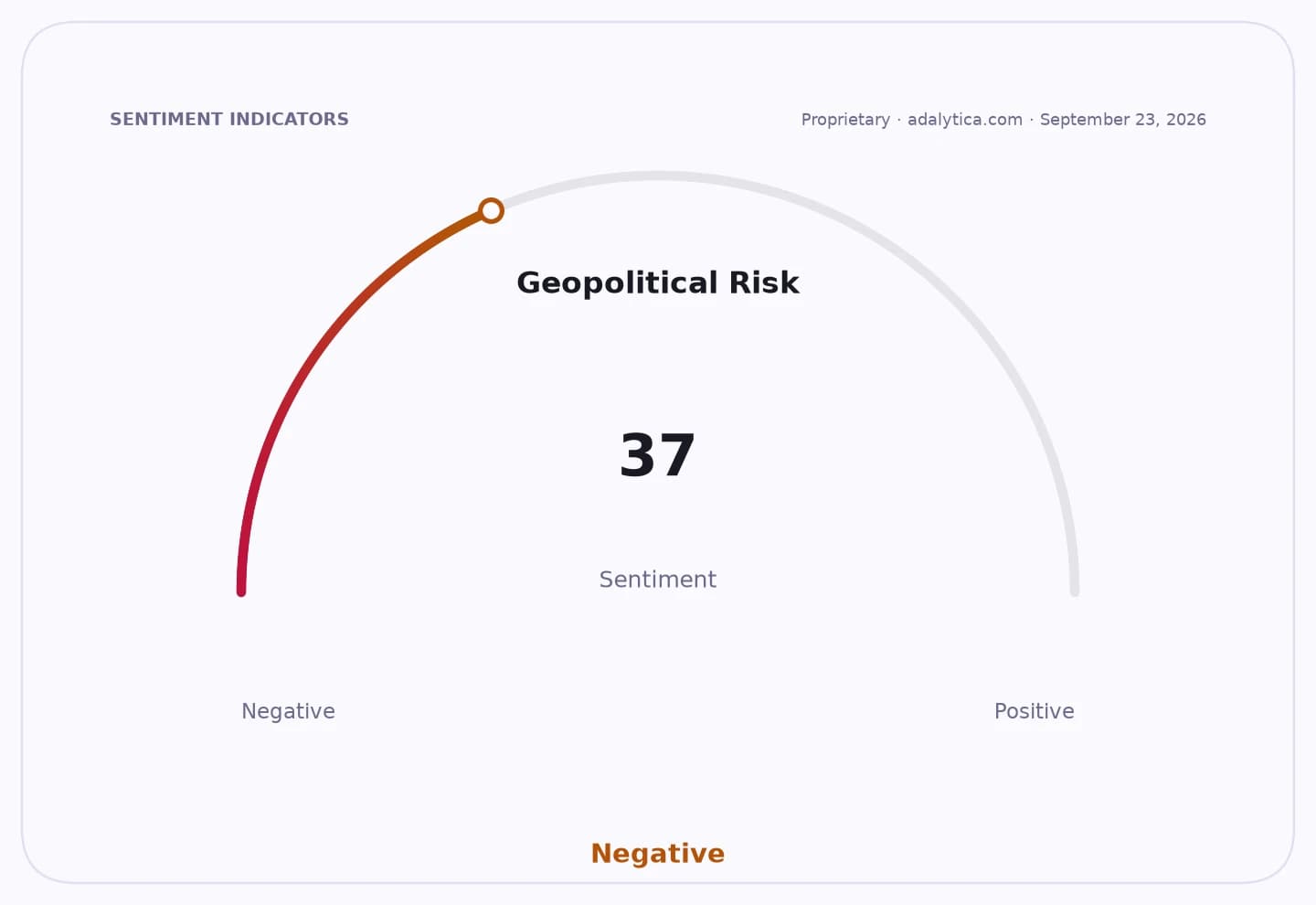
Sentiment IndicatorsⓘProprietary · adalytica.com · September 9, 2026
This is a snapshot — live sentiment, awareness and momentum for 130+ markets update continuously in the dashboard.Open AlphaPulse
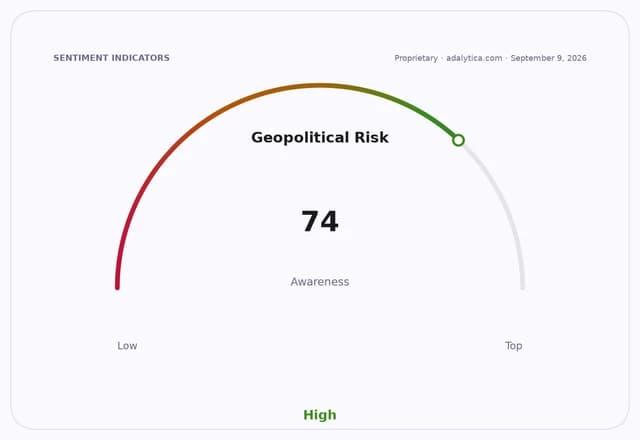
China’s defence ministry said the two countries held their fifth defence-coordination dialogue, and Canada’s defence department later confirmed the exchange. Ottawa said it does not publicize working-level meetings, but said the talks are intended to protect Canadian interests. The language suggests both sides are trying to preserve channels of communication despite lingering distrust.
The timing is notable. In early 2024, Canadian military officials said they were seeking more open dialogue with Chinese counterparts, but Beijing’s ambassador said that effort was complicated by Canadian navy ships transiting the Taiwan Strait. The latest meeting indicates that, despite those frictions, the Carney government is still pursuing a more pragmatic line with China.
That approach comes with clear trade-offs. The bull case for dialogue is that regular military contact can reduce the risk of miscalculation, keep crisis lines open and support broader diplomatic and commercial engagement. The bear case is that any perceived rapprochement could trigger criticism from allies and domestic opponents, especially Conservatives, who reject military co-operation with China and see Beijing primarily through a national-security lens.
For investors, the immediate market impact is limited, but the story matters for how Canada positions itself in a more fragmented geopolitical environment. A more flexible foreign policy could help Ottawa manage exposure to tariff disputes, technology restrictions and supply-chain realignment, while a sharper political backlash could constrain that room to maneuver. The key question now is whether these talks become a one-off reset or the start of a more durable, and controversial, channel between Ottawa and Beijing.
| Entity | Gains | Losses |
|---|---|---|
| Canada government | ▲More diplomatic flexibility | ▼Domestic political criticism |
| China | ▲Open channel with Ottawa | ▼Less isolation, but no trust dividend |
| Canadian exporters | ▲Potential wider market access | ▼Geopolitical uncertainty |
| Conservatives / security hawks | ▲Little | ▼Influence if dialogue deepens |