Canada’s inflation picture remains uncomfortably close to the Bank of Canada’s upper tolerance range, keeping interest-rate expectations highly sensitive even as price pressures vary sharply by city.
Canada inflation at 3% keeps BoC rate cuts in focus

The key takeaway from July’s selected city inflation rates is not just that headline inflation accelerated to 3%, driven in part by gas prices, but that the underlying geography of inflation is uneven. That matters because a broad-based cooling in prices would give policymakers more confidence to ease again, while a patchwork of hotter local readings suggests inflation is not yet fully subdued across the country.
Sentiment IndicatorsⓘProprietary · adalytica.com · August 17, 2026
This is a snapshot — live sentiment, awareness and momentum for 130+ markets update continuously in the dashboard.Open AlphaPulse

For investors, that keeps Canadian rates and the loonie in focus. A 3% reading is still far enough above target to make the central bank cautious, especially after months in which markets have been trying to handicap the timing and pace of cuts. Higher gas prices can lift the headline rate quickly, but persistent services inflation or wage pressure would be more consequential for the Bank of Canada’s reaction function.
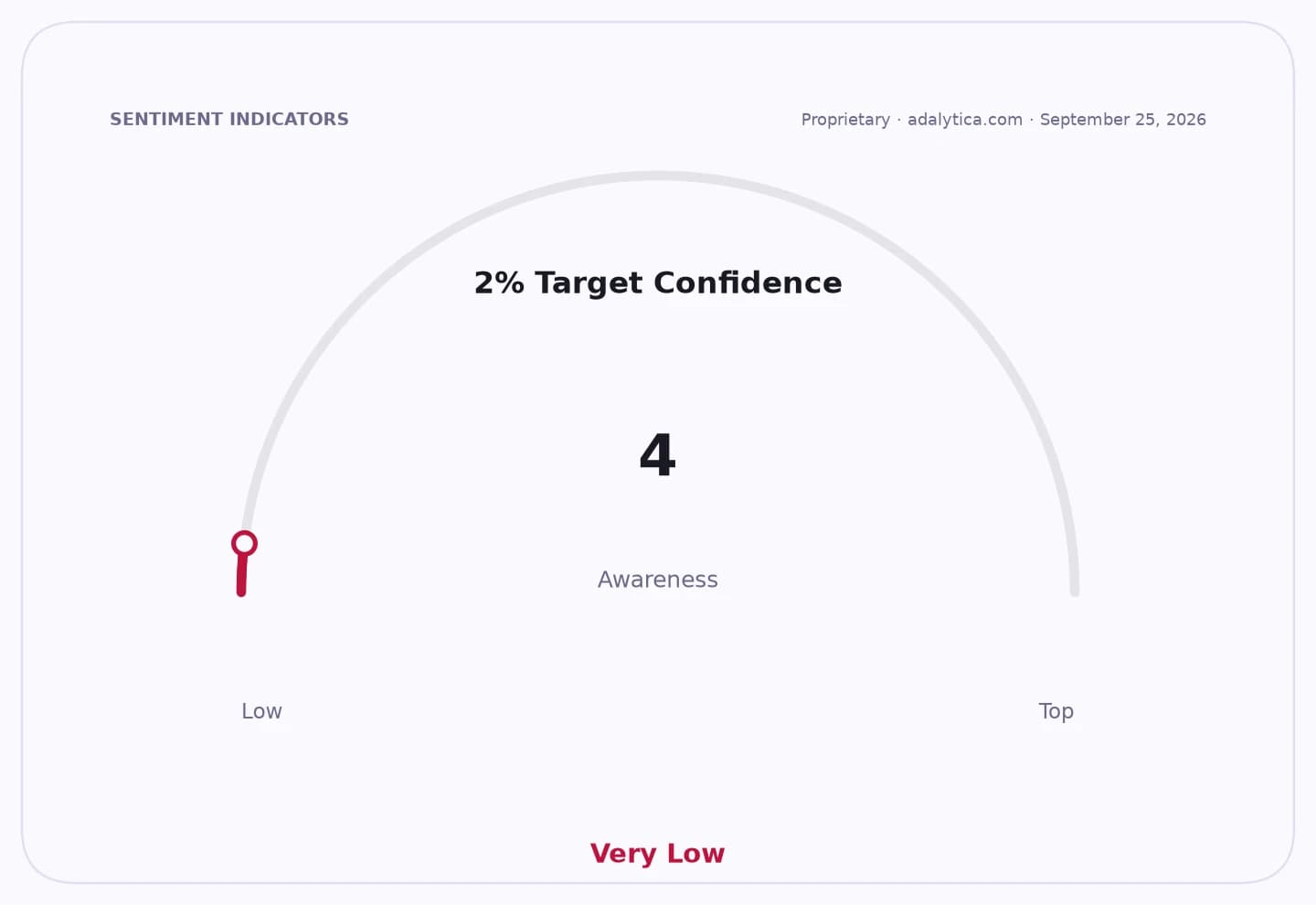
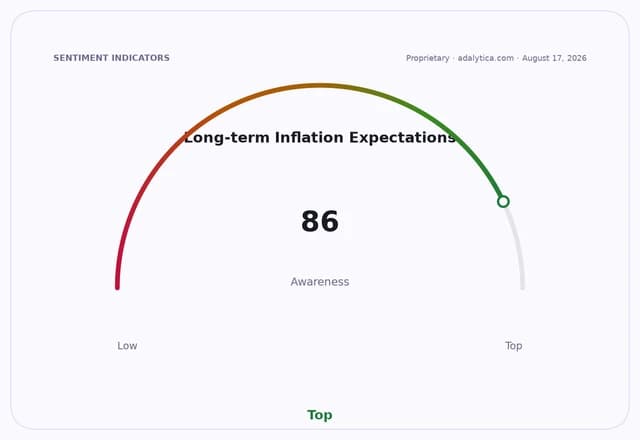
Adalytica’s inflation-related indicators point to how quickly market attention has sharpened. Long-term inflation expectations sentiment is at 100, confidence in the Fed’s 2% target is at 96, five-year breakeven sentiment is at 100 and wage inflation sentiment is at 93, all flagged as extreme greed. While those are U.S.-focused gauges, they reflect a broader global market backdrop in which inflation is still capable of reshaping bond pricing and central-bank guidance.
That is the context for Canadian inflation. A 3% national rate is not a crisis, but it is high enough to keep real yields, mortgage-rate expectations and duration-sensitive assets under pressure if the data stop improving. For equity investors, that argues for caution on rate-sensitive sectors such as housing, utilities and consumer discretionary names. For bond investors, it means the front end of the curve is unlikely to price an aggressive easing cycle unless the next few prints show clearer disinflation.
The bull case is that July’s acceleration may prove temporary, led by energy, and that inflation can drift lower if gasoline prices retreat and broader demand softens. The bear case is that price pressures are proving sticky enough to keep policy restrictive longer than markets expect, even if growth slows. The next round of inflation data will be watched closely for whether the city-level variation seen in July is noise or the start of a more persistent pattern.
| Entity | Gains | Losses |
|---|---|---|
| Bank of Canada hawks | ▲Higher-for-longer case | ▼Dovish rate-cut bets |
| Energy producers | ▲Firmer gasoline-linked pricing | ▼Consumers at the pump |
| Bond bears | ▲Sticky inflation supports yields | ▼Duration-heavy investors |
| Canadian households | ▲None | ▼Real purchasing power |