Canada’s business activity accelerated sharply in August, with the Ivey PMI climbing to 64.3, its highest reading since May 2022, a sign the economy retained momentum even as markets weigh whether the Bank of Canada has room to keep policy on hold.
Canada Ivey PMI Rises to 64.3 in August

The seasonally adjusted index rose from 55.1 in July, staying well above the 50 threshold that separates expansion from contraction. The employment component also improved to 55.0 from 52.2, suggesting firms were still hiring as activity strengthened. At the same time, the price index jumped to 80.4 from 75.5, underscoring that inflationary pressure remains embedded in parts of the private sector.
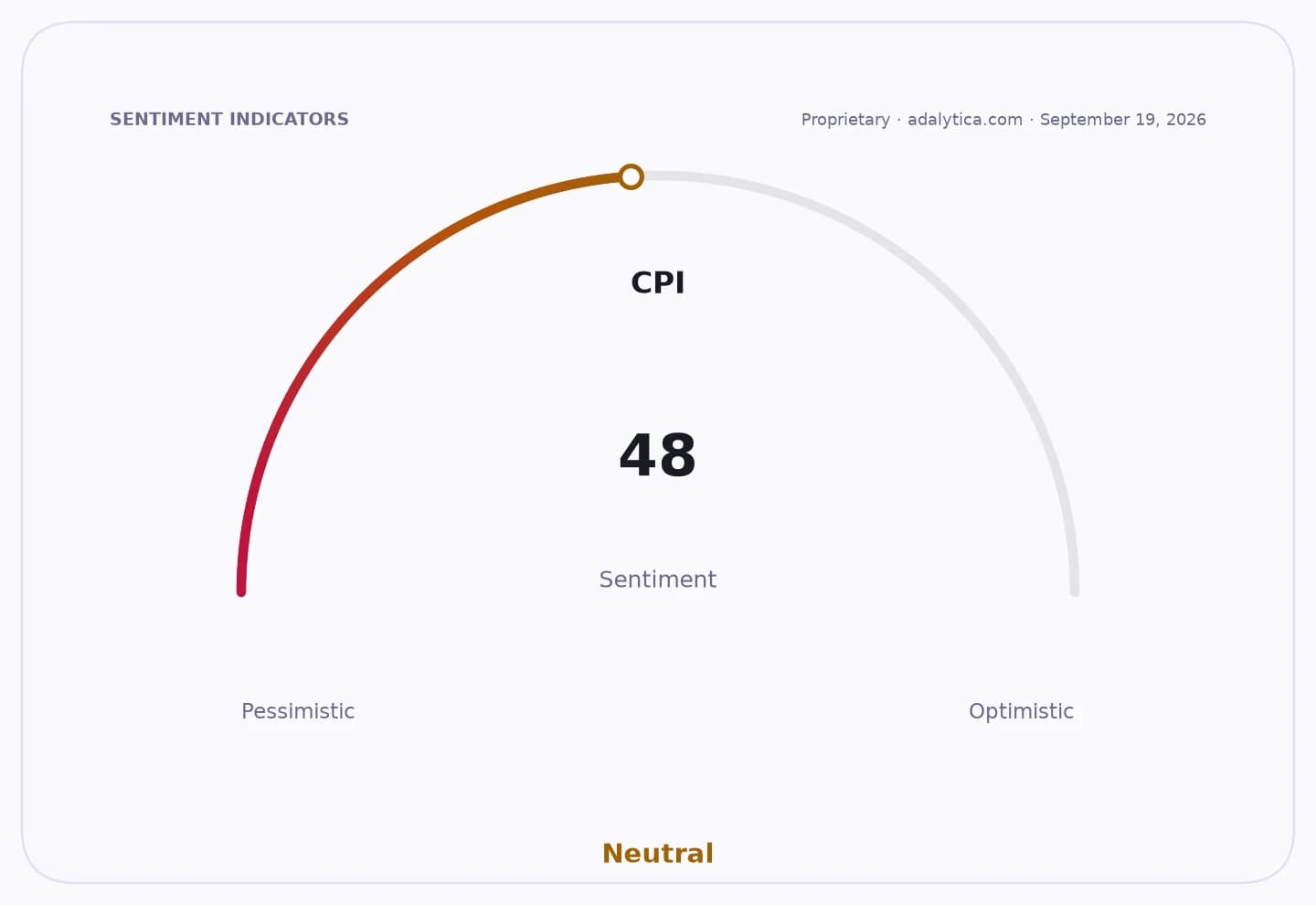
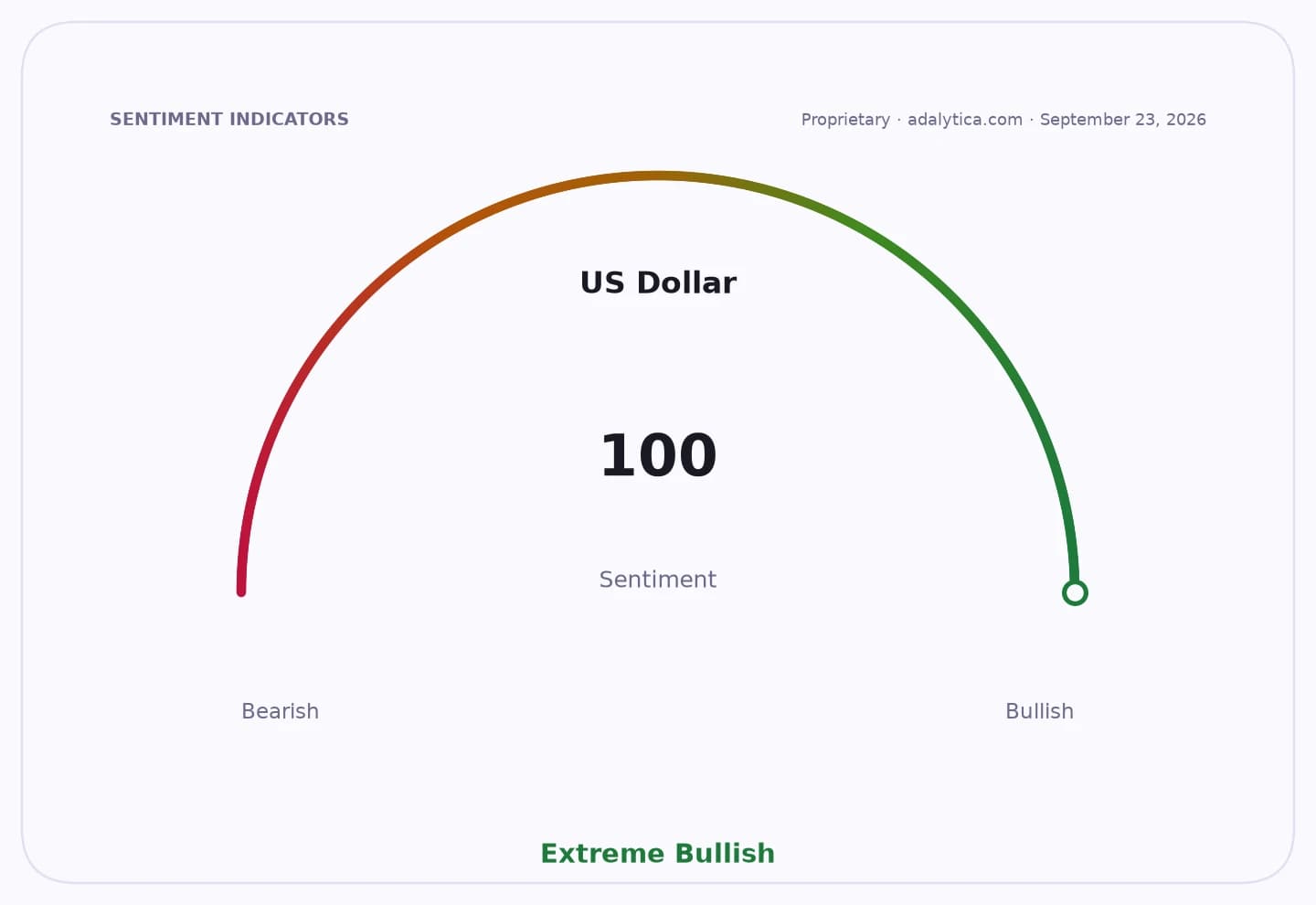
Sentiment IndicatorsⓘProprietary · adalytica.com · September 5, 2026
This is a snapshot — live sentiment, awareness and momentum for 130+ markets update continuously in the dashboard.Open AlphaPulse
For policymakers, the report matters because it points to growth that is not simply holding up, but reaccelerating at a pace that could complicate the case for near-term easing. For investors, that combination of stronger activity and firmer prices is important because it tends to support cyclical assets and the currency while limiting the upside in bond prices. Higher prices within the survey also reinforce the risk that disinflation is uneven, even if broader macro data show some cooling elsewhere.
The detail behind the headline was also constructive. The unadjusted Ivey PMI rose to 62.7 from 54.1, and the improved employment reading suggests the pickup was not purely a pricing or inventory effect. In macro terms, that kind of breadth is more consistent with a genuine expansion in demand. It also gives Canada a more resilient profile than some other developed markets where PMIs have shown only modest growth or renewed weakness.
The release comes as the Canadian dollar trades near 0.72 U.S. cents, and the broader market backdrop has been one of cautious risk appetite, with the iShares MSCI Canada ETF recently pushing above its 50-day and 200-day moving averages. A stronger PMI typically supports domestic-oriented names, banks and retailers by improving expectations for revenue growth, though it can also raise concerns about rates staying restrictive for longer. Bond traders, by contrast, are likely to read the report as mildly hawkish.
The bull case is that Canada’s economy is regaining momentum after a softer patch, with hiring and pricing power holding up better than expected. The bear case is that the Ivey series can be volatile month to month, and one strong reading does not erase the risk that higher borrowing costs eventually bite into consumer demand and corporate margins.
Investors will now look to see whether the strength carries into other high-frequency indicators and whether it begins to show up in official GDP and inflation data. If it does, the August reading may be remembered not just as a one-month spike, but as evidence that Canada’s growth backdrop is proving sturdier than markets had assumed.
| Entity | Gains | Losses |
|---|---|---|
| Canadian businesses | ▲Stronger demand outlook | ▼Higher input costs |
| Bank of Canada | ▲Better growth signal | ▼Less room to cut rates |
| Canadian dollar | ▲Rate-supportive backdrop | ▼Exporters facing firmer currency |
| Bond investors | ▲— | ▼Yields may stay elevated |