Canada’s labor market deteriorated sharply in September, with employers cutting 68,000 jobs and the unemployment rate ticking up to 6.5%, a surprise that strengthens expectations the Bank of Canada will hold rates steady later this month.
Canada Jobs Report Weakens Ahead of BoC Decision
The setback matters because it points to a weakening economy just as tariffs from the U.S. are beginning to bite. Economists had expected a gain of about 9,200 jobs, so the report marks a clear miss and follows an already weak 42,000-job decline in August.
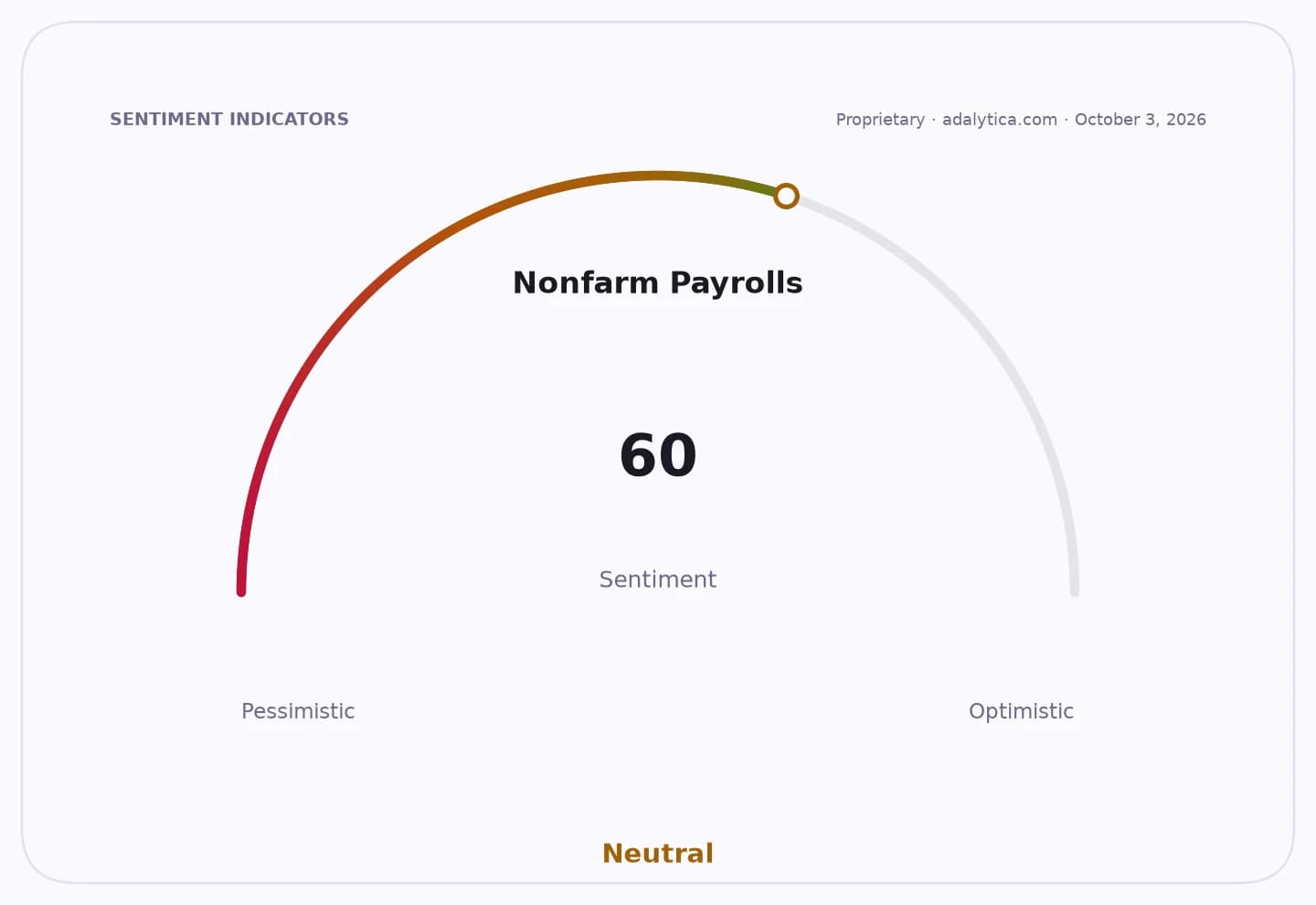
Sentiment IndicatorsⓘProprietary · adalytica.com · October 12, 2026
This is a snapshot — live sentiment, awareness and momentum for 130+ markets update continuously in the dashboard.Open AlphaPulse
The losses were broad, hitting both full-time and part-time work, but were concentrated in the public sector. Youth employment took the biggest hit, with people aged 15 to 24 losing 48,000 positions, while women aged 25 to 54 also saw a drop of 28,000 jobs.
Regionally, Quebec led the decline with 49,000 jobs lost, followed by British Columbia with 20,000 fewer positions. Alberta bucked the trend with a gain of 23,000 jobs.
By industry, education services, health care and social assistance, and manufacturing posted the steepest declines. That manufacturing weakness is the part investors will watch most closely, because it may indicate the first tangible drag from new U.S. tariffs that took effect in August and broader trade restrictions under President Donald Trump’s trade war with Canada.
The data arrives before the Bank of Canada’s next rate decision on Oct. 28, giving policymakers little fresh labor-market evidence beyond a report that is weak but still potentially volatile. Andrew Grantham, economist at CIBC, said the drop in education jobs may partly reflect seasonal noise, but the manufacturing losses could be an early sign tariffs are hurting activity.
For investors, the message is mixed: a softer labor market raises the odds of slower growth and eventually easier policy, but this report also supports the view that the central bank is unlikely to rush to cut rates if it sees the weakness as temporary. Deloitte has already trimmed its outlook for Canadian growth next year by 20%, underscoring how trade friction is feeding into the economic outlook.
The report leaves the loonie, Canadian banks and rate-sensitive sectors focused on whether the weakness spreads beyond September’s volatile details and shows up again in October data.
| Entity | Gains | Losses |
|---|---|---|
| Bank of Canada | ▲room to stay cautious | ▼pressure to cut rates quickly |
| Canadian workers | ▲eventual policy support | ▼near-term job security |
| Exporters in Alberta | ▲job gains in energy-linked economy | ▼broader trade uncertainty |
| Manufacturers and public-sector employers | ▲limited benefits from weaker currency | ▼tariff pressure and hiring cuts |